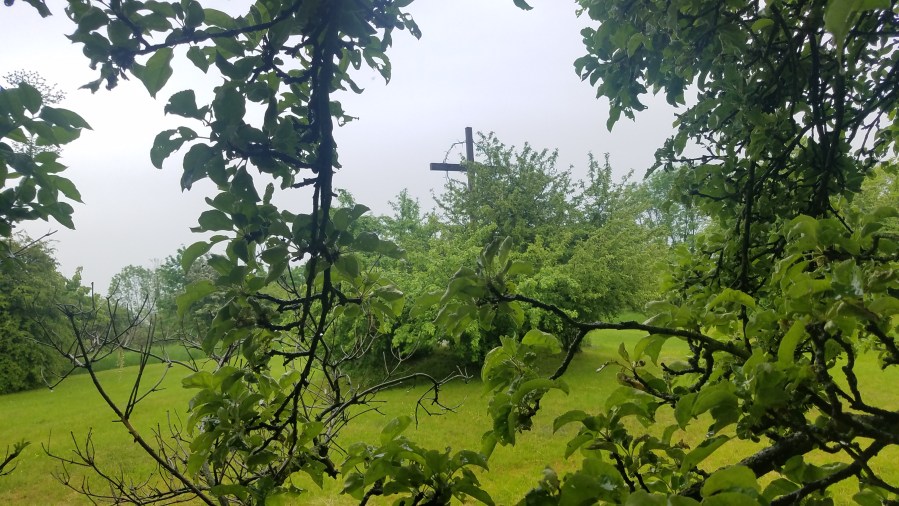
There will be no balcony seat tonight. The view will have to suffice. Rain. Wet rain too. Forecast suggests more for the rest of the week. But as miserable as we feel, we can go back to our room. We can relax afterwards. We still have our home. Those who were deported to this work camp had no home. They were forced into labour. They live on a few hundred — a maximum of 300 — calories/ day. I eat when I’m hungry, and drink when I’m thirsty. Why didnt everyone have this basic human right — was it because they were different? Obviously not. They were people. People with the same depth of humanity and emotion. They were people with a desire to live, and they were killed because they believed in their God. They were not executed as criminals — criminals are still people. These people were liquidated — literally, millions were eliminated in the most efficient manner possible.
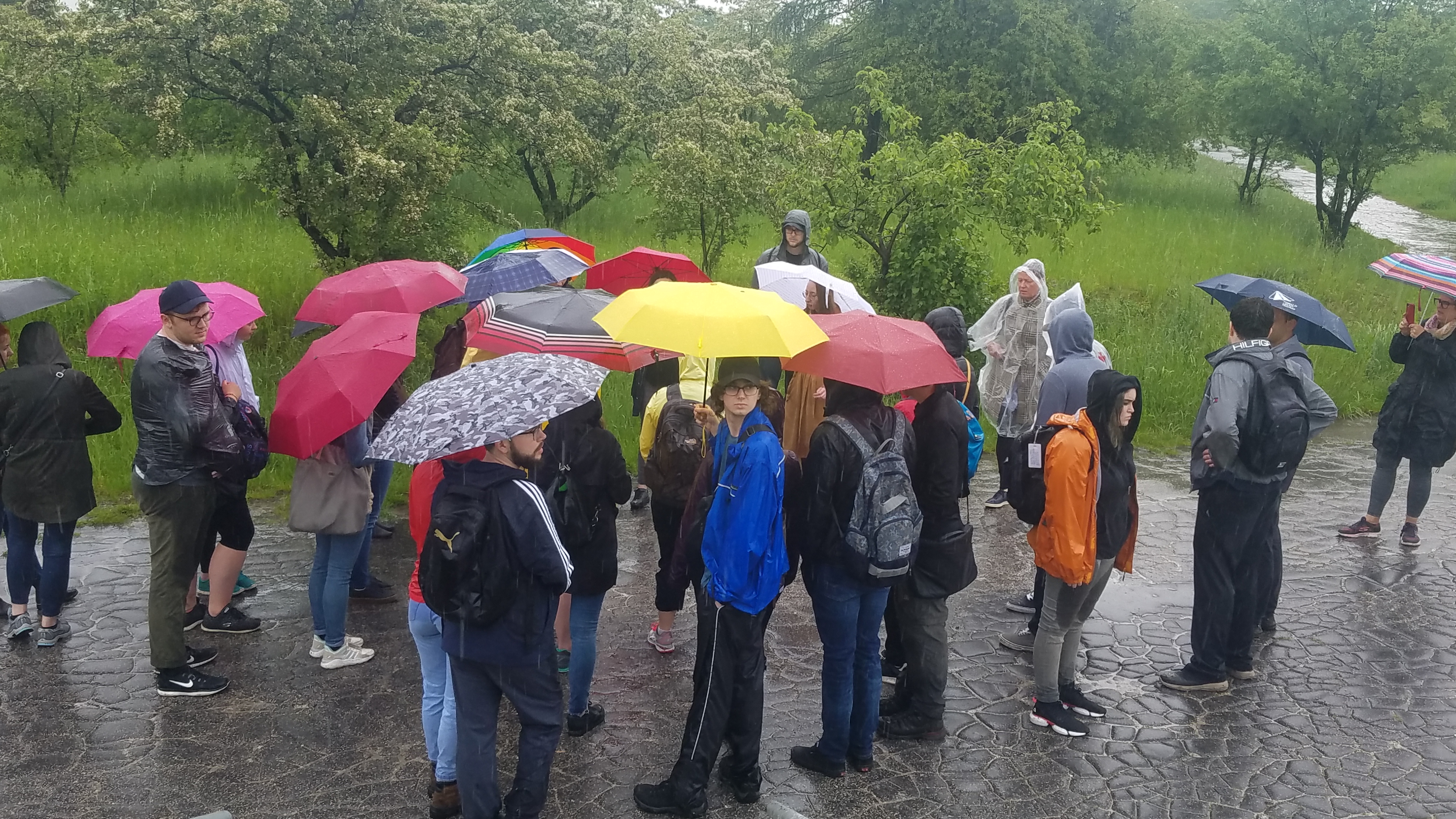
As a group we were honoured to participate in cleaning up a large Jewish cemetery within the city. When discussing this activity with a few others, we all concluded that we would not fully understand how meaningful this part of the trip was, at least not until later in the day after we had completed it. There was also a question of why we would do this, when we are on a trip such as this one. The reasons became apparent as I worked, and this was very much the case — this opportunity allowed for me to participate in Jewish remembrance in a simple manner. This also struck me as a time to honour the history of the Jewish people throughout time — many of these extended families have lived in Poland for centuries.
Prior to the Holocaust, such grounds would have been much better kept, as there would have been a many more visiting and caring for the graves of their relatives. The overgrown nature of the grounds really struck me — this site was unlike any cemetery back home — telling me a little bit of the narrative of rapid extermination of millions of Polish Jews. The large weeds, garbage, sprouting trees in the gardens, and even the heavy vines demonstrated a significant absence of family visits. Not many of the headstones even had signs of visits, whether that be a bouquet, candles, or prayer stones.
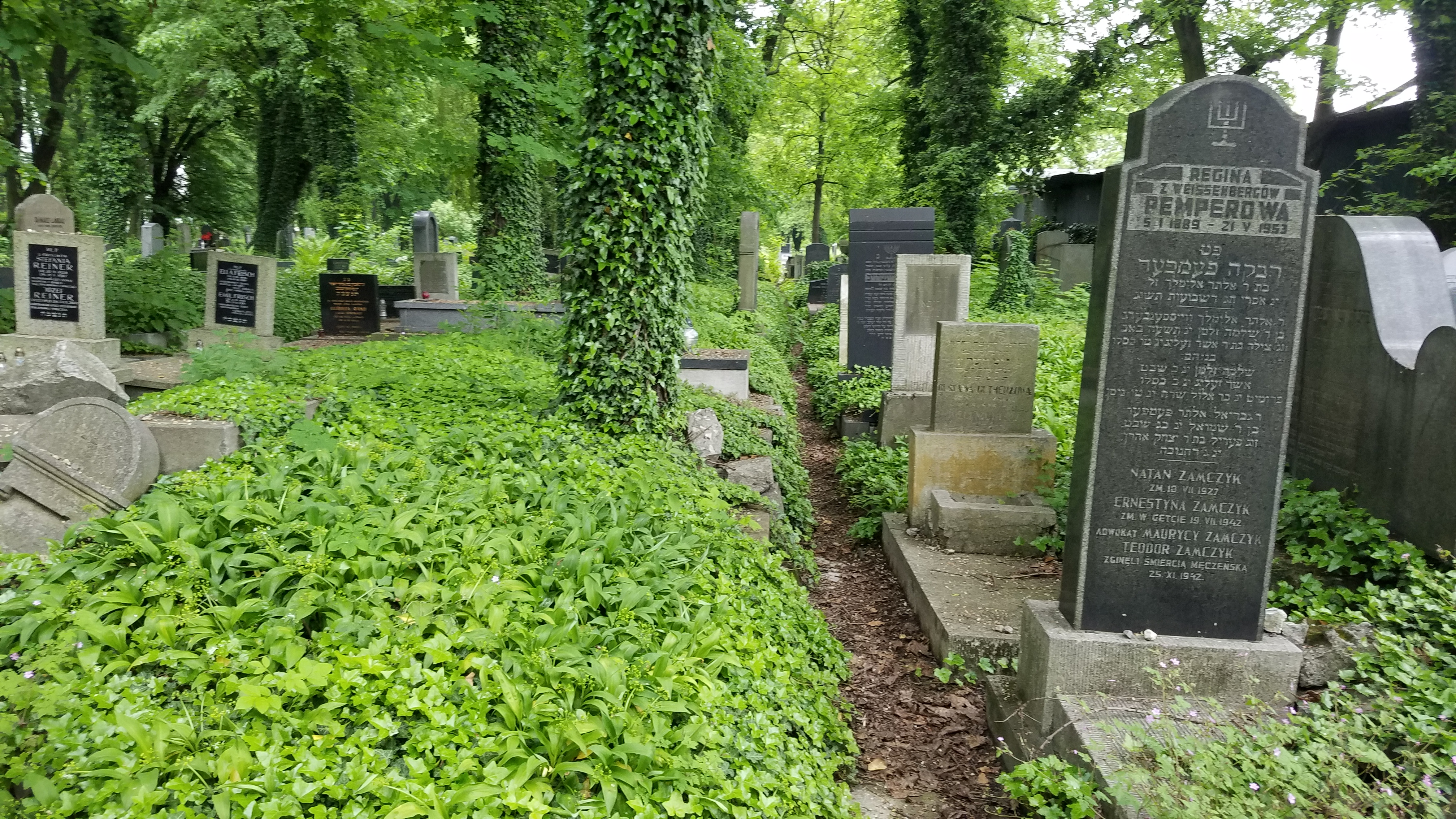
Within a few hours, we cleaned a small section towards the back of the cemetery (the place most in need of some cleaning). Though only working in a small section, we gathered up over 100 bags of waste, making a noticeable difference in the appearance of the cemetery. While many other cemeteries and burial plots are maintained by relatives of those who died, or are under state responsibility, these provisions do not exist for most Jewish cemeteries, and we were witnesses to the fact that there are simply comparatively few relatives left alive to care for the space. Many burial grounds therefore rely on such volunteer work and donations to keep up their functionality and maintenance. But whose responsibility should this be, considering these are the historic burial grounds of the Jewish people?
I find there is an undeniable responsibility of the Polish state to ensure these are maintained. In terms of identity, these families were not only Jews. They were residents of Krakow and Polish citizens for hundreds of years. These two identities cannot be separated from each other — as 25% of the population of Krakow, these people were a vital part of society. As 10% of the total population of Poland, the Jews were a significant minority group not a small faction. However, curatorship of such places still belongs to the surviving Jews, and their choice of what to do with these grounds remains as such. This absence is a significant part of contemporary Jewish identity, though, no doubt, a defining moment of their family life but not the defining moment of their past. Tracing their history back to the Abrahamic times, their history is filled with continual opposition, which still persists today in some places. Furthermore, I found a powerful message in the overgrown state of the grounds — speaking to the community memory of the cemetery, there is a significant absence of those who would have once come to pay respects to their dead.
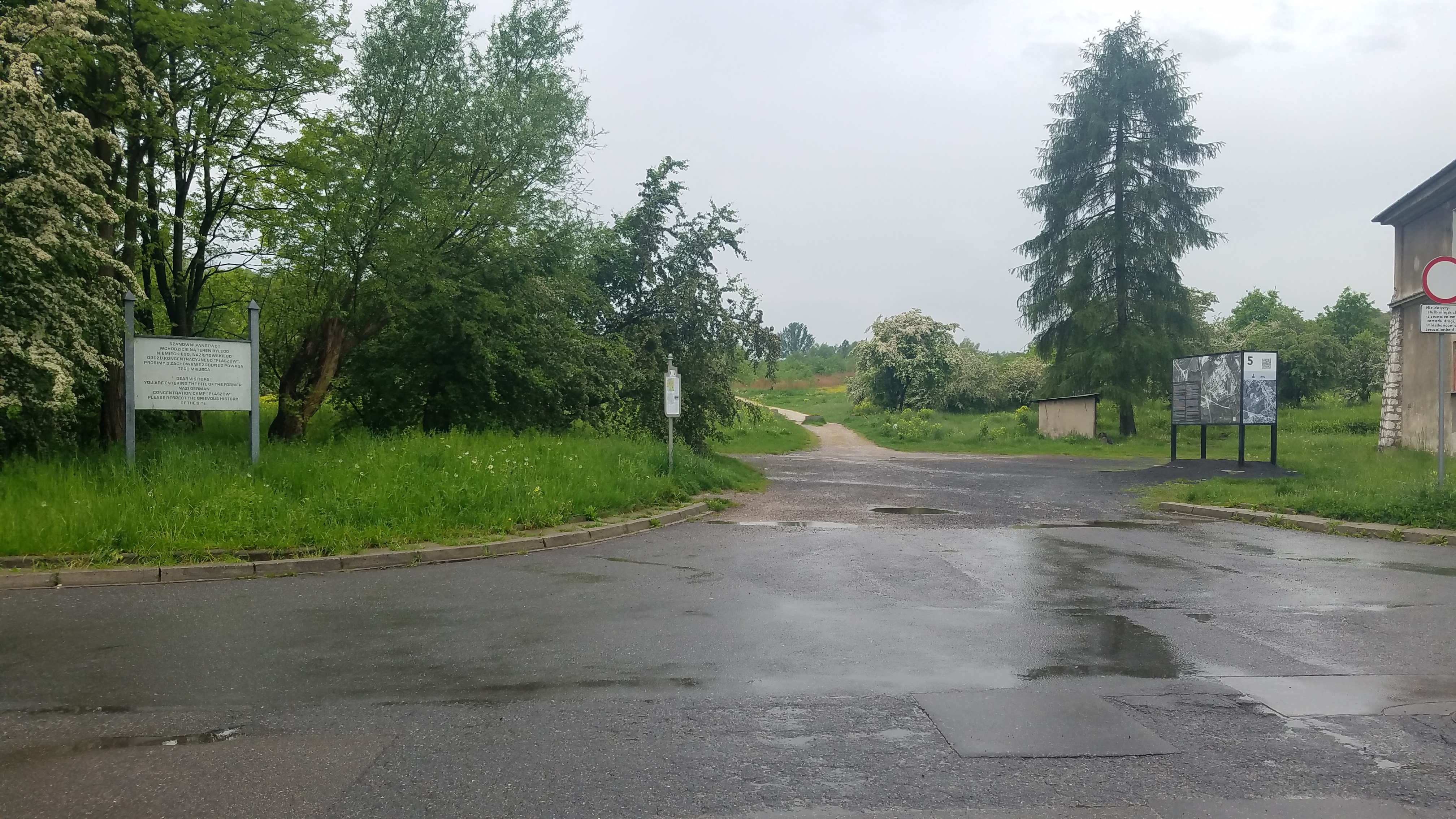
There was a similar absence at the Płaszów concentration camp grounds. Very little remains, except open, empty grounds, and several commemorative plaques and two prominent monuments of mass killings that occurred there. Interestingly, the one monument commemorating a mass killing site is a large cross adorned with a crown of thorns. Recently coming out of the time of the Passion of Christ, this symbol really intrigued me — why would the Polish community choose a cross and crown of thorns to commemorate the deaths in Płaszów, especially considering the commonly mentioned reality of the Jews demanding the crucifixion of Jesus, which this monument represents to the Christian church? I don’t know. Regardless, this monument represents a narrative of Polish-Jewish relations, and the complexity of the retelling of the event of 1939-45 and beyond.
I also found it very interesting to see buildings such as the house of Aman Goth, the former SS command officer in charge of the work camp, on the former camp grounds. This house is now a privately owned residence and no longer part of the camp. The camp itself was undeniably gone. I was unsure what to think of this for quite a while — I went there expecting a different memorial. The ones of Płaszów were much more shocking. Without the work of people like Professor Sendyka, who has dedicated her life’s work to Płaszów, the site would be absolutely empty. Now, the emptiness is a monument to what once was — a memorial on its own, standing behind the solemn plaques and telling of the history and suffering.
 Into That Darkness — and Out of it too...