These sort of things sometimes just happen. Sometimes they don’t just happen. This one all began some time ago on a walking trail in Brantford, while conversing with a good friend about just how great my undergrad is shaping up to be. Feel free to follow along this month, as my education looks to be getting a whole lot greater.
Sometimes you just need to be a little less practical and a lot more passionate. — That aforementioned friend
For those of you yet unaware, my studies throughout the month of May will be dedicated to studying Polish-Jewish history, the Holocaust, WW2, and the millions of people whose lives and families were harshly altered, restricted, threatened, and rapidly extinguished — not because they were dangerous or enemies but because, according to Hilter’s prescribed Aryan race, their genetics were not in line with the German vision.
My studies begin at the “other Laurier” (a.k.a. the Waterloo campus of WLU — the larger and yet unfamiliar of the two campuses). This semester then, looks be a significant one, not only because of this course or the unique travel opportunity, but also considering the perpetual question facing every student at WLU Brantford: “Why Brantford?”
As an aside, reactions often also include comments such as, “oh, that’s too bad,” or “ouch! Maybe you can still apply for a transfer…,” or even “What’s there?”
Well, it’s friendly squirrels mostly.
But returning to my current education:
The first half of the semester (the next 2 weeks) focuses on the history of the Holocaust in Poland, as well as contemporary issues surrounding its remembrance both locally, and on an international scale. With 9 other Laurier students like myself, a similar-sized group from Nippissing University, along with PhD candidate, Eric Story, and course directors, coordinators, and instructors Dr. Plach and Dr. Earl, we then hope to proceed to focus more on experiential learning to study various dimensions of the Holocaust and its ongoing remembrance and memorial. This off-campus/international experience involves various guided activities, visits to several death camps, cleaning up a Polish-Jewish cemetery, walking tours, and walking the streets of the wartime Jewish ghettos, among other activities.
What follows in future posts then, will not be the thought processes of a tourist. I will not be describing many attractions or pretty sights. My descriptions may not be so refined (though, I do hope they are readable). But throughout the month of May, I hope to meet some of the people of the Holocaust, to see beyond lists of family names and the unspeakably large numbers of people that were exterminated because they were born as they were, and because ideologies encouraged hate, anti-semitism, and the ranking of humanity based on genetic variations.
P.S. I really hope Laurier’s Waterloo-campus squirrels are also wonderful critters. So far I’ve only been greeted by several hissing Canadian geese.
Returning to daily life the following Monday after returning home was a very strange sensation. My experience and learning of the last month kept coming to mind — and continues to do so. Yet, our daily life carries on and sights changed slightly by the time I returned home.
Throughout my time in Poland, in visiting museums, monuments, cemeteries, concentration/labour/death camps, I really began to notice the complexities of historic memory. Controversy surrounds so many of these monuments and yet, these controversial monuments become part of history themselves. Take, for example, the mausoleum at Majdanek — while Jewish law does not allow for the display of human remains, this monument still exists. However, to some this represented the best form of offering a token of remembrance. Furthermore, Poles and Jews undoubtedly remember this history in different ways. There is loss and pain tied up in their individual identities, but from different perspectives. Many Poles died in the war too, and even during the Holocaust — but does this allow for some form of competitive suffering?
This memory and commemoration is not to the benefit of any one people, per se. This memory is about healing and about redefining post-Holocaust Jewish life. What do non-Jewish culture brokers have to do with this then — shouldn’t memory be reserved for those whose personal history it focuses on? I believe healing is taking part on both sides of the divide in Poland. The idea of a Polish Jew is once again a real possibility, with the ongoing efforts of grassroots organizations like the Warsaw or Krakow JCCs. There is no demand for Polish jewish people to be defined as singularly Polish OR Jewish. This is, of course, even more important when considering the idea of victims as perpetrators of the Holocaust as well. This could only be more torturous for the Jewish people — forcing these people to process and manage the functions of death camps, as well as to decide who lives, who dies, and who gets on the next transport could only heighten the anguish and suffering at the time. How can I, as a student of history, judge this? Could it ever be simple collaboration, if someone had to do this regardless; was this work something done willingly?
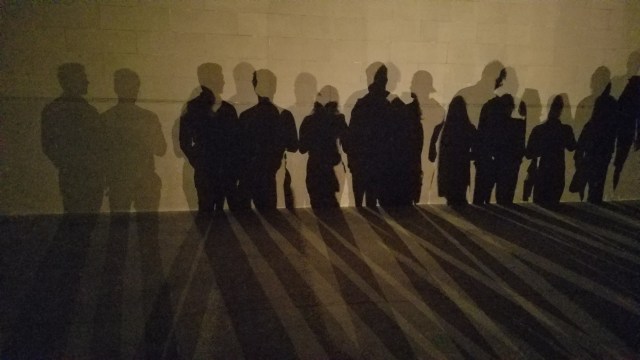
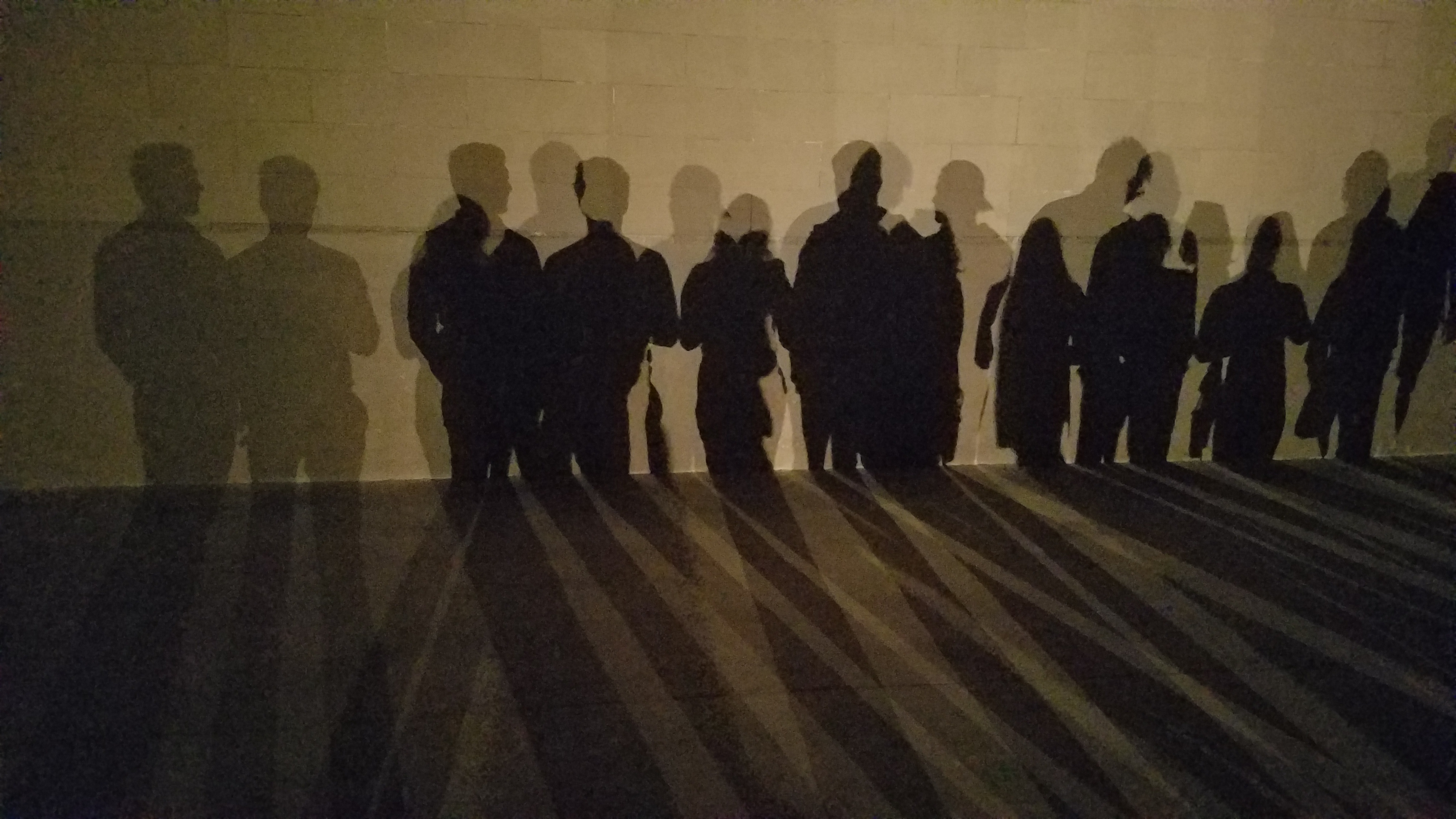
Coming into this course, I had considered this a crucial part of modern history that cannot be ignored or forgotten. I soon realized what really needs to be questioned is how it is actually remembered and whose story is being told. The individuality of of the millions of victims of the Holocaust is what really struck me over and over. I wanted to meet these people in history, to see their faces, and to learn their stories — but I failed. I failed, because I can only remember them, never know them. Again, the massive acoustic chamber at Belzec comes to mind — at the end, we were faced with an empty wall and shadows. Only shadows.
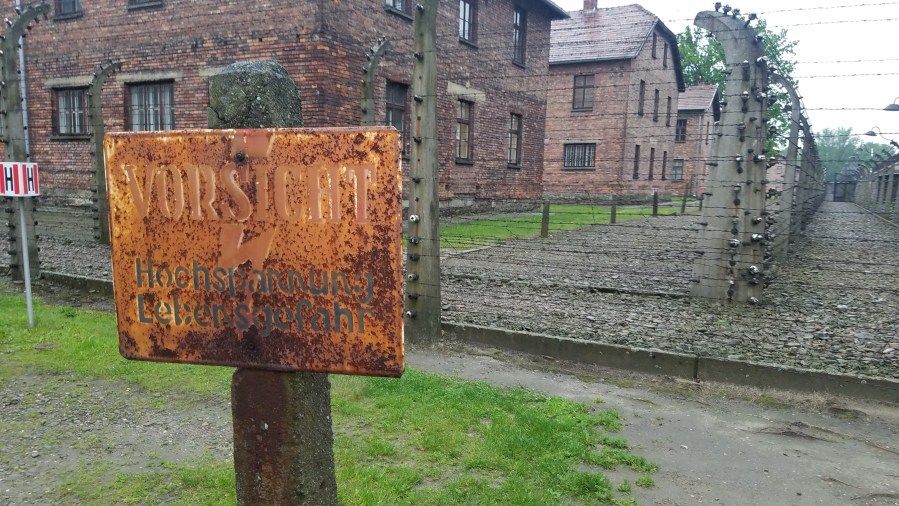
To conclude, I’d like to once again mention the most well-known and famous of Holocaust sites. I think the reason the Auschwitz museum in particular was unappealing to me (and probably why I keep raising this memorial in my writing) was because I found it so awfully beautiful. It was tidy, orderly, had short, well-trimmed trees singing the roadways… the Auschwitz 1 camp looked like a wealthy community, albeit one surrounded by barbed wire and guard towers. I could not reconcile that with the terrors of that place 75-80 years ago. Visiting crude monuments of stone I could easily understand — they were constructed to commemorate those horrors — but this place was an attempt to show the overall operations of the Holocaust. I found myself taking pictures there, not because those were the ones everyone wanted to see, but because it was pretty. Again, the thought of what it would take for me to have been among the perpetrators… Here I live in 2019, studying history.
Why visit another cemetery in Warsaw? Why visit them at all?
Thus far in the trip, I was repeatedly both stunned and disappointed with the conditions of Jewish cemeteries, as compared to the Polish Catholic graveyards. The distinctions are obvious and stark — Jewish cemeteries were sometimes even difficult to identify as burial grounds, until I really started to walk around. We drove past a few Catholic cemeteries in our travelling across Poland — these were well-kept and orderly.
On occasion, I have questioned how the Polish people can live on without paying attention to these differences. Yet, I can see a cemetery from my living window at home. I have cut grass at several different cemeteries for work. I have often seen funeral proceedings going on there too…and those moments have done little to affect me — I recognize them and carry on with my day’s work. Death is an unnatural thing, making it horrendous to consider for too long. Humanity naturally wants to live and to survive. That’s exactly what makes the Holocaust so alarming. What if it was not wrong? What if it was just based on a different moral and ethical thought process? Ultimately, what would it take for me to do the same things — to ruin families, to dehumanize parents in front of their children, or to take another’s life?
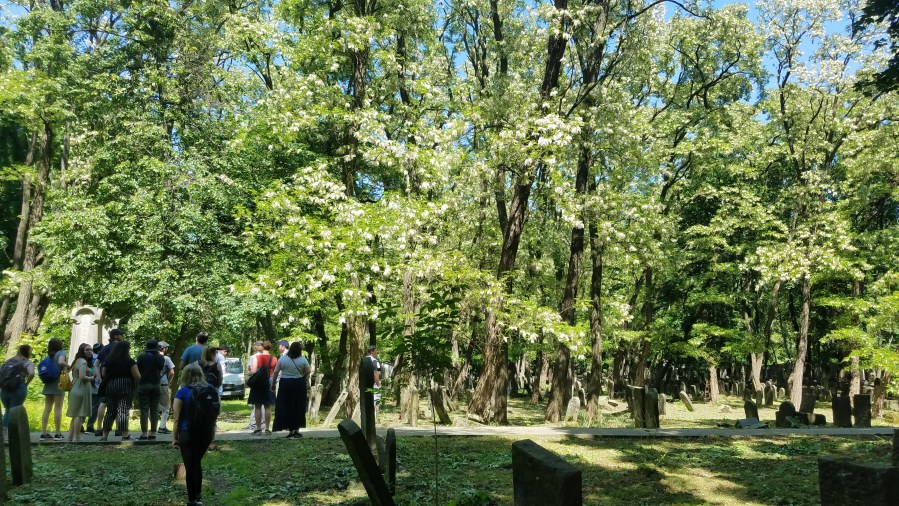
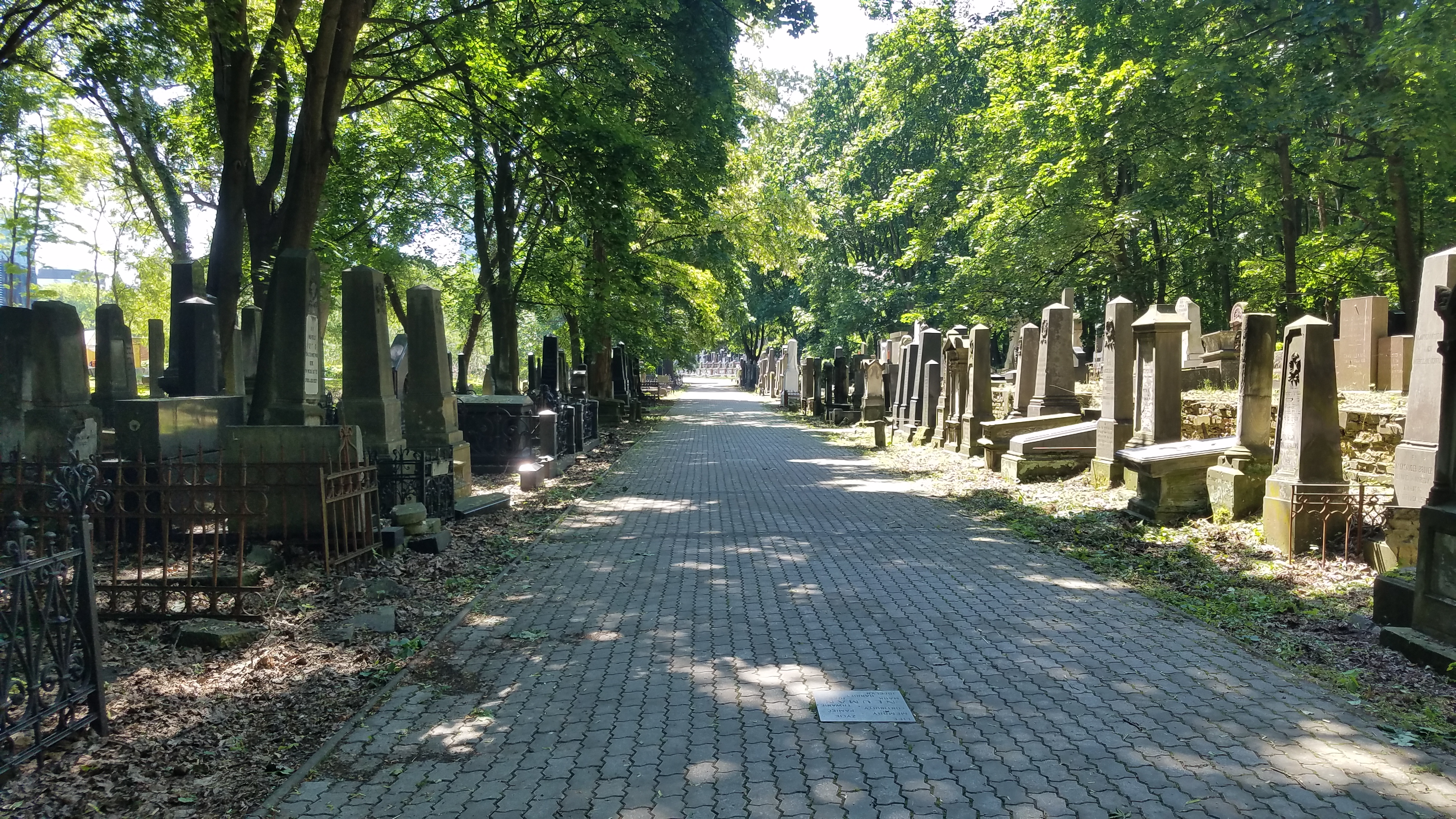
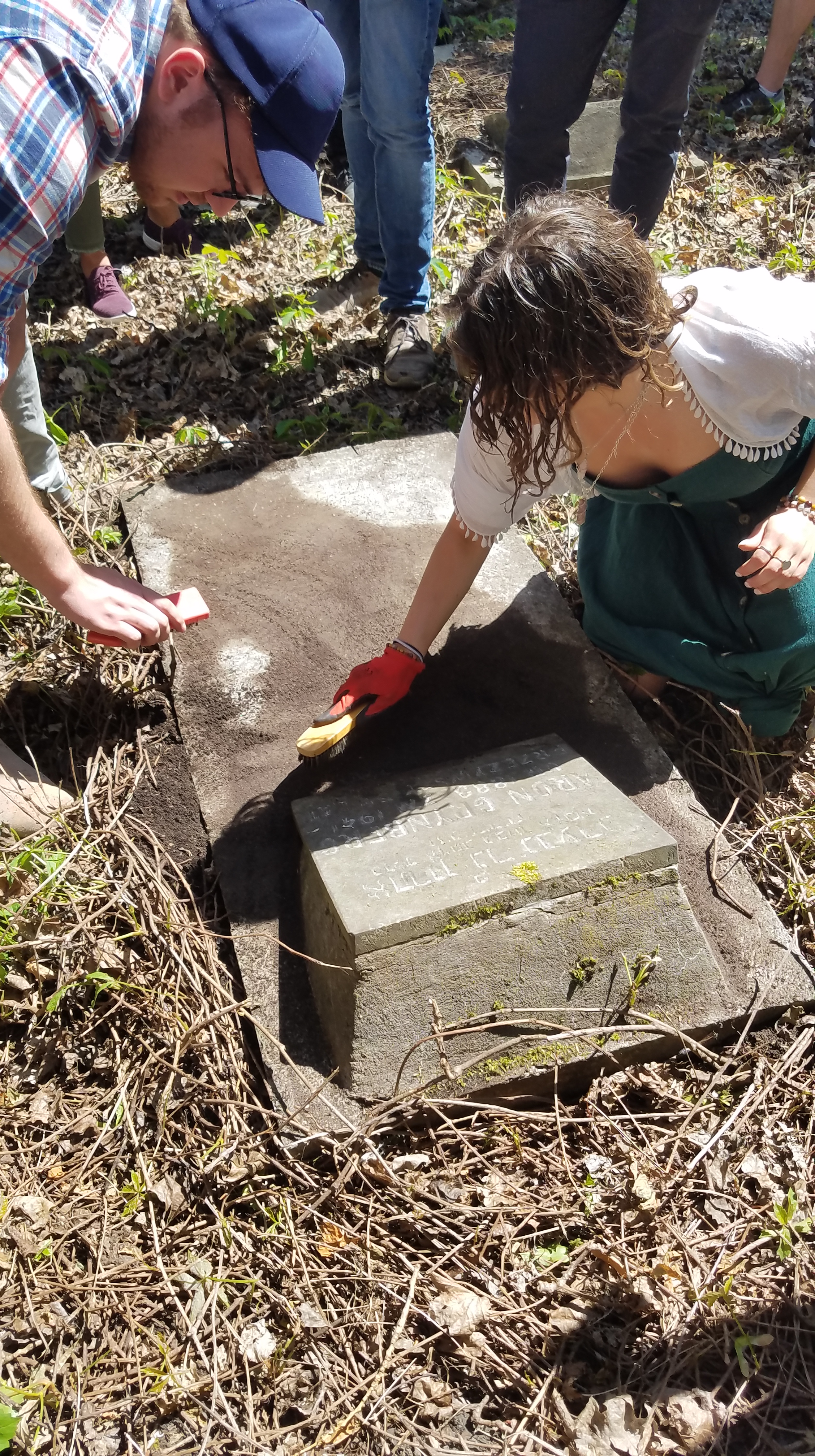
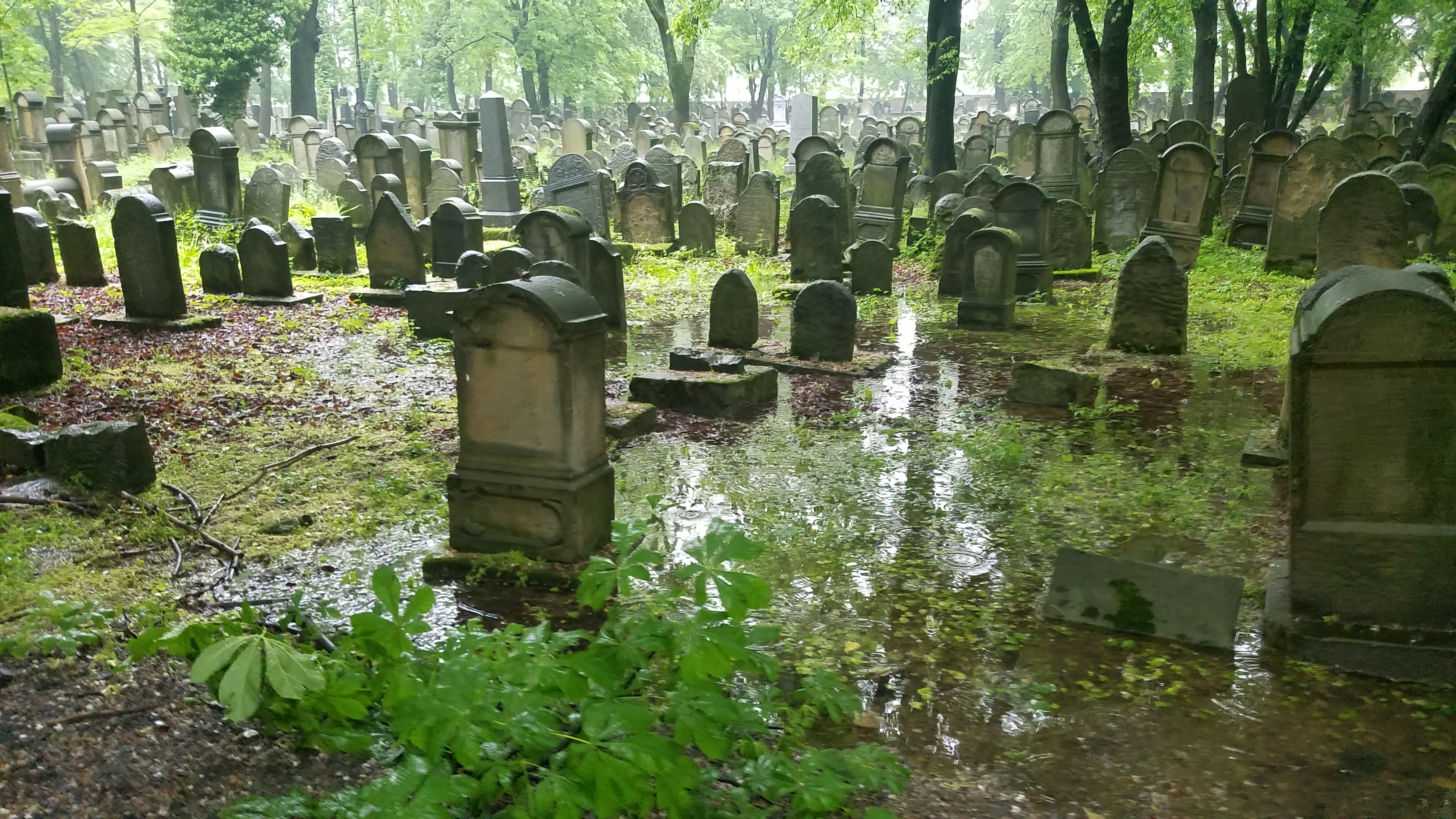
Okopowa cemetery was different. It WAS actually well taken care of — or in the process of being uncovered, at any rate. In fact, as Michela shared with us, many graves there were once lost and nearly buried beneath the overgrown grass, trees, and weeds. Together, we found a grave of a family friend that had once been lost. Yet, the paths through the cemetery only lead to the different ‘sections;’ I still often found myself wandering through disorderly rows and around large numbers of closely located stones. Yet, this cemetery was one that was not eery or dismal like others we visited. Okopowa had a strange natural beauty — the trees were in bloom and the grounds were filled with the sounds of bird calls and squirrels chirrups in the treetops. This was one Jewish cemetery that was well-cared for, as we learned, with the funds offered from the Polish state.
Spent some time travelling in sporadic downpours, though thankfully, our bus roof didn’t leak too much…
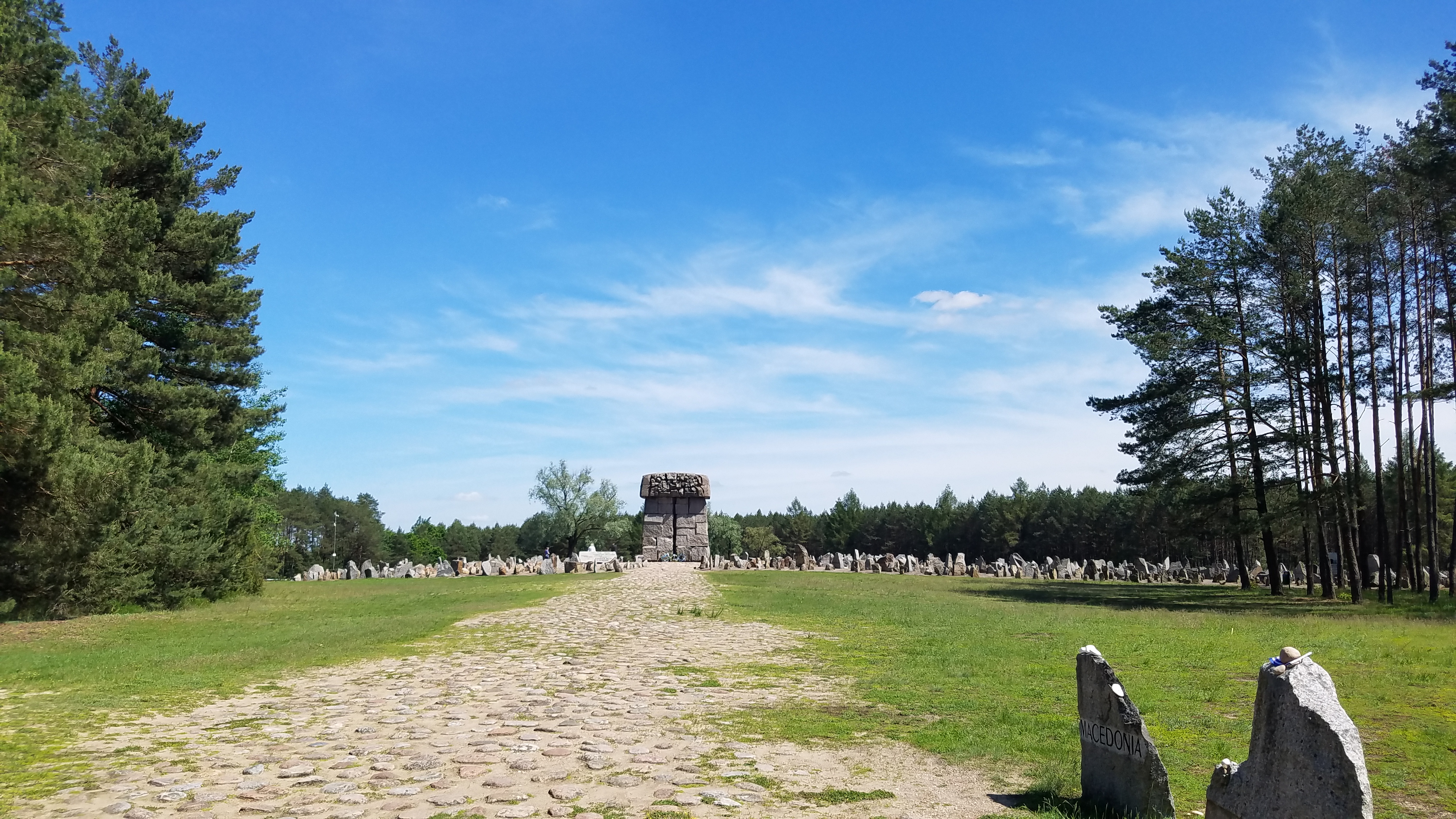
When we eventually arrived at Treblinka, after a minor detour on Polish country roads, I was really impressed by the strangeness of its location. It was essentially out in the middle of a forest. The whole lane and parking lot, as well as the memorial and education centre itself were absolutely surrounded by towering pines.
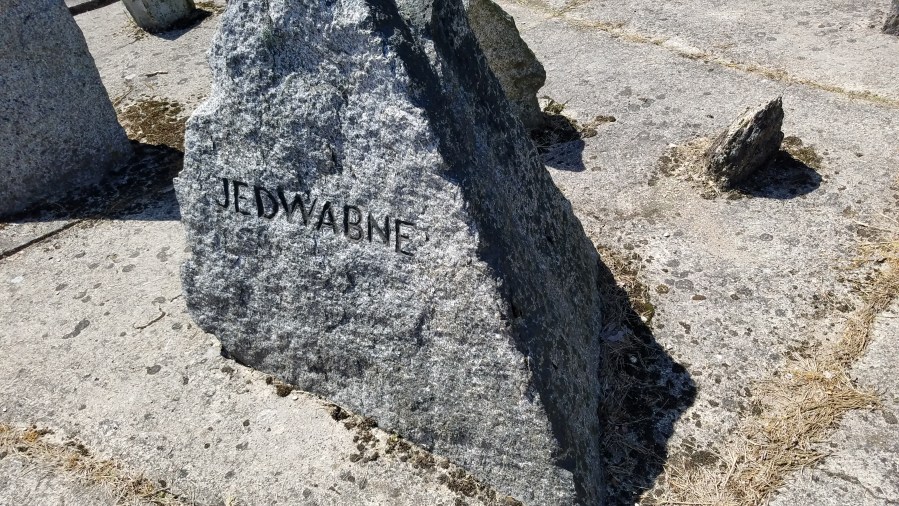
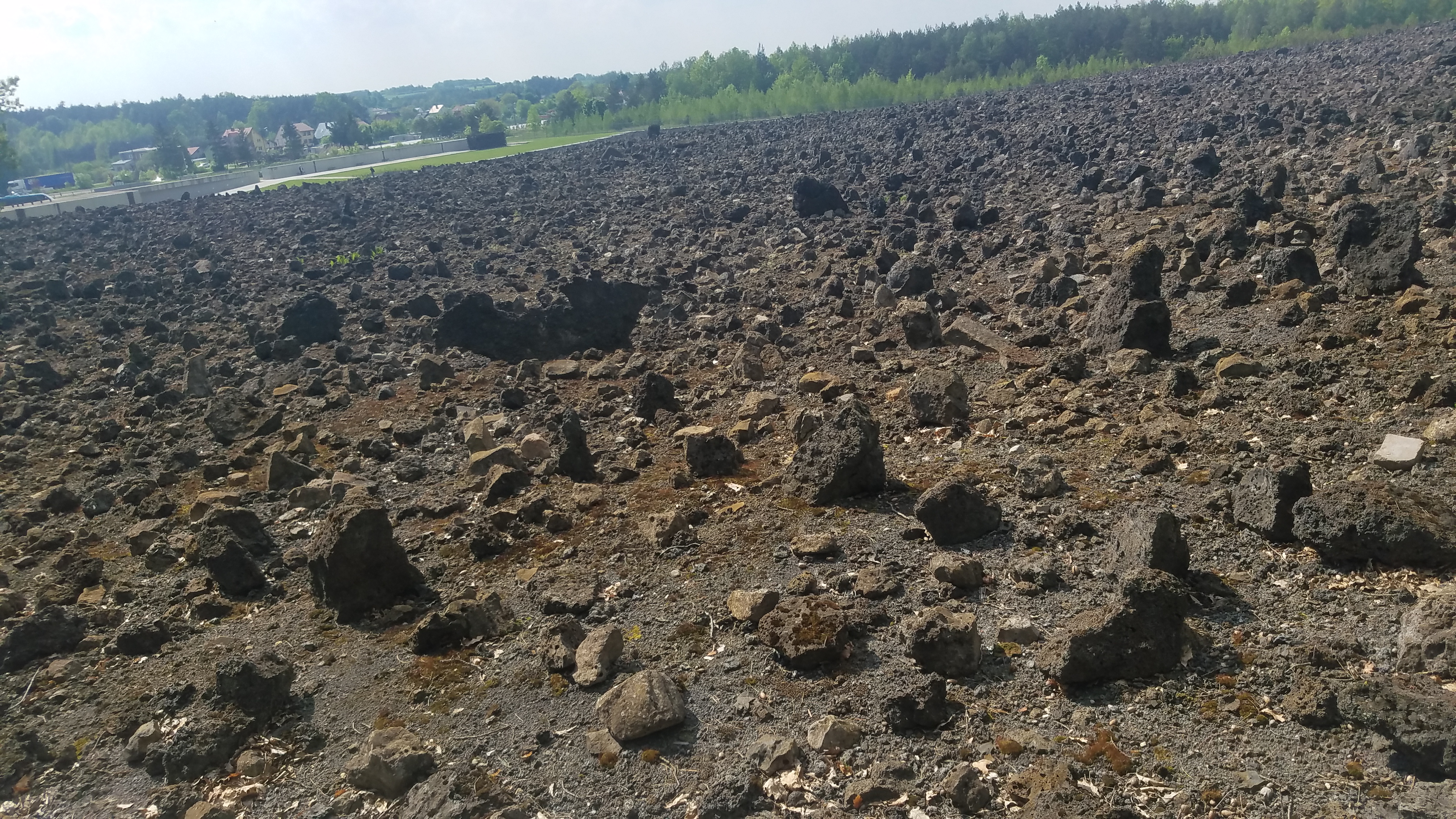
The memorial at Treblinka was fascinating. As we baked in the sun, walking alongside various geckos and snakes, a group of students spent time looking for a stone commemorating the town Aaron’s family was from — none of us found such a stone, unfortunately. Nonetheless, the memorial was evidently supposed to be a symbolic graveyard, filled with innumerable, unnamed and unmarked stones. Nearly all the stones that were marked had only the names of countries and of towns and cities that many of the victims of Treblinka were from. However, it was also hugely symbolic in the construction of the supposed rail line corridor and the path the prisoners would have walked through the camp after arrival. As a site of memory, I found this site to be well done. Using the information known from different reports, the camp has been reconstructed on a model scale in the education centre, leaving the grounds for an opportunity to remember — instead of experience — Treblinka. There was no claim to authenticity, but rather a claim to being a place of memory. Treblinka did not offer to direct me through the camp, and the many stones were not even in rows or sections. The only paths were the ones leading to the memorial and a second one returning through the woods, back to the parking lot.
In the early afternoon, returning on our morning route down wonderfully scenic, but awfully paved country roads, we arrived at Jedwabne.
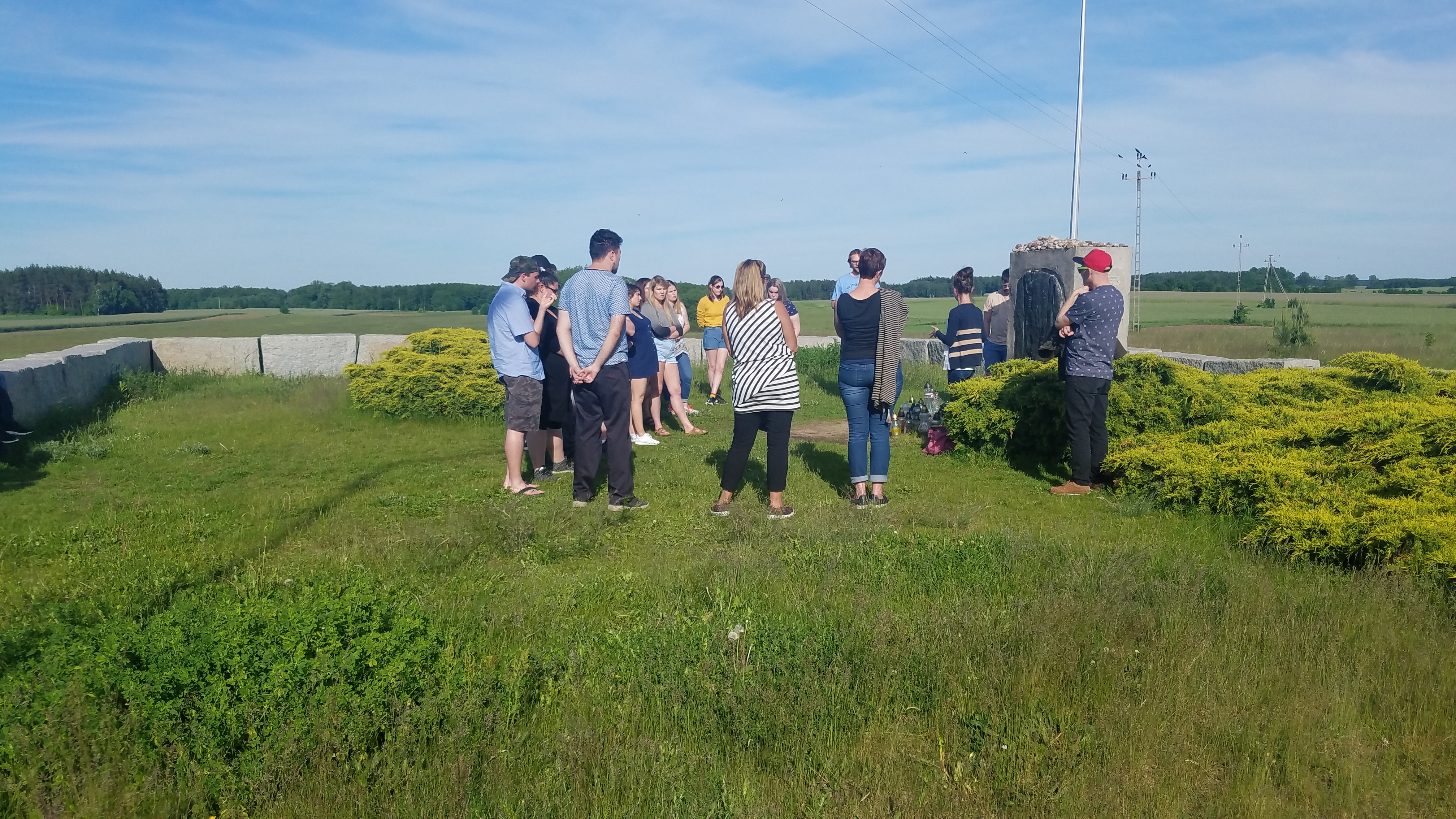
Crows. Black hordes of them circling around and sitting on the nearby hydro wires. Jedwabne was mostly as I had imagined it from The Crime and the Silence, but I was surprised to see how close the site of the barn was to the rest of the village. From houses on the edge of the town, the barn would have been in clear sight from a kitchen window. Additionally, the market gathering square was much different than I had imagined — I had pictured it to be larger and surrounded by many stores or houses.
Thinking back to the vivid accounts of the massacre of Jedwabne’s Jewish population provided by Bikont’s book, I struggled to step into the space where the barn is believed to have originally stood. I repeatedly thought of the terror of the masses of bodies that remained, and the lives of those few who miraculously managed to survive by some providence. The stories and work of people like Kamil Mrozowicz have changed the remembrance of this history. He explained that for much of his life, having Jedwabne as his hometown was a taboo subject — this was something no Polish person wanted to embrace. Even in his efforts to study the history of the Jedwabne Polish Jews, Kamil faced significant criticism and bureaucratic delays. His work and studies are efforts to reinstate this history as more than just a shameful and undeniable reality. Yet, his work is inspiring, and as he mentioned, there is hope for changing memories and attitudes toward this history.
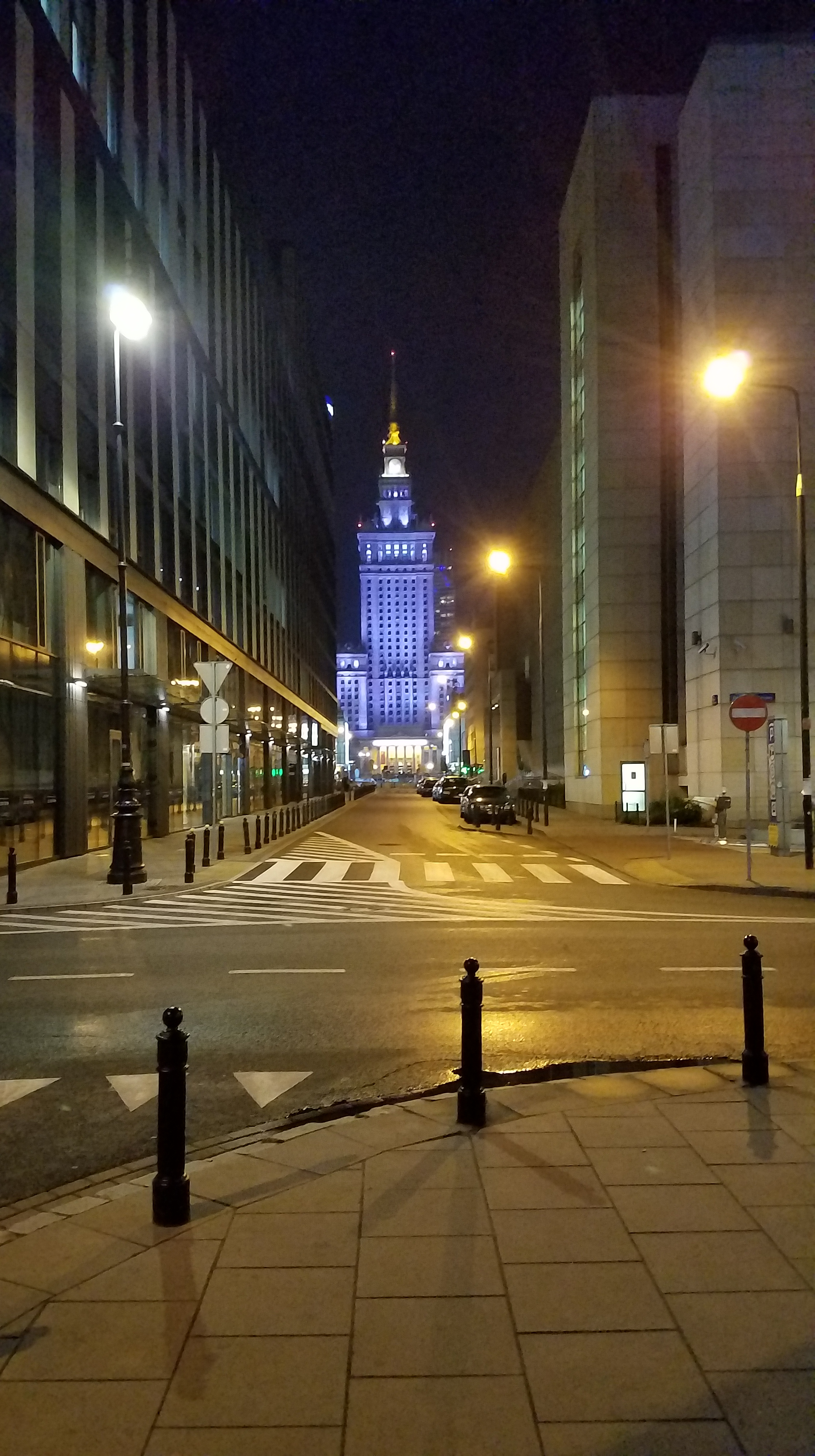
Had an extensive walking tour of the Warsaw Ghetto region, one that both incorporated and expanded on my knowledge of wartime Warsaw Jews and the resistance efforts that took place there. Warsaw itself was a very different place from the other cities we visited. Aside from the fascinating combinations of Nazi and Soviet era architecture on the same streets, along with modern-day skyscrapers (such as one featuring a bold ‘McDonalds’ trademark), Warsaw is also a place full of construction projects. At one time, I had this interesting thought: is Poland still rebuilding and recovering? While Krakow and Lublin were largely, or at least partially intact after the war, Warsaw has a few single surviving pre-war structures. Furthermore, I was really impressed by the lack of cobblestone streets — as charming and wonderful as these are, these roads were becoming absolutely awful to walk on some afternoons. Instead, I was greeted by wide sidewalks and an even wider roadway. Those who once rebuilt the city of Krakow had to plan around surviving structures, but for those who were/are rebuilding Warsaw, the city presented an opportunity for a new landscape. The city is filled with courtyards and parks, while still maintaining a ‘modern’ grid-like structure — I found our hostel was extremely easy to return to, even by different routes.
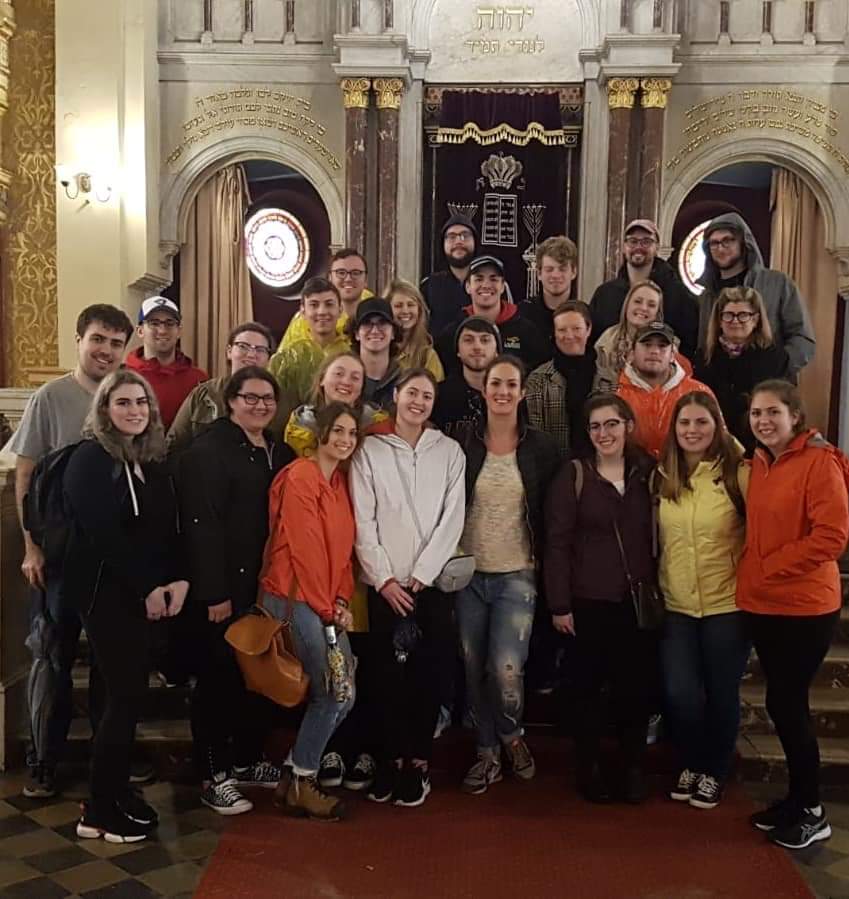
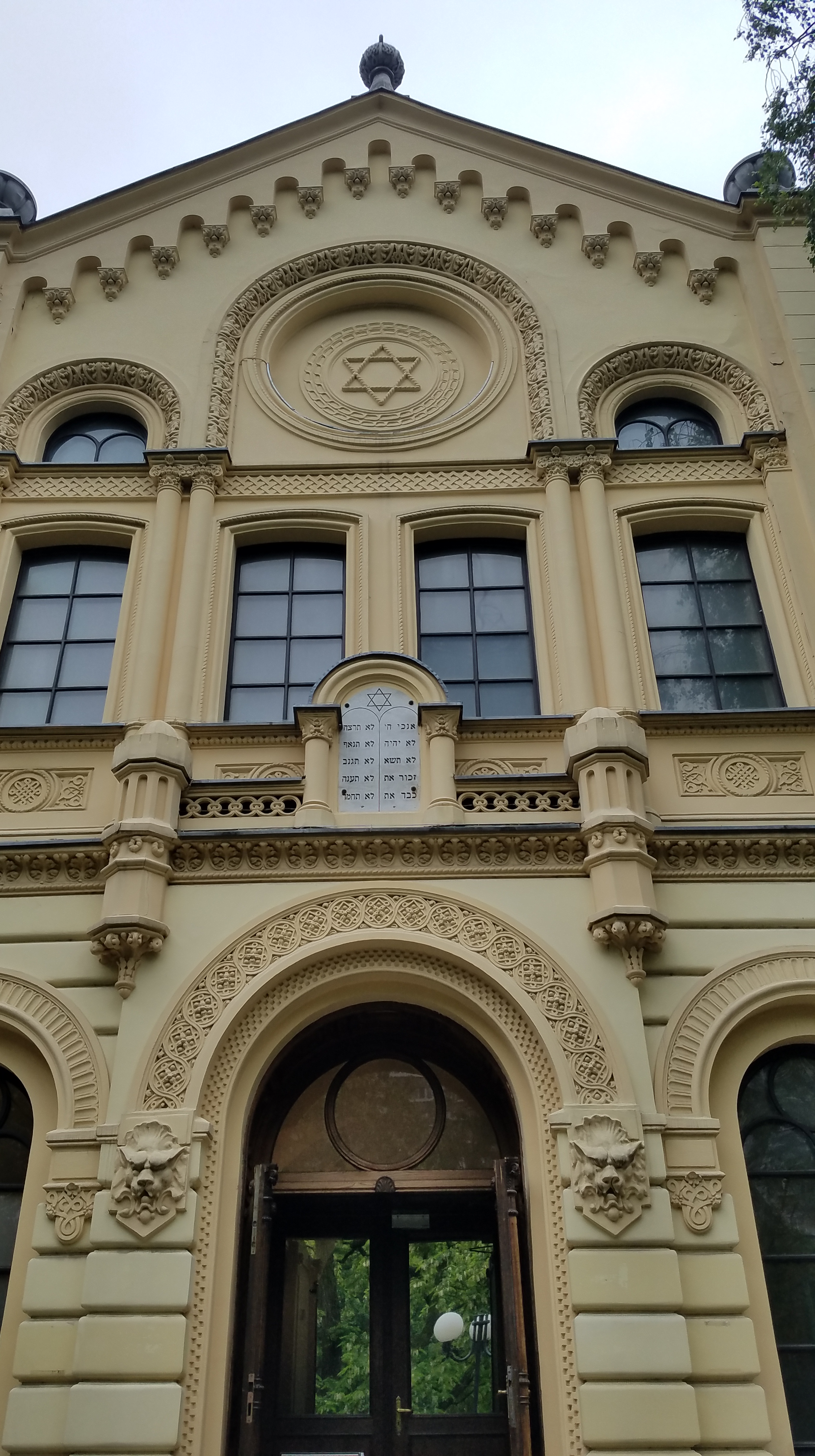
Jewish Warsaw: it exists… faintly. Throughout the day, we came across small traces of Jewish culture and history in Warsaw. On our tour of the city, we stopped at the only synagogue in Warsaw to survive the devastation of war. Unfortunately, we couldn’t go inside, but this remained an impressive monument to the continuation of Jewish life, recovered from being once used as a stable house for Nazi animals. On another occasion that morning, we noted the seemingly random palm tree in a roundabout at an intersection of two main roads. Of course, this sort tree would never survive in Eastern Europe, but the image of a palm tree presents a unique opportunity to remember the Jewish history of the city. It seemed like it was a little bit of Jerusalem, or at least Israel, in Poland. In the afternoon, in visiting the Ringelblum Archives and later the Polin Museum, a much lengthier history of Jewish Warsaw became apparent.
Shortly, out of the whole city tour, the most shocking moment was the memorial made of standard apartment buildings — created with the idea of the phoenix in mind (rising from the ashes). This memorial was constructed from the rubble and ashes of the former ghetto — including many victims who died there. These buildings are in use today… and many do not even know of this reality.
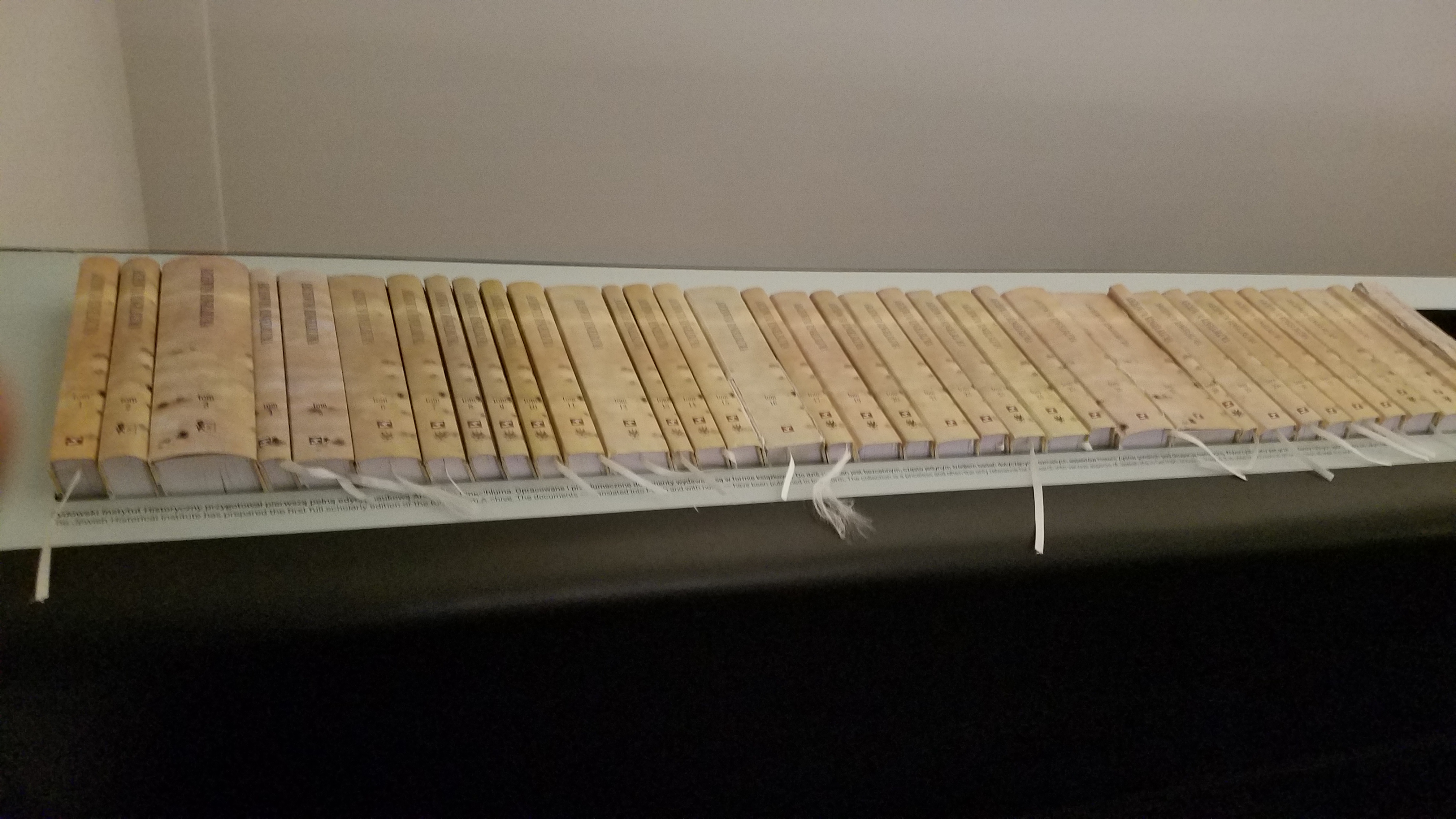
The Ringelblum archive was a fascinating history preserved in original documents. Not only did the display clearly illustrate the history fo Warsaw during WW2, but it also incorporated many physically preserved words, letters, and even poetic thoughts of people living at the time. But why did people decide to start writing these things down at all? People write to remember. People write to commemorate. People write to share, to think, to record. These people though, wrote because it was what something they could do to rebel, to share their lives, and to hope these documents would not be all that remained of their history.
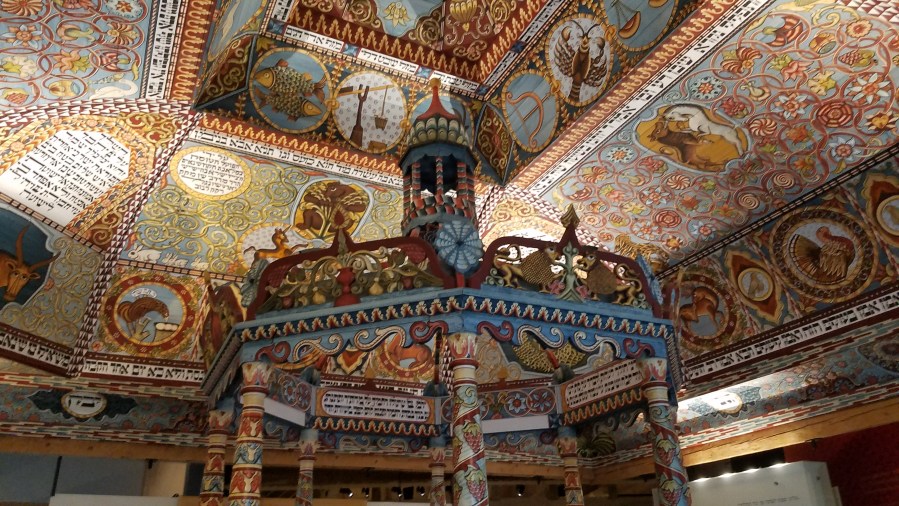
Walking into the Polin Museum, I was greeted by an amazing ceiling display appearing to be like sand dunes above and around the whole entrance hall. The museum itself, a recent development, presents the history of the Jewish people in Europe and Poland, throughout the centuries of their existence there. I found the museum to really focus on the cultural life and traditional practices that once played such a vital role in Polish society. This, no doubt, is an immense undertaking for a single museum, but I think this institution did an excellent job of walking us through the history step by step (literally too). If anything, I think what was lacking was humanity of this lost and missing culture. At the JCC in Krakow, I purchased a picture album titled: “The Lost World: Polish Jews from 1918-1939.” In perusing this book after returning home, this realization dawned, that their personal lives were missing too, not just the society as a single entity. Polin retold the history of Polish Jewry well enough, considering the enormity of such a task, but of all the exhibitions the most powerful and poignant were the single quotations of both witnesses and victims of the Holocaust.
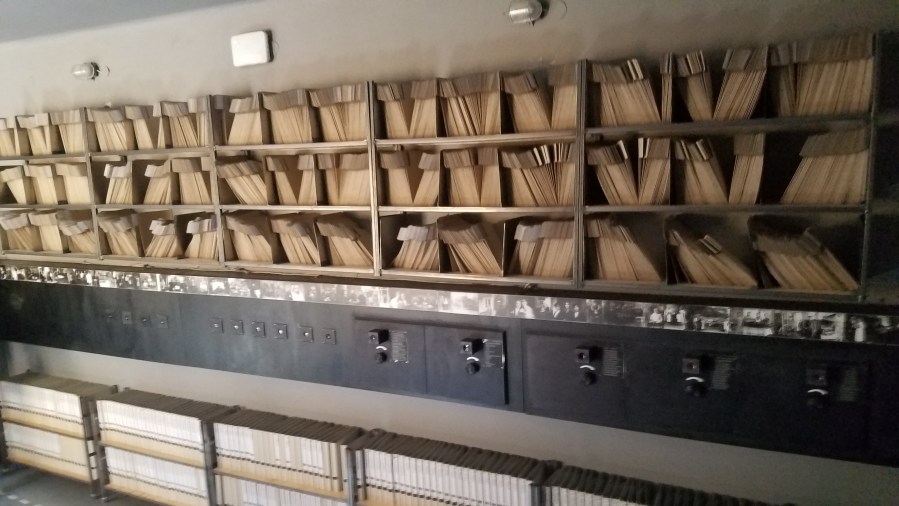
Lublin 1939: home to 43000 Jewish inhabitants and a centre of Jewish culture and tradition.
Lublin 2019: home to 43000 file folders (completely or nearly empty of any information), and a former centre of Jewish culture and tradition.
This change could not have been better noted than by the efforts of the Grodzka Gate — NN Theatre Center. Their whole exhibit, presented inside what was formerly the “Jewish Gate” between the high-town and the Jewish district, focuses on this apparent absence. No doubt, their work is further accentuated by the lack of any Jewish quarter today. Just outside the gate, a parking lot appears, filled with moving bodies, cars, buses, and trucks. Next to this: an open park with only a dirt path through the middle. Using recovered glass negatives and the available information of pre-war Jewish civilians, the centre utilizes active community engagement as a means of commemorating the Holocaust. Likely their most well-known effort, “Letters to Henio,” asks the community to send letter to this young boy from Lublin who died during the Holocaust. These letters are then mailed to Henio’s former address (which is probably under the parking lot or park grounds) as a means of demonstrating this absent part of the city. The letters all receive the same mark: Return-to-sender. No such address or recipient exists anymore in Lublin, though both once did. I found this to be such a powerful form of remembering the city’s past; this activism retells the stories of Holocaust victims in a simple manner, but with a striking result. Additionally, all the information and images that did survive are organized and sorted to tell the stories of some citizens of Lublin, but many stories will remain forever untold. Most of these 43000 do not have anything to their name or remembrance… much like the former Jewish district.
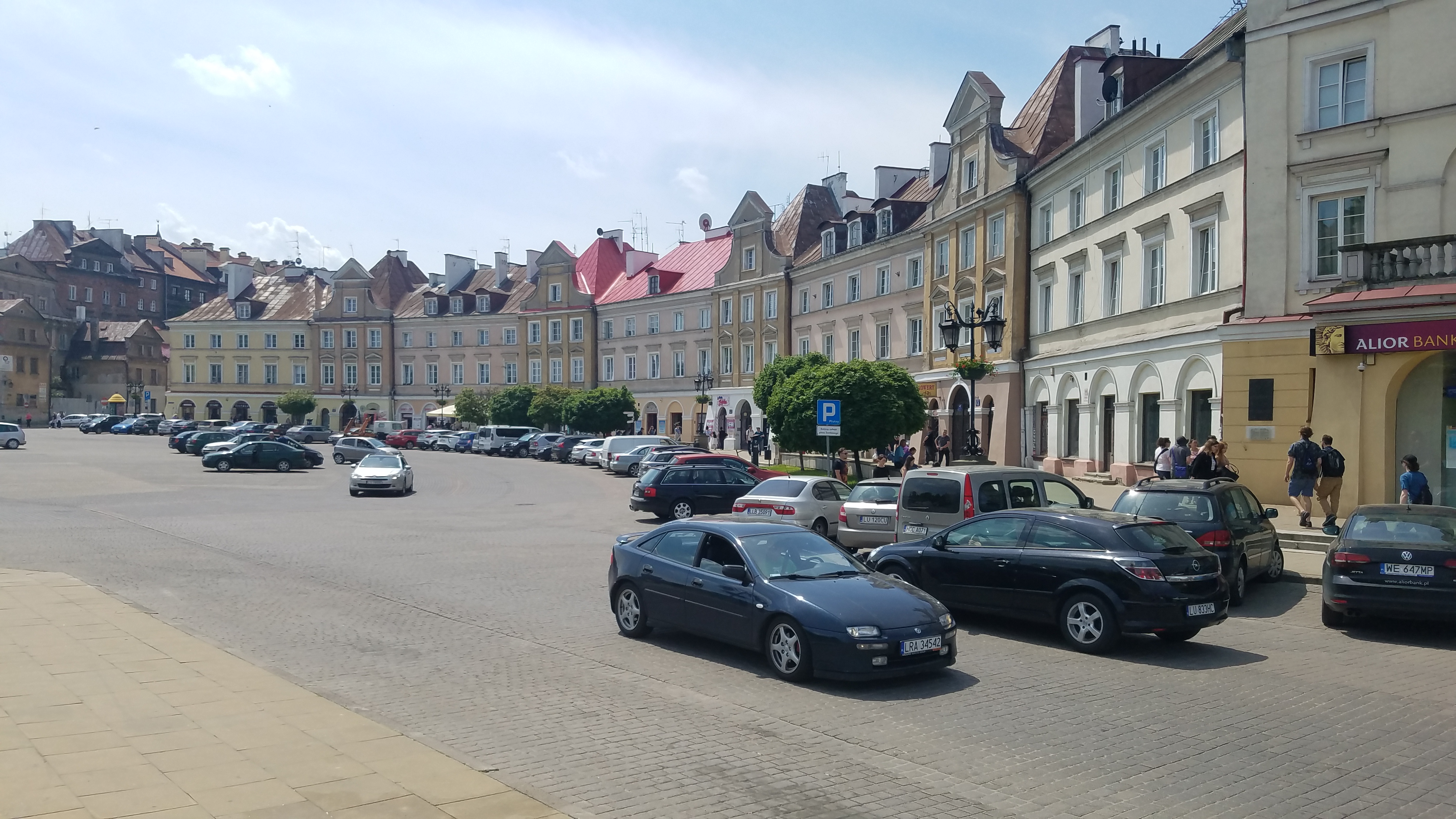
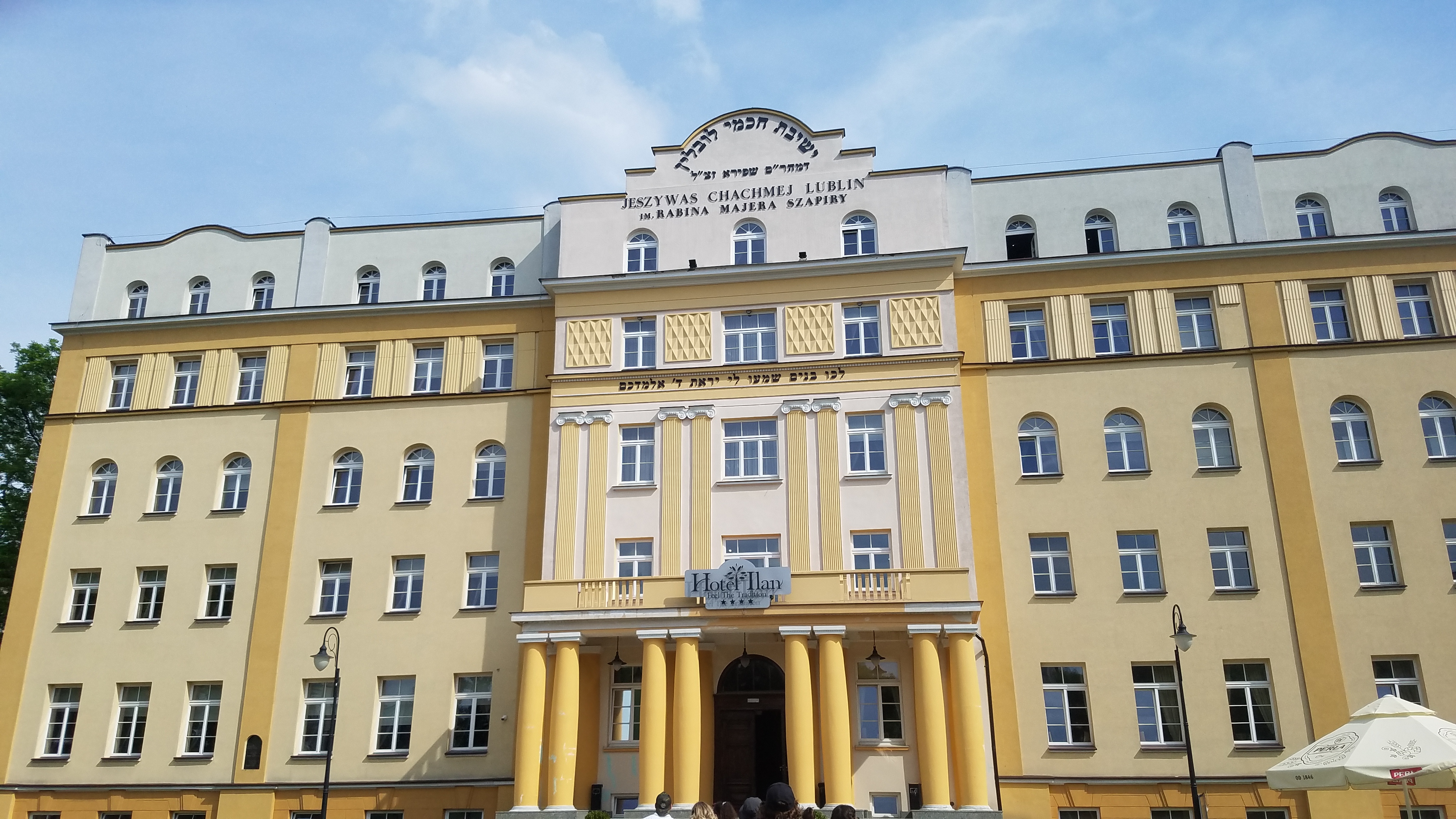
Lublin is a very different city from Krakow. Krakow, though feeling quite small, due to the proximity of most essentials, is a much larger and more diversified city. Lublin, while initially seeming quite similar, is much smaller and not as well preserved. For the most part, I found the old town’s architecture was quite similar to that of Krakow, though the former ghetto still appears to be quite preserved — or not. Nonetheless, Lublin is a crucial part of Jewish history in Poland. This was especially seen in our visit to the Yeshivat Chachmei Lublin, a Jewish Talmudic school opened in 1930 by Rabbi Shapiro at the time. This building, currently a hotel, still has a central synagogue upstairs, even though the building was largely ruined and desecrated during its Nazi occupation.
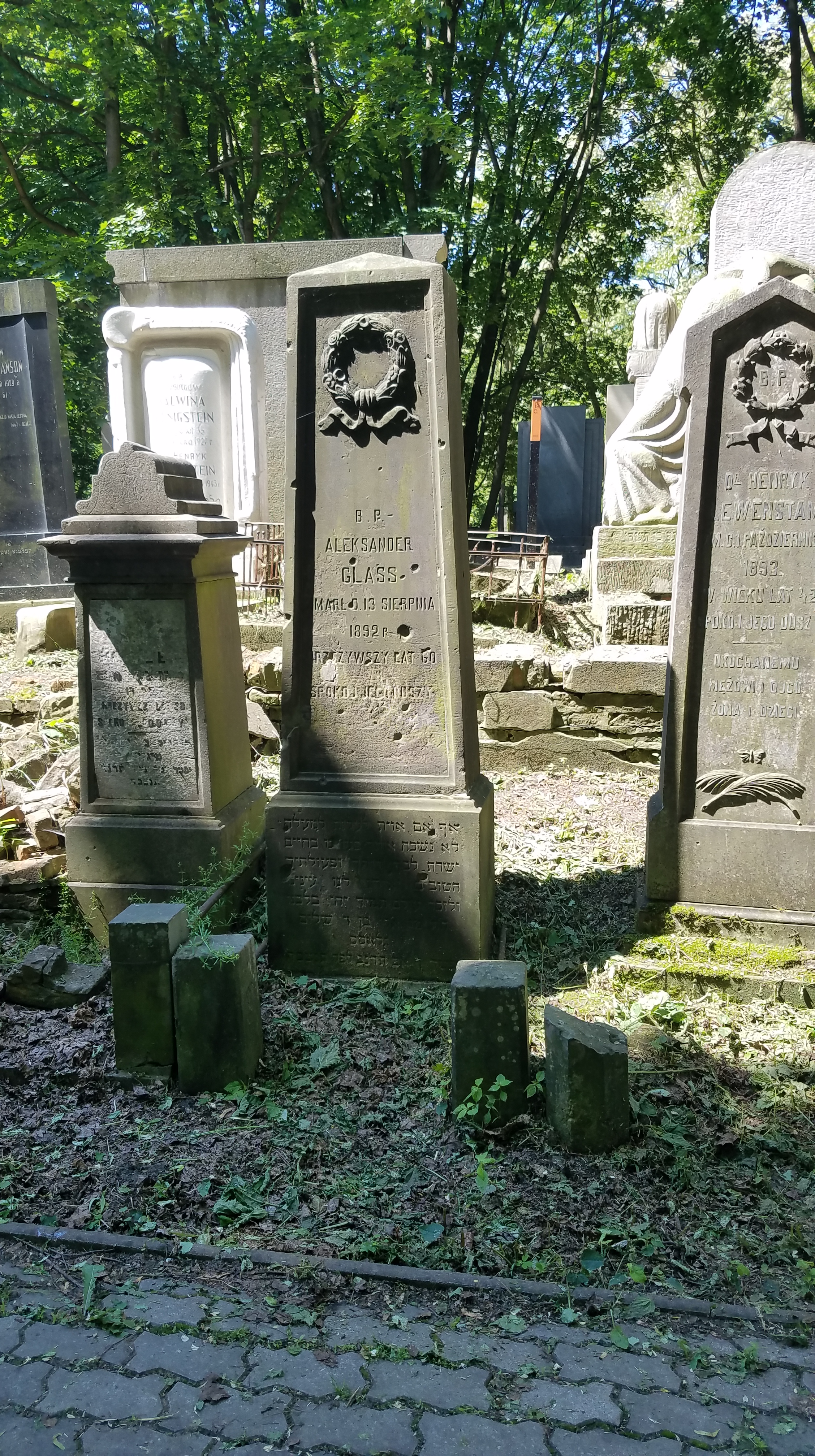
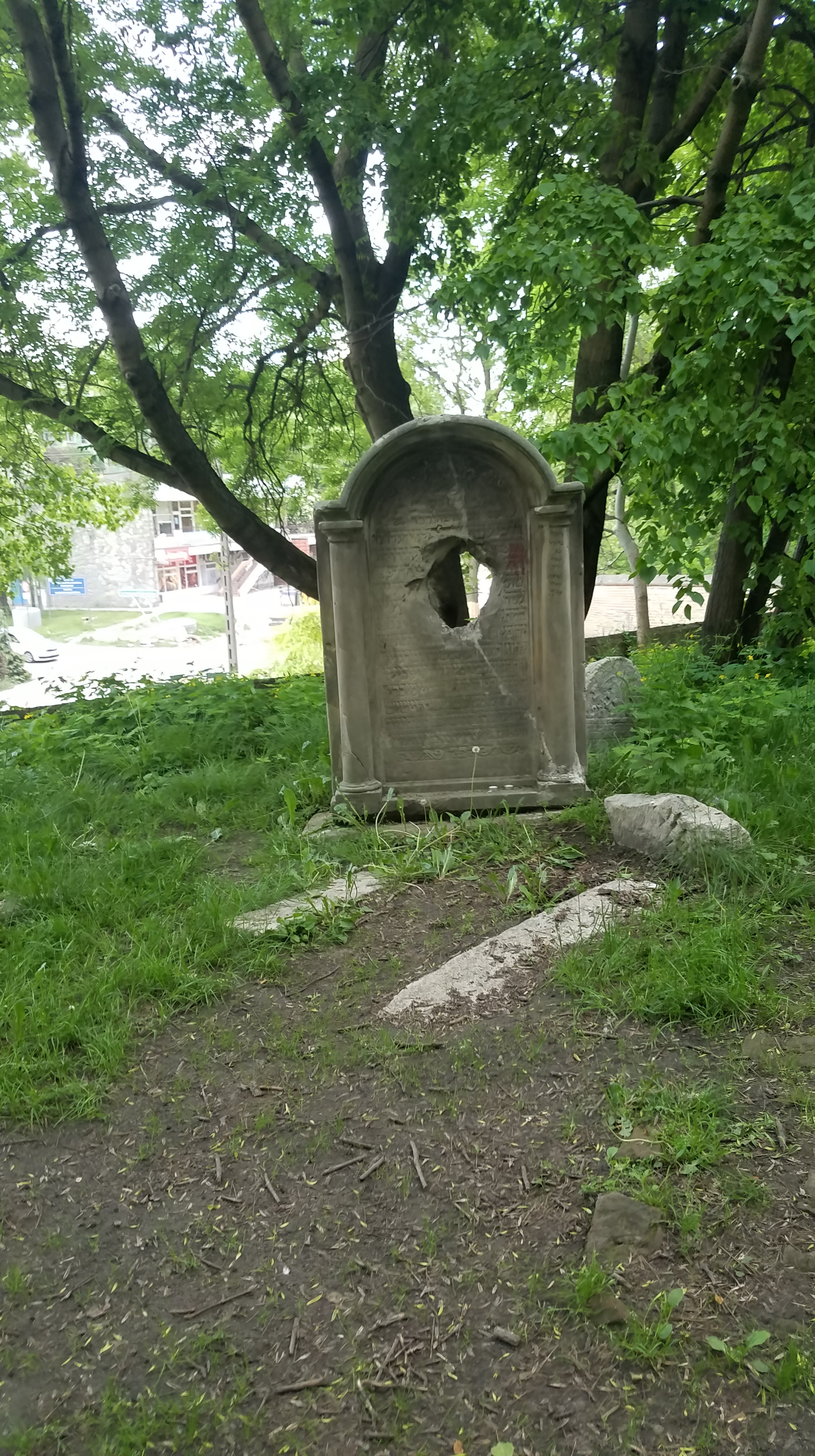
Likewise, in our visit to the Old Jewish cemetery of Lublin, I was immediately drawn to the remaining traces of the war. Though some restoration has taken place, to piece together parts of headstones, one stone stood out from the rest: a stone with a gaping hole from a large shell. Again, my mind went back to this very real absence in Lublin.
However, as we learned from our guide, this is also the site of the oldest known Jewish gravestone in Poland. One famous stone, dating back to the mid-sixteenth century, offers insight into Lublin’s Jewish history. This cemetery has existed there for centuries under administration of the Jewish community, and continues to remain as a memorial to the history of Lublin’s Jewish heritage. Even though Lublin was home to Jewish culture for centuries, referred to as the Polish Jerusalem, commemoration of this history becomes increasingly important. The parking lot and adjacent green space do little to share the history of the former hub of Jewish tradition, specifically when this absence is not even being broadcasted to the community. Nor does the former site of a once massive Jewish synagogue, where now a highway intersects the city. All that remains are empty folders, buried histories, and century-old gravestones. This is why I believe we visited Lublin — this was once the centre of European Jewish life, as difficult as this reality appears in contemporary Lublin.
The following day, prior to leaving Lublin region, we travelled out to the site of the former Majdanek camp. As an intriguing side-note, this camp was under construction throughout its existence — today, ongoing restoration efforts are evident, especially on the original surviving gas chambers and adjacent barracks. This construction was among the most brutal aspect of the camp conditions — generally, it was the horrible conditions of the camp that killed the prisoners. The camp memorial itself is not unlike either Belzec and Auschwitz. in terms of reconstruction, only one section of the camp was rebuilt, while the rest of the fields remain empty (though a forest was once planted and later cut down on these fields). The debate of memorialization has carried on through the camp’s history, since the time of its liberation by the Soviets. Other aspects, such as the mausoleum and mound of ashes still also remain hugely controversial — is there still a proper way to respect these remains? Since Majdanek’s liberation, the camp infrastructure was even utilized for various purposes, such as a P.O.W. camp, a military base, and as a source of building materials.
I think the camp’s most moving aspect was a recent addition to the exhibitions — a display telling of individual people of the Holocaust. These people were not solely defined by their ethnic roots — these were also educated intellectuals, business owners, parents, teachers, children… I found the best part fo this exhibit was the camp art, both small mementos and gifts, as well as large public sculptures. Even after being stripped of every bit of humanity, prisoners here still created jewelry engraved with their assigned number. Even a shred of dignified identity was enough. A Nazi project, nicknamed “beautify you home” was presented to Majdanek prisoners as an attempt to make the site look less menacing. For the prisoners, this was obviously more than a chance to create beautiful art; this was a moment of resistance handed to them. Specifically, one artist chose to create a statue of a large tortoise — of which the symbolism is clear (work slowly here!). The beauty of this — not just aesthetic — was the ironic and clever willingness to participate as a form of resistance. One of the last artifacts I saw as I walked out was an urn; an urn that German prisoner’s families could pay to have their relative’s ashes returned in.
Dan Pagis ‘Written in pencil in the sealed freight car’
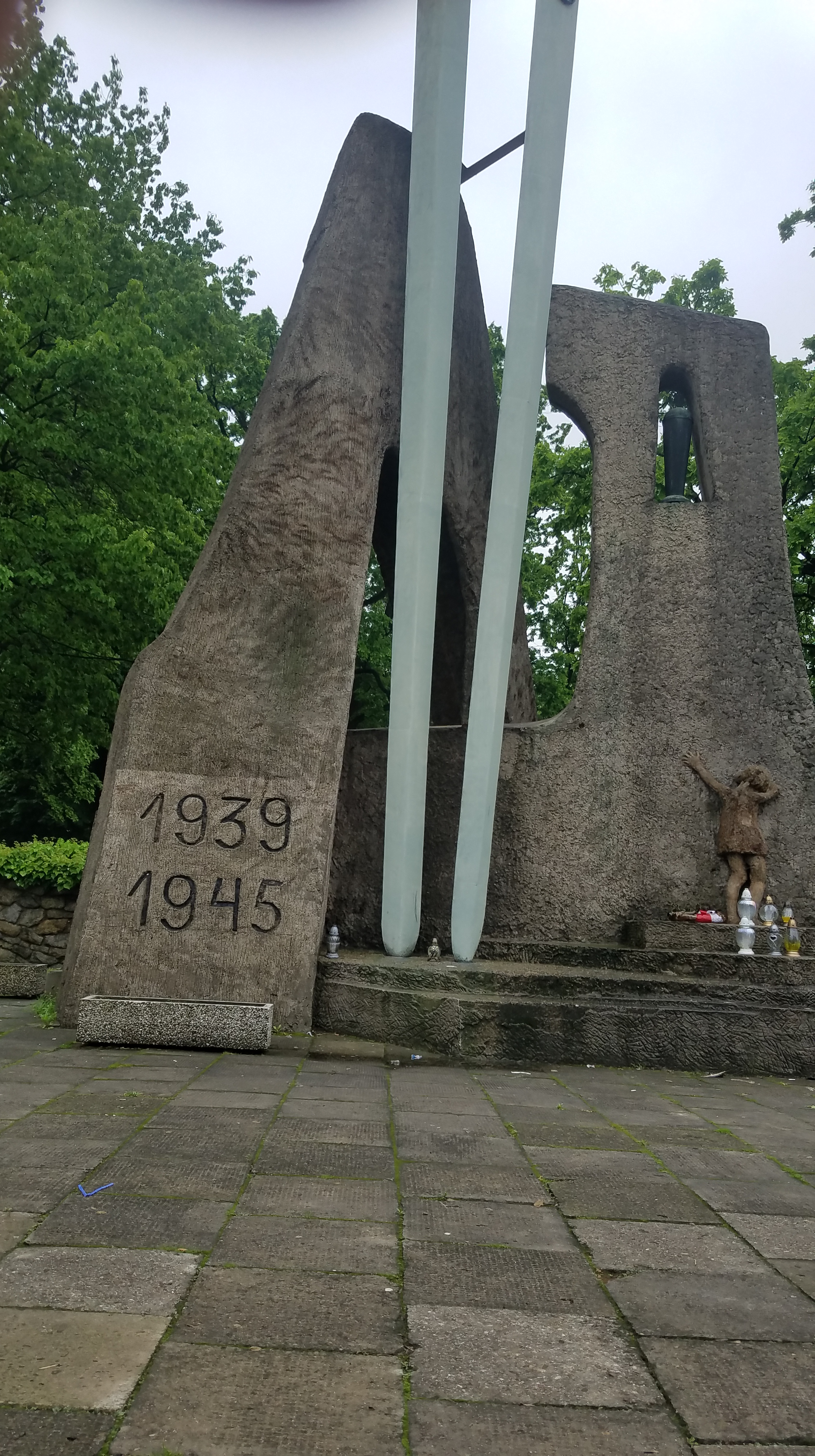
Late morning, we visited the Bełżec memorial of the Bełżec death camp, a place where over 430,000 Jews were exterminated. Previously, the Soviet governance had erected a monument here, of course in typical Soviet era style of crude stone monuments. Unfortunately, this small monument was removed, and only the plaque remains in today’s museum.
Whether or not I choose to compare monuments of history, I am finding that a course such as this both encourages and necessitates such thought. Remembering is based on such interaction with the past; factually speaking, I’m sure most can remember basic information. All this is to say, in our visit to the Belzec monument on Sunday, I was profoundly moved by the thought and symbolic interaction such a place demands. This memorial was put together with such a depth of thought to create an artistic, careful, and simple place honouring the innumerable victims of the region.
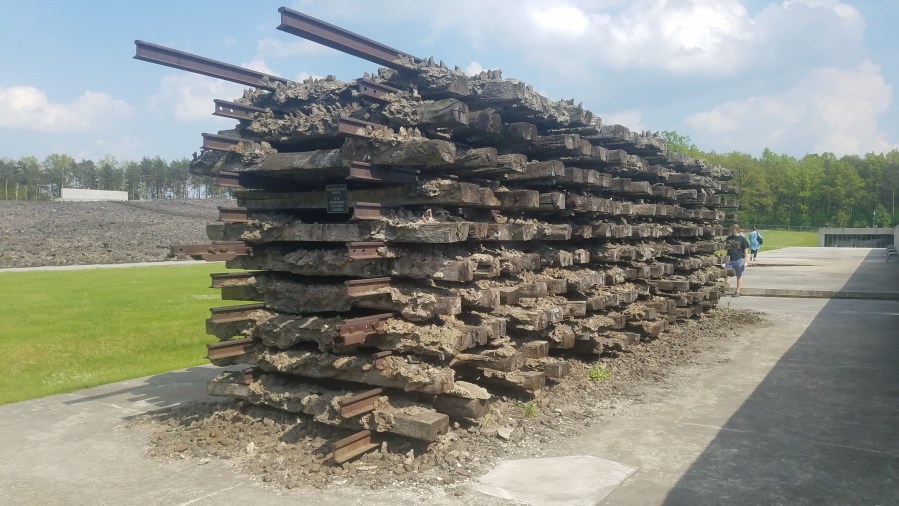
Thus far, in our visits to different museums and camps, I have found the memorials primarily focus on functional aspects of the Nazis’ ideological thought; few properly convey the individual elements of the victims and what their lives meant. It wasn’t the brutality of the experiences that I saw, but the humanity and depth of suffering for the victims. Here there was no reconstruction — not even an attempt to demonstrate the functions of the camp. This was a place focused on the victims of Belzec. The symbolic designing of this monument is hugely responsible for this — from the acoustic chamber, to the aerial view (using lighter and darker construction materials to define certain key locations), even to the funeral pyre constructed of original rail lines from the time.
I found the beauty of such a monument to be in interpretation. Each person receives a unique experience here, while at museums such as Auschwitz, interpretation in minimized in favour of a certain anticipated experience. I received what I expected from Auschwitz. I nearly missed the bus at Belzec.
The Auschwitz camp reconstruction was designed and reconstructed in the Soviet era to show the absolute horrors of Nazism. Of course, being the largest and among the last of the death camps in operation, this site promised to do so very well. Unfortunately, though this is site is widely regarded as a symbol of the Holocaust at large, this presents inaccuracies in retelling the experiences of the victims of the Holocaust generally. I think every person should visit this site, but with the knowledge of what this re-formed history will not be able to offer. Belzec presents a different remembrance of history; calling for active and ongoing thoughtfulness. Here, I repeatedly found myself thinking about the names engraved in the walls at the end of the monument and about the lives each of those names represent. Without reconstructed buildings to demonstrate how the camp functioned during operation, I realized that we are not only studying victims of the Holocaust alone. We are also, and more importantly, memorializing millions of individuals whose lives where horribly altered through this propagation of hate.
Later in the day, this was further impressed upon me in our visit to Izbica. This was a small, primarily Jewish town, home to around 4000 Jews before 1939. During the war, this served as a transfer point for many being deported to Belzec or Sobibor. Furthermore, this town is also the site of a mass killing — at the Izbica Jewish cemetery, where 4000 people, including many of Izbica’s Jewish people, were murdered during the Holocaust. As we walked around the town, I was continually reflecting on the vitality of pre-war Izbica. All of its Jewish occupants are gone. The lists of names on monuments can never do justice to this. What can ever properly reflect these lives? Perhaps the least I can do is offer time to share and reflect on this sobering reality. It was never the numbers that terrified me, but the sheer weight of each individual human life.
Arriving at the end of my first week in Poland, I have a few short thoughts to share:
TRUCK! Oh no! It’s a truck.
Michal, the man who surprised us all
A lunch comprised of peach cheesecake, coffee, and crème brûlée is perfectly acceptable. Perhaps, this is even encouraged if you are willing to live by my standards.
I’m desperately in need of a real coffee. Burnt-tasting black water just doesn’t do it.
A decent beer is still cheaper than a bottle of coke — of course, it’s healthier too, right?
The Poles enjoy regular meals of chicken, potatoes and salad (or some combination of the three, by which they make some excellent pirogies). They make soups out of everything else.
On a more serious note, about this class itself, I’m really enjoying the group dynamics. Every person his able to contribute their thoughts coming from their own interpretations and experiences. Whether studying music, philosophy, math, or geography, we all add to the experience in a very positive manner. I really enjoy hearing what others think about the places we visit, and discussing why we came to such different conclusions. In some museums, it may have been nice to spend some more time working through the exhibits, but thankfully we are privileged to have excellent and extremely knowledgeable guides who effectively bring this history to life.
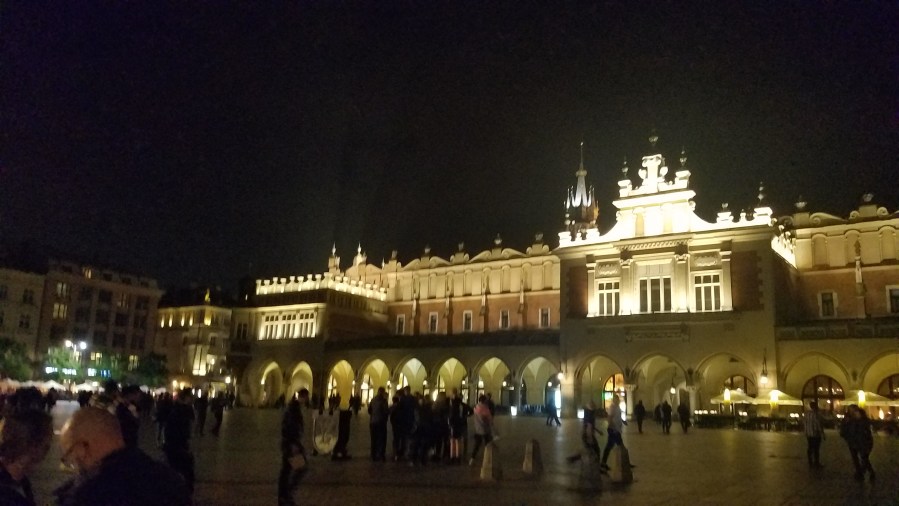
Over the last week, we were bombarded constantly with rain. Nonetheless, I’d say we are all quite content — or maybe just resigned to another week of this. I have acquired two umbrellas, though I actually neglected to bring even one because I hoped for great weather. Saturday is our first full day of sun this week, a great day to explore the rest of the town, shop, and sit on patios to enjoy the sun. Interestingly, a large number of Catholic evangelists emerged as well — in the town square were numerous street preachers, as well as a small choir singing Polish hymns. Though many of us had seen members of the clergy walking around the city, this was the first time I really noticed how pervasive Catholicism was in their society.
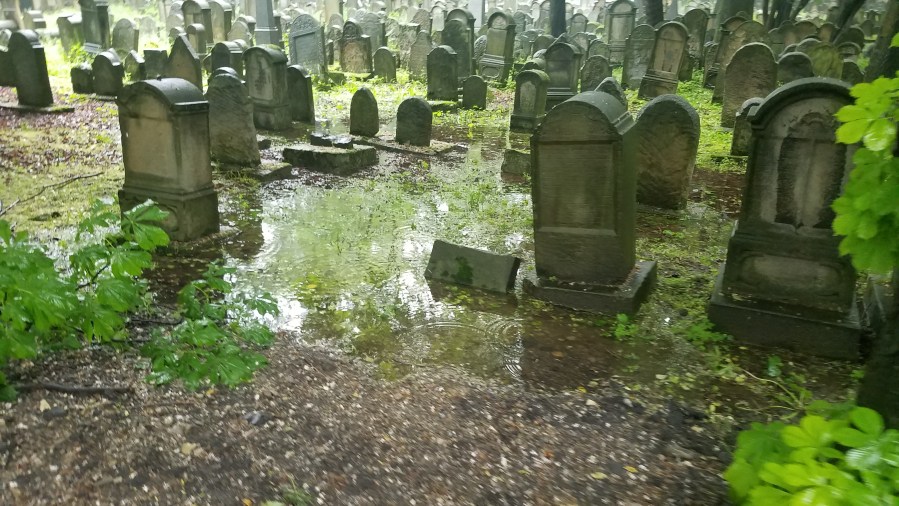
Of the whole week, I found some of the saddest moments to be in visiting Jewish cemeteries throughout the region. The distinctions between Catholic and Jewish cemeteries are both obvious and astounding. The headstones are absolutely incomparable and the maintenance of the grounds (really, the lack thereof) is heartbreaking. These differences show the forgotten part of Polish history. Who can possibly care for these places? Again and again, this massive absence appears to me. Not only because of the numbers of headstones in all of these cemeteries, but also because most seem to have been neglected for the last half century — or perhaps it was 74ish years. I found this to be a definitive fact pointing directly at the mass grave sites we visited; these were the places where whole families were executed together, one person after the next. As we also discovered in Tarnow, Jewish cemeteries were once vibrant places, filled with colours and bright headstones. Today, very few are taken care of, if ever visited. The execution of people by the millions left behind so much more than corpses, ashes, and bone; it left behind a huge societal void that continually returns to our minds.
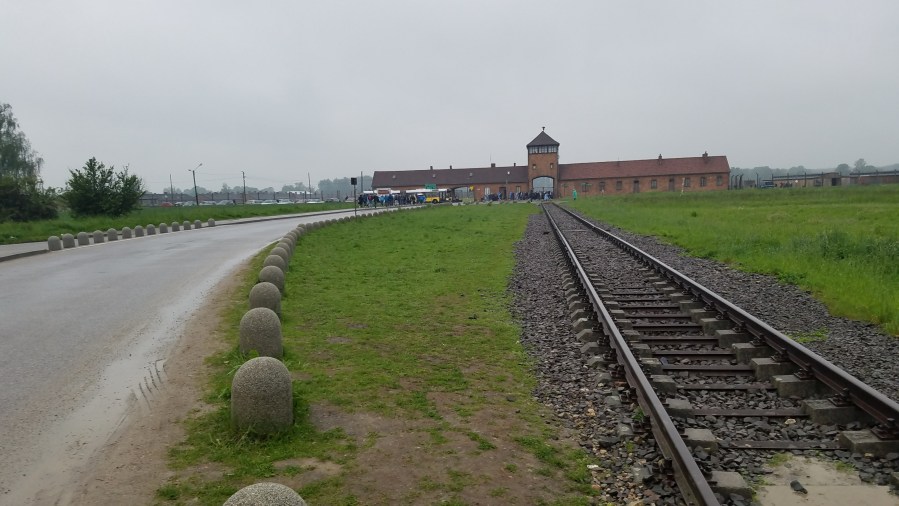
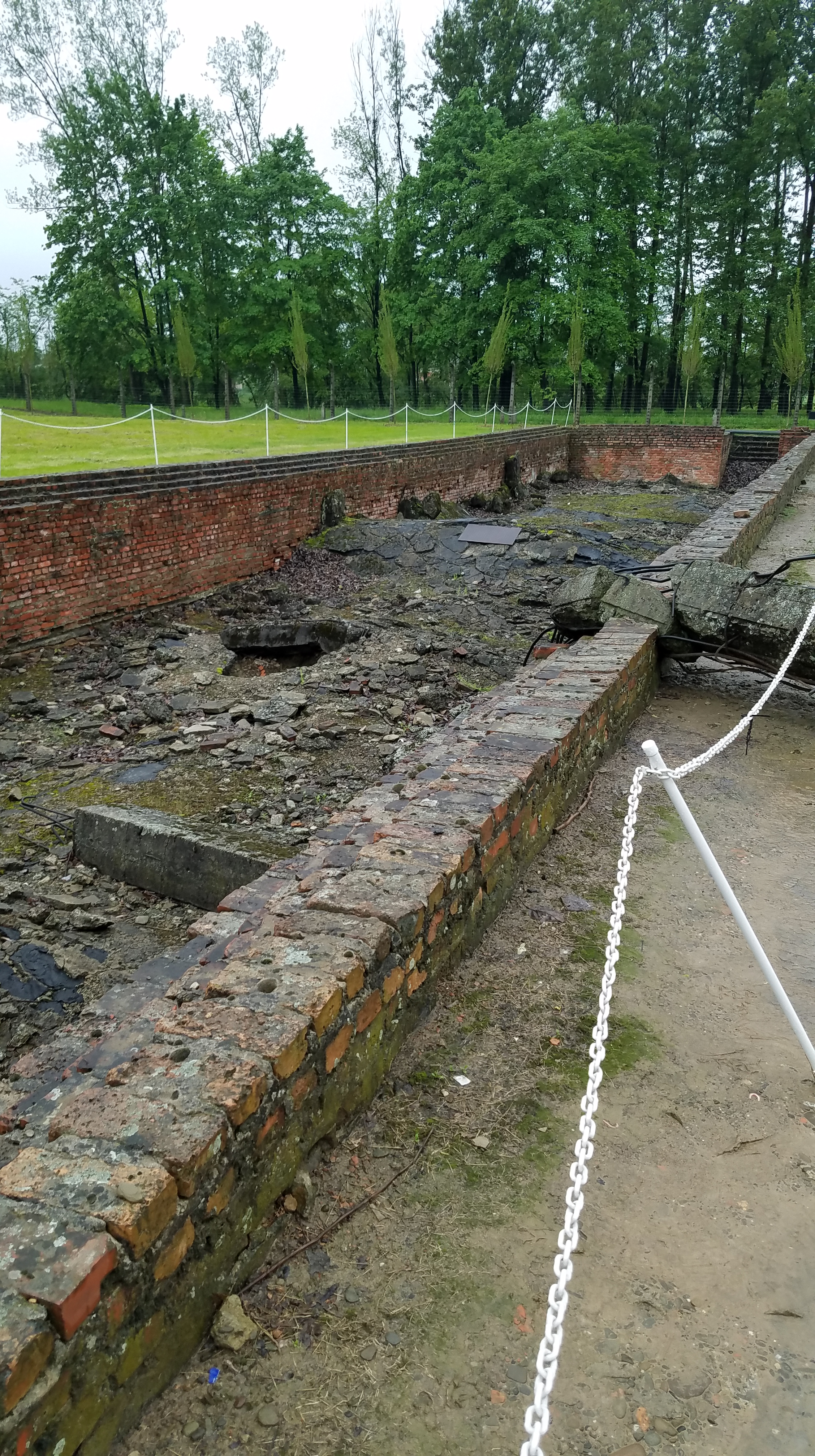
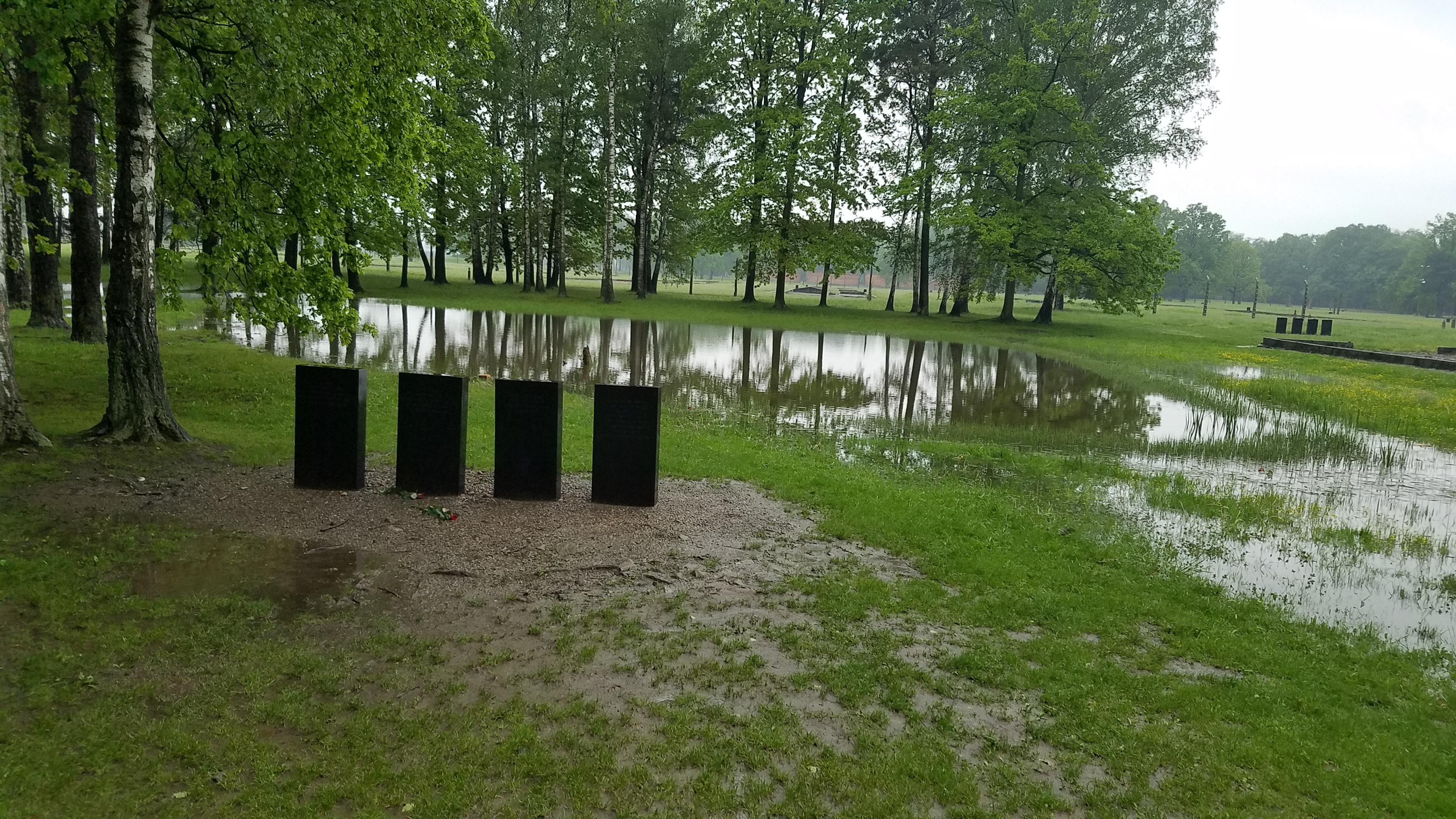
After leaving the main camp, Auschwitz I, we travelled a few minutes down the road to Auschwitz II-Birkenau — the main site of the Nazi extermination of the Jews. My first thoughts of Birkenau were that it looks like a graveyard. Only the foundations of the former camp remain, sometimes even submerged under water. However, this is also a literal graveyard for those burned in the crematoria — these ashes were spread throughout the camp, forcing the living to be physically walking over their own dead. I found this even more terrifying, considering the camp has largely been preserved in its original post-war condition, although much dismantling of barracks occurred in the Soviet era. Nonetheless, this aligns with respecting the Jewish laws about exhuming graves; leaving the grounds means for the most part, these are original artifacts of the Holocaust.
I found Auschwitz still offers a very strong representation of the overall dynamics in the history of the Holocaust, and that this memorial was designed to evoke emotion over the horrors of the Holocaust. However, it does not offer the whole history and the reality of the expanse of the Shoah, or the full terror of this ideological mass killing. The remains of the gas chambers and crematoria, being original, are original artifacts of the Holocaust. This is why I really appreciated what the reconstruction efforts at Birkenau preserved. For example, building off of the original foundation and floor, a building was re-erected to show the operation of the Nazis dehumanization efforts and the processing of prisoners. Yet, they placed a glass floor above the original floor, both to protect it and to respectfully interact with the history of the space.
Often, when learning about the Holocaust we hear the phrase “Never again.” Birkenau is in ruins — gone, demolished, flattened — speaking to this as a literal form of these words. It cannot happen if nothing remains. Yet, we need to move beyond this to consider contemporary crises as well — by this, I mean that we need to work towards “nobody again being subject to such hatred.” When walking around the outskirts of the camp, I noticed headstones placed throughout the camp in fours, near each of the front of each crematorium. I found these to be a very powerful monument to those whose ashes were spread throughout the area — these people have no set grave, but were scattered. These monuments all have the same inscription in different languages: “To the memory of the men, women, and children who fell victim to the Nazi genocide. Here lie their ashes. May their souls rest in peace.”
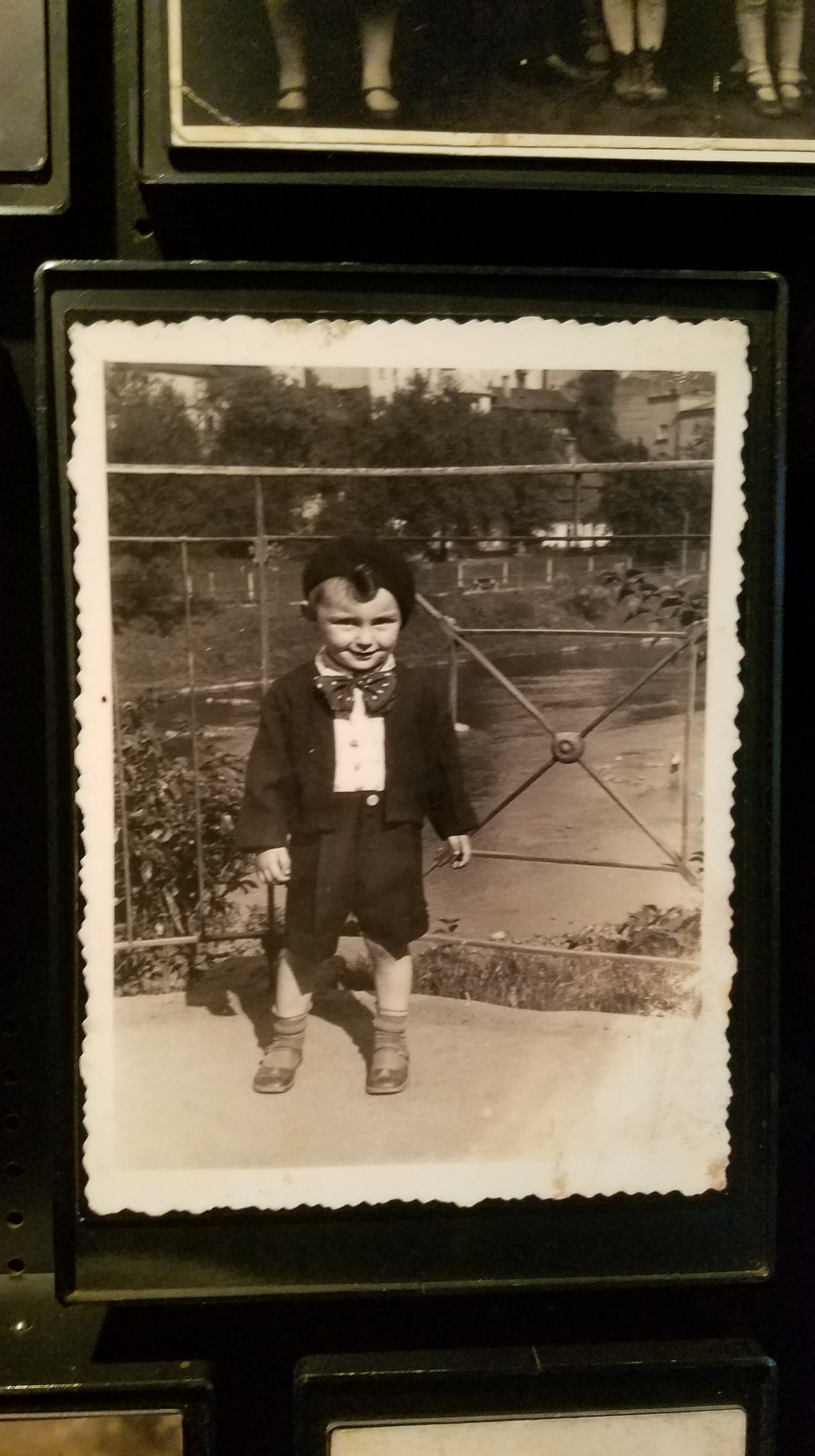
I met a young boy at Birkenau. There is no record of his name, no information available about the dates of his birth or death. All that remains is this image of him. Someone’s own child. A beautiful boy who died because he was born into a Jewish family. He was condemned because he was too young to possibly be sent to a labour camp. This reminded me of the white room at Auschwitz where only children’s art was shown —an absolutely heartbreaking monument to the children of Auschwitz and of the Holocaust. And there were millions like him, who died not even recognized as people, as a child. They, children with their own lives and families, were seen as less than animalistic.
In visiting small Jewish shtetls and even larger towns on Friday, I began to realize the extent of Jewish presence and their current absence. In Tarnów, we found a fully Catholic society — the single last Jewish man died in the mid-2000s after moving back to Tarnów after the war. These villages were previously centres of Jewish culture and life — often the Jewish community lived in the village, and the rest of the Polish community would live on farms in the surrounding area. These communities were devastated by the arrival of the Nazis, and because these villages were small and too far from the main rail lines, were marched or driven to nearby forests and murdered en masse for days at a time. It was too expensive to even consider sending thousands of people to death camps; the countryside is effectively filled with mass graves and execution sites.
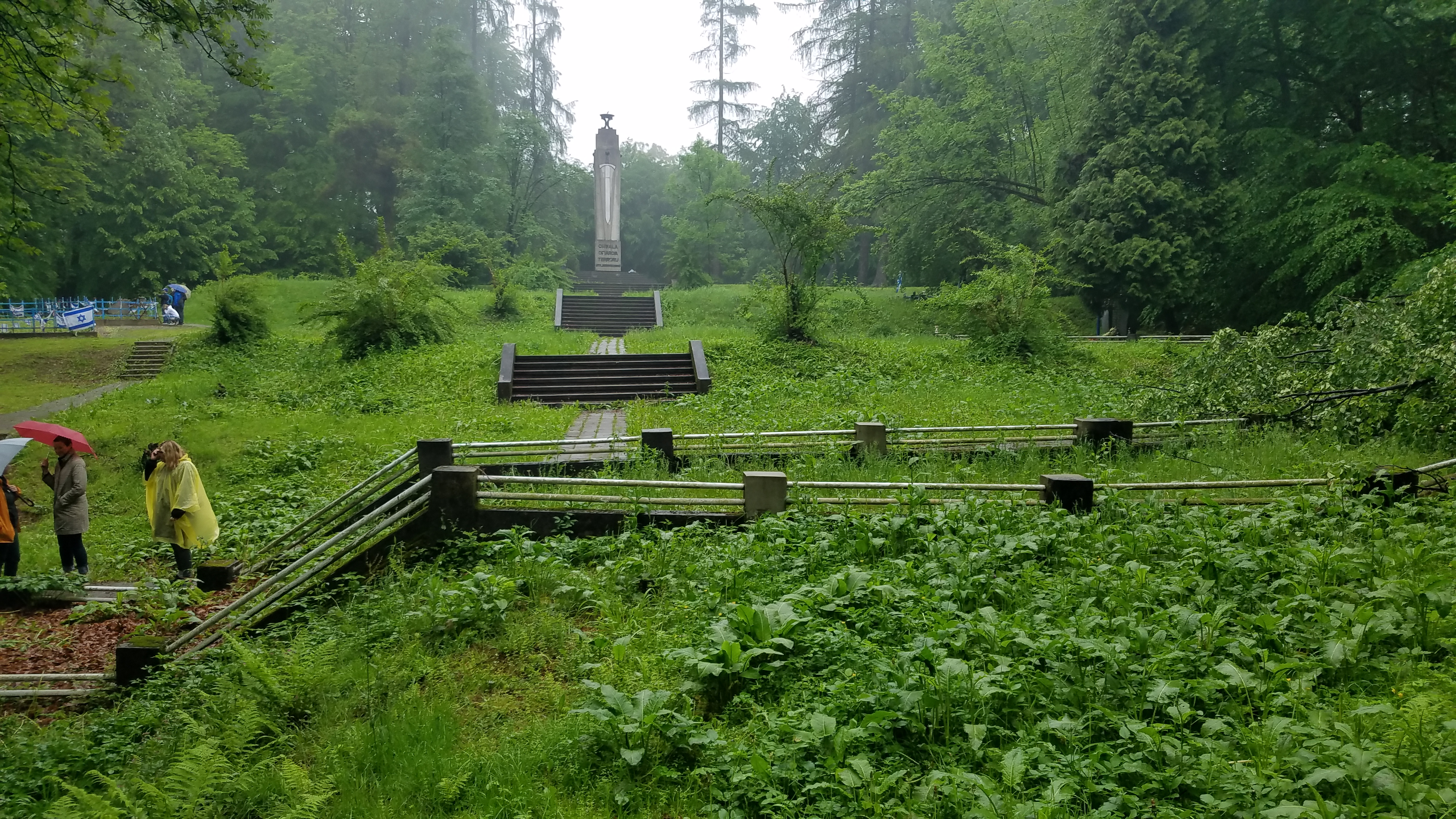
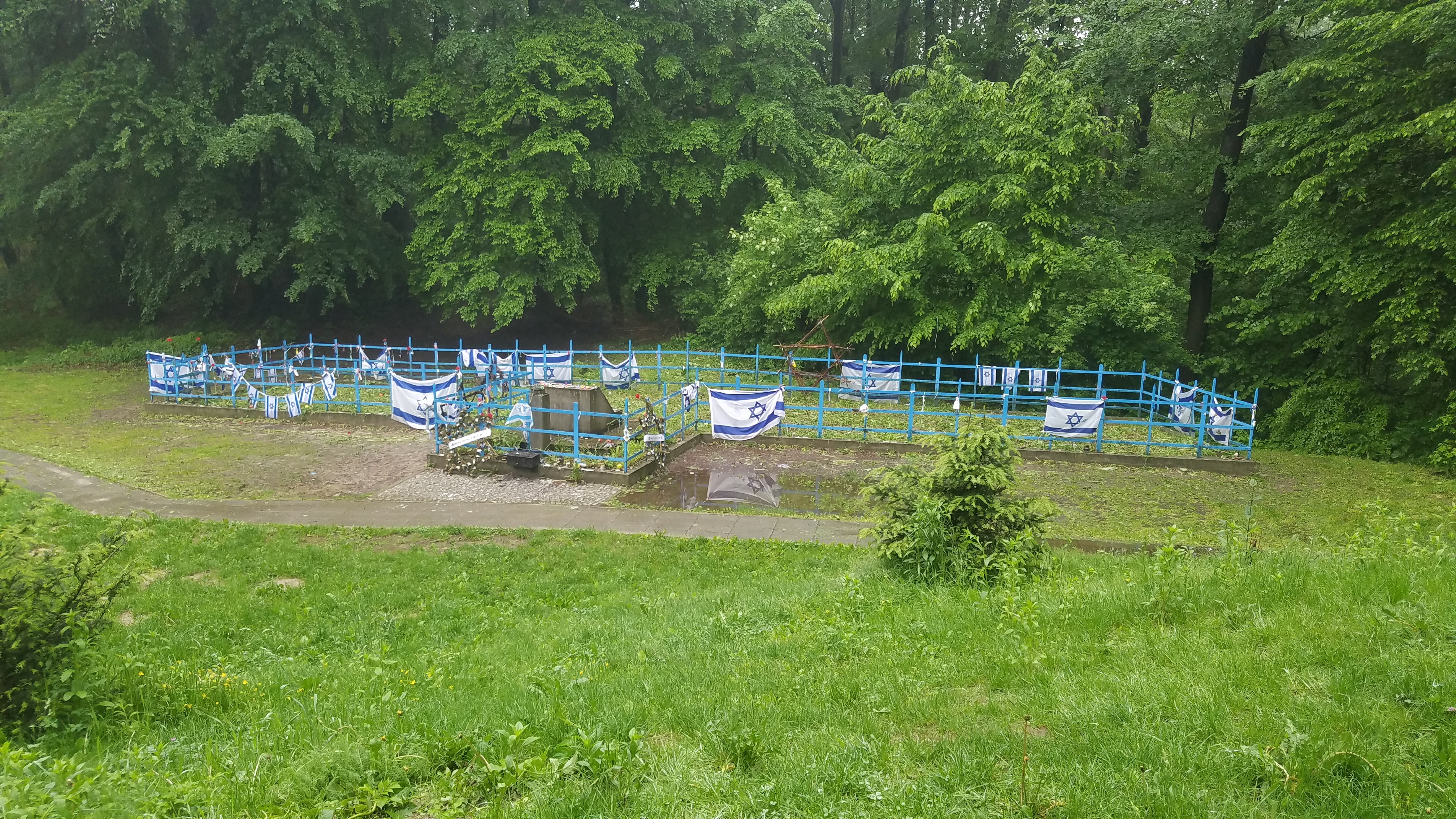
The first site we visited was a monument two km outside the village. This was the site of the massacre of Tarnów’s Jews — probably nearly 8000, including over 800 small children. Thousands of others were murdered in similar places, on the outskirts of the town. At this first site, I was overwhelmed by the numbers of young children killed in the later years of the war. Around the mass grave of these 800 children, were various small toys, flowers, notes, and candles.
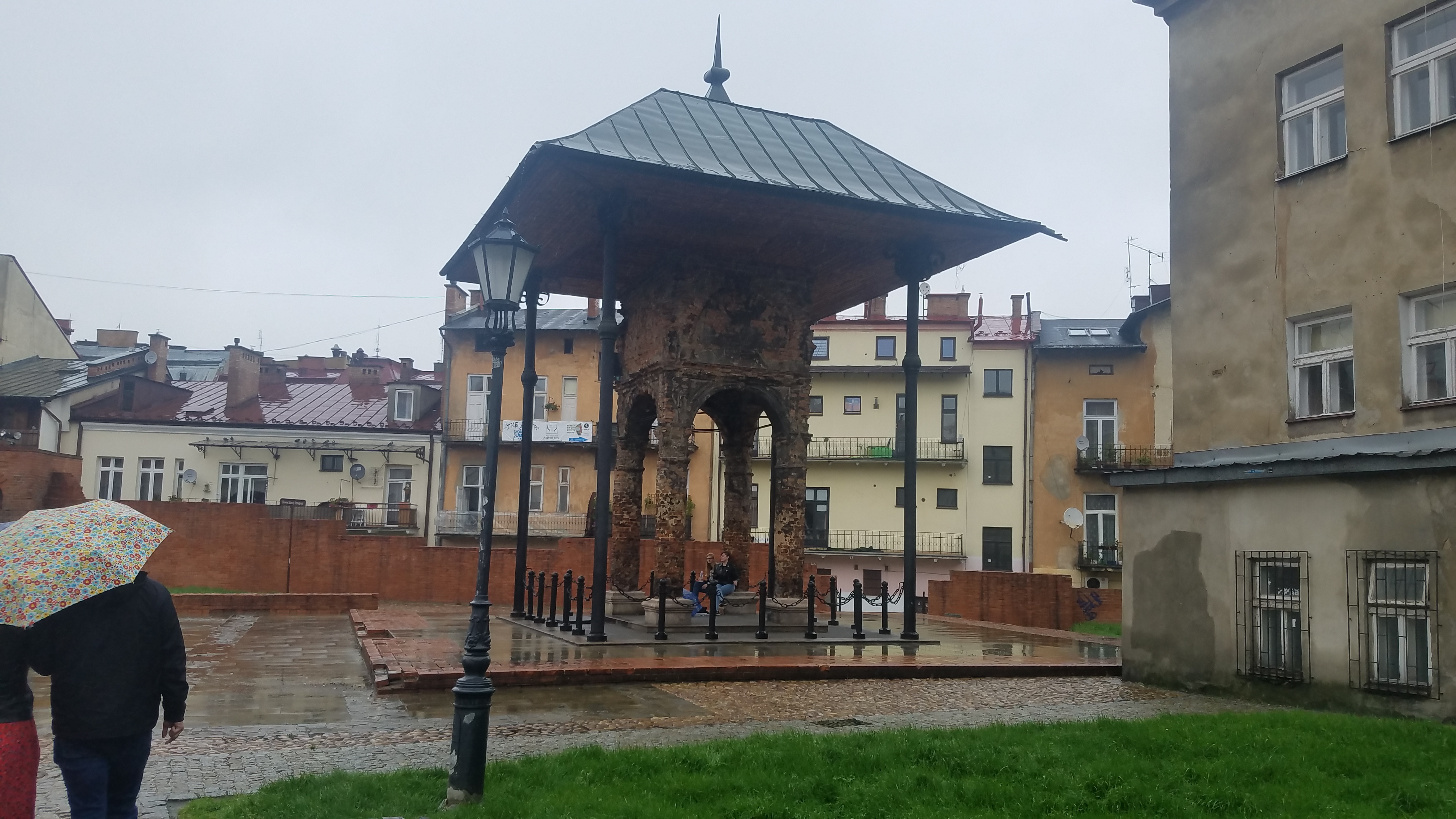
The touring of small towns demonstrated that the Polish-Jewish history is very complex. These regions were once populated by Jews and Poles alike, living in the same villages. Today, many places like Tarnów tell the often forgotten parts of the history of WW2. The Jewish people were not only under threat from the Nazi police, but also from their Polish neighbours. I really saw this when we visited the site of a former synagogue that was torched in the early part of the war. The size of the building — outlined in the courtyard with a coloured stone — was quite large, and likely would have been ornately decorated inside.
Walking around the village as tourists felt completely different — almost strange — as compared to Krakow. Krakow is a tourist destination. Jewish shtetls are rarely a place tourists would choose to visit. Yet, it was fascinating to see how much history is situated in a small region of Poland. Memorials, monuments, plaques, and museums of historic buildings are found throughout the town. However, it was strange seeing modern-day inhabitants of Tarnów going about their work, accustomed to these monuments, but strangely making us feel awkward about visiting as a student group to hear about their history. Are they looking at us with a sense of responsibility, or are they simply curious why we would choose to visit such a town? I can’t say I would not look curiously at a tourist group if they came to visit my hometown, but there isn’t nearly as much evocative history there. Tarnów has centuries of history to contend with as well. Interestingly, some of the residents have taken it upon themselves to erect individual monuments to their history — including acknowledging their own property as formerly owned by Jewish peoples. I found this to be a very appropriate way to demonstrate interaction and responsibility for the history of those grounds. Of course, this does not mean every property needs monuments and memorials, but nonetheless, such actions demonstrate efforts of the Polish people to acknowledge the present absence in their community.
We also visited a very large Jewish cemetery in the heart of Tarnów. This cemetery was a mass grave site, a WW1 cemetery, and a long-term cemetery for the Jewish residents of the city. I was saddened to see the disrepair of the cemetery, even on some fairly recent headstones. Furthermore, the previous pathways through the cemetery had been effectively used as burial grounds as these were the only places that could be safely identified as not being another grave site.
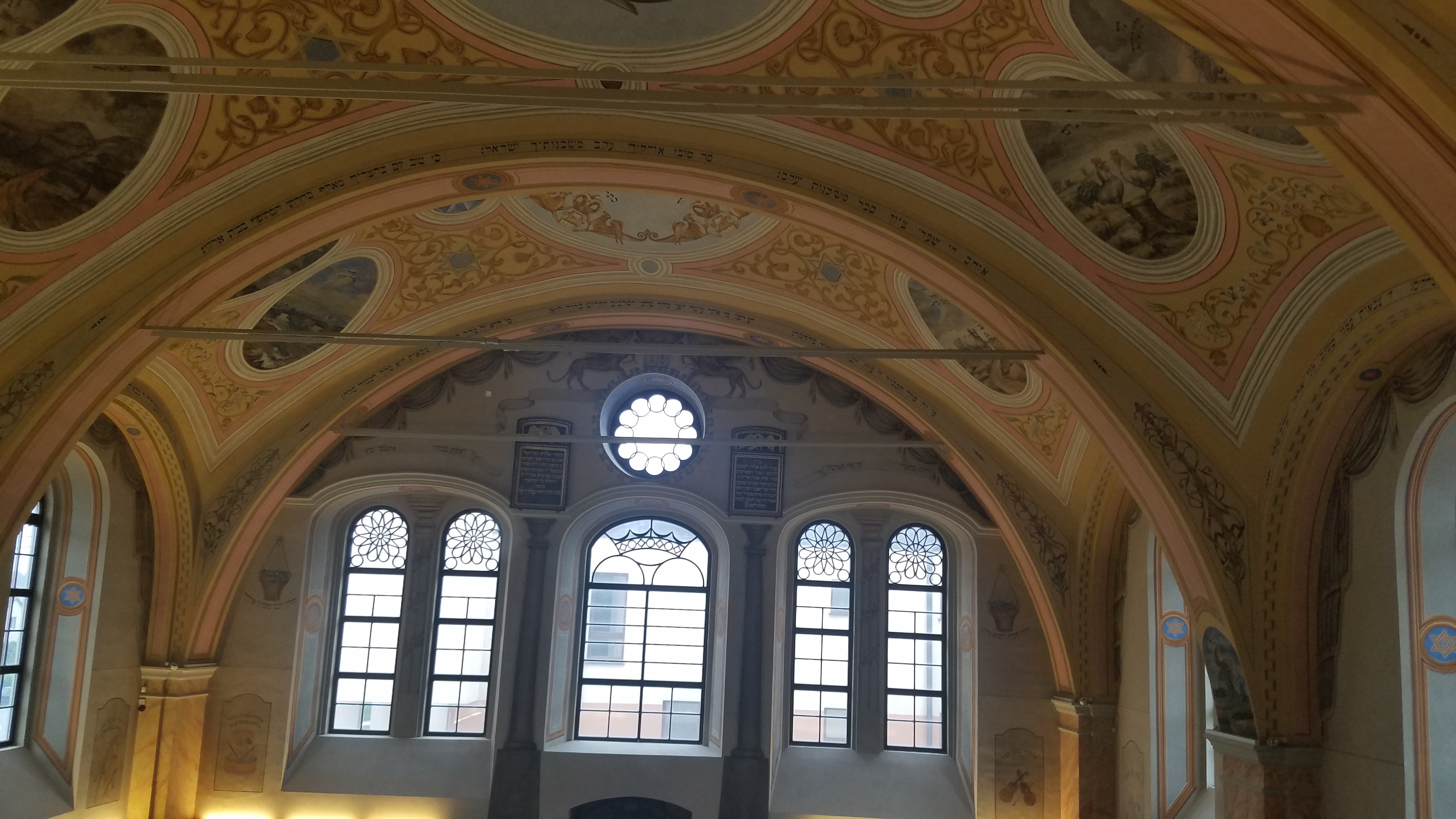
Dabrowa Tarnowska: we couldn’t make it to Bobowa due to the weather conditions and time constraints. This is a much smaller town, but also not home to any Jewish community. In 2015 a Jewish synagogue here was renovated, transforming the building into a museum. Of what, none of us were quite sure — our guide specifically wanted to show us this place for that reason. I’ve never seen such an exhibit of local history — though this was supposed to be a museum of Jewish history in the town, this was an exhibition of everything available. This museum, a restored Jewish synagogue, lost nearly all credibility with its full refurbishing into a modern-looking building. There were still various interesting exhibits, but these would have been better displayed in a different manner, perhaps one showing the history of the town itself, not in between exhibits of Jewish history.
This was a museum unlike any I have ever seen. Inside, I saw everything from Polish culture to WW2 artifacts and from Torah scrolls to stained glass and decorative windows. This was a 4 year old synagogue, not nearly even a 19th century architectural masterpiece. Demolishing and modernizing the former Jewish synagogue doesn’t seem to offer justice to the historic remembrance of those who worshipped there. I think much better things could have been done with the grant received to restore the building — there is a responsibility left to the community to remember the huge absence of their town. Who else is there to carry on their remembrance when whole families and Jewish communities were wiped out, besides the rest of the community who knew and lived among them? There is nobody else left.
I won’t be your Polish meteorologist today, but here are some basic observations. Patterns persist and water levels rise. Rain keeps falling (as everything subject to the laws of gravity has, at least since 1687 when gravity was invented).
Uwaga! Dzis w Malopolsce przechodzi fala wezbraniowa na Wisle – kulminacja w piatek i sobote. Nie zblizaj sie do rzek. Stosuj sie do polecen sluzb.
Uwaga! Intensywne opady deszczu i burze. Mozliwe lokalne podtopienia i przerwy w dostawie pradu. Nie chowaj sie pod drzewami. Jesli mozesz, zostan w domu.
On the bus heading to Osweincim now — the city near Auschwitz camp — to visit the Auschwitz Jewish Center, before travelling to Auschwittz camp 1. I was just thinking: we are travelling in the rain and cold, but at least we are comfortably dry in this coach bus. Additionally, we only have a 90 minute drive from our dormitory — compare this the travel well over 1 million people underwent on their way to Auschwitz — not in a coach for a short drive, but crammed in a suffocating cattle car for days. I cannot even begin to imagine the dehumanization and torture of the trip alone — even in transport, many died — mostly the weak, elderly, and children. Thankfully the transport could pay itself off, right?
Osweincim used to be a town with nearly 8,000 Jewish inhabitants. Today, these is not one. Zero. The Holocaust was not just a big city phenomenon. This was a plan with worldwide intent — many of these camps were under construction, expanding and developing new sections, throughout the war. Even in the last six months of the war, plans were being made for the expansion of Auschwitz-Birkenau. This place was not efficient or effective enough on its own. The reason why such sites of deaths ere developed was strangely human: the Nazis were afraid that the repetitive killing of people, especially women and small children, was both too expensive and traumatizing for those on the trigger end. It was too expensive, even when the possessions of their victims were exploited, even when they had taken everything from them, even when they gave these people nothing but hatred. Far too expensive, this was still deemed necessary — the Holocaust was about ideology not business. However, there were ways to gain back some of the losses — waste could not be tolerated. Exploiting their possessions, labour, and even their hair was obviously necessary to pay for all this. Ideology demanded it.
I…will commit to concentration camps those who still think they can continue to treat animals as inanimate property…This does not correspond to the German spirit and most decidedly it does not conform to the ideas of national socialism.
Hermann Göring, 1939.
People often say the victims of the Holocaust were treated like animals. The Nazis however, were naturally a very progressive people. Animal rights activism and laws improved tremendously during the time of the Third Reich — of special concern was the issue of kosher slaughter and animal experimentation. Kosher slaughter was deemed to be too painful and cruel for animals to suffer while dying, and animal experimentation was likewise viewed as unnecessary and unduly causing pain. Those same principles were strangely reversed with all the victims of the Holocaust, and specifically with the Jewish people. The intent was to remove all humanity and to transform them into something unworthy of living — far below that of animals living in the Third Reich.
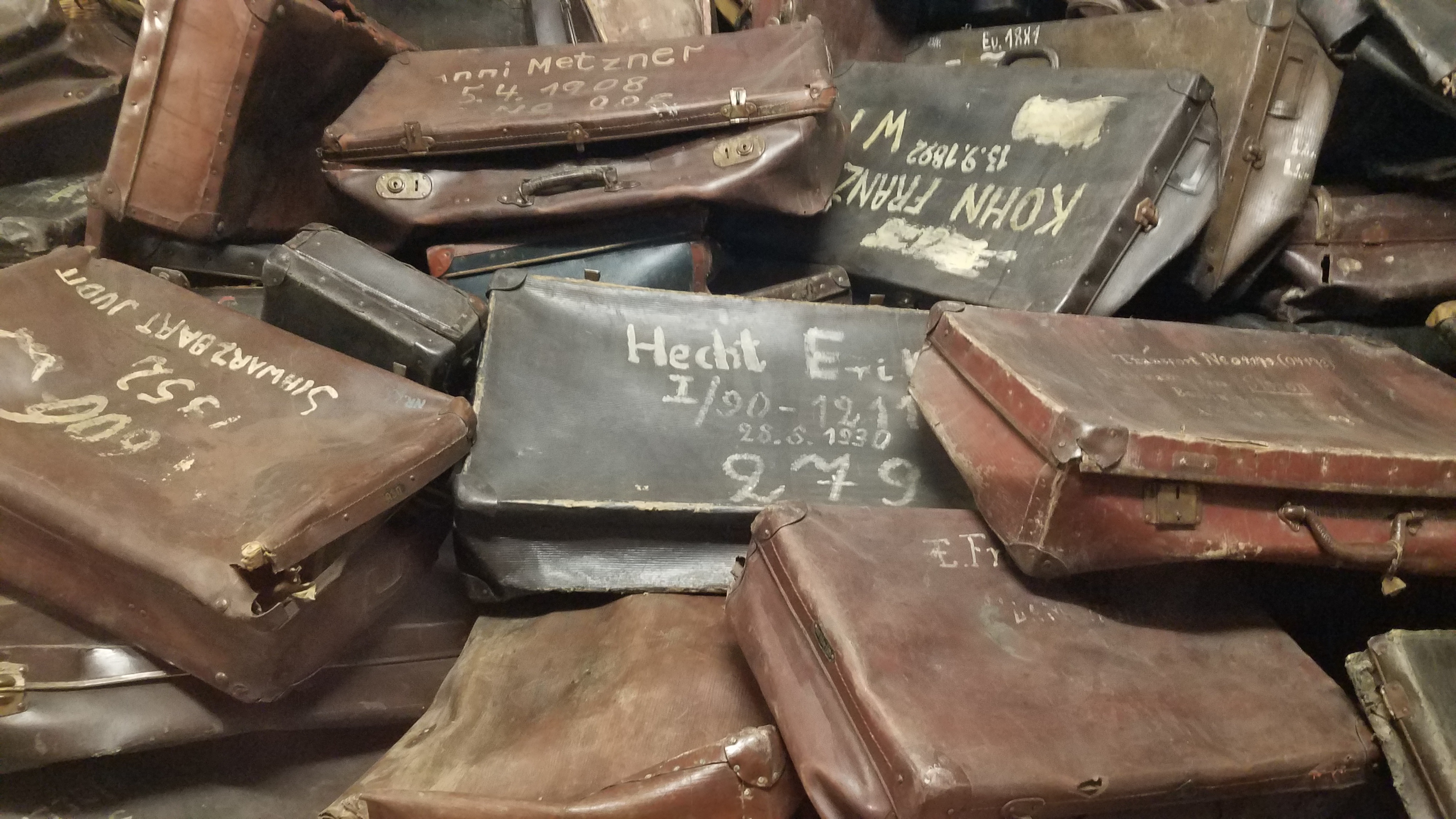
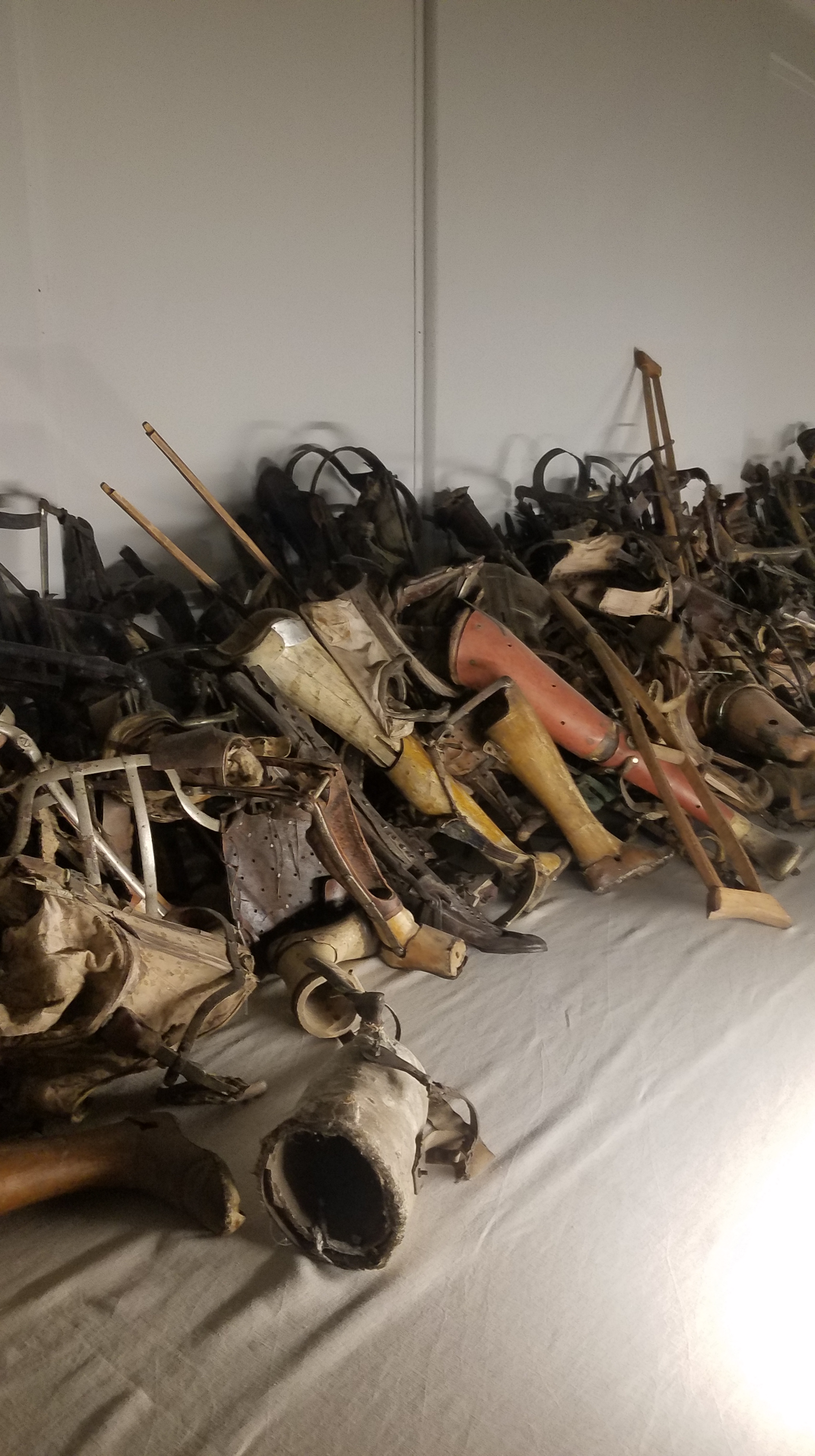
I’m glad we came together as a group of scholars. We’ve studied this history already, and know what we were walking through, at least in part. So many elementary school classes were on school trips at Auschwitz. As we discussed in our classes, at least part of the camp has been reconstructed, and is not factually all correctly done. I found it appeared to be a very different experience for students than for tourists. I was disappointed with the museum in that regard — the mentality of seeing everything as quickly as possible and moving on was evident in so many people. I don’t know that I saw half of the camp. How does pushing people through allow for reflection, for acknowledgement, or for moral conviction? Seeing and not understanding is a terrifying thing. This place is a graveyard — people don’t take selfies in a graveyard, don’t walk through a graveyard without considering there are other people’s family members buried there. While the historic artifacts and buildings are the same, I think we saw things differently.
For me, there was a strong sense of responsibility involved — a responsibility to learn about these people, preserve their memories, and ensure that they are remembered. I don’t want to remember them as just victims of the Holocaust — these were all individual people with equally individual lives. So many people seemed to just want to see what it was like and move on to the next exhibit. But I found the most powerful parts of the museum to be the pictures of children, the book of names, and the scratches in the concrete wall of the gas chamber. How can we ever get to know them — all we have left are their images, names, and some physical scars of their anguish. What would Poland, Europe, and the world be like today if each of these people had not been hated, despised, and murdered? I’m not trying to start talking about counterfactuals, but I just wonder how much of the future died in the Holocaust. How much good could have been done by those people? As such, the difference between Auschwitz as a tourist and memorial site becomes clear.
Top ten things to do in Poland: Auschwitz is a guaranteed part of that bucket list. It’s a fascinating place. I’d give it a solid 5/5. Additional comments: “Would not recommend — I hope nobody ever does recommend it. However, I do say go. No picture will ever offer the same understanding as seeing the same things this massive number of people saw as they died. This is a museum that evokes the emotion of remembering the past. You cannot walk out of the gas chambers unchanged, especially when the 1.2 million victims of Auschwitz did not leave either the camp or the chambers alive. Why are there so few survivors? The answer is simple — the camp was well-designed to ensure maximum efficiency. But I think the museum was designed the same way (though perhaps not by choice) — being an immensely popular tourist attraction, the place tries to keep people moving through to see the rest of the exhibits’ I think more emphasis needs to be given about the reality of respecting the site as a graveyard memorial and not so much a reconstructed camp.
If only the bricks and trees could talk. I walked same roads and saw the same scenes and landscapes. But I didn’t experience the same thing any person at Auschwitz did, and I could hardly begin to imagine the horrors they lived through and died among. So much death and pain. I think I saw more of a memorial at Birkenau than at the Auschwitz camp 1. I found the ruins there to speak much more of the truth. These were never reconstructed, and the camp remains almost completely as it was, aside from the effects of the elements.
I’ll have to continue this later, probably tomorrow. I’m throughly exhausted, and I could say so much more.
 Into That Darkness — and Out of it too...