Thursday, May 23
I won’t be your Polish meteorologist today, but here are some basic observations. Patterns persist and water levels rise. Rain keeps falling (as everything subject to the laws of gravity has, at least since 1687 when gravity was invented).
Uwaga! Dzis w Malopolsce przechodzi fala wezbraniowa na Wisle – kulminacja w piatek i sobote. Nie zblizaj sie do rzek. Stosuj sie do polecen sluzb.
Uwaga! Intensywne opady deszczu i burze. Mozliwe lokalne podtopienia i przerwy w dostawie pradu. Nie chowaj sie pod drzewami. Jesli mozesz, zostan w domu.
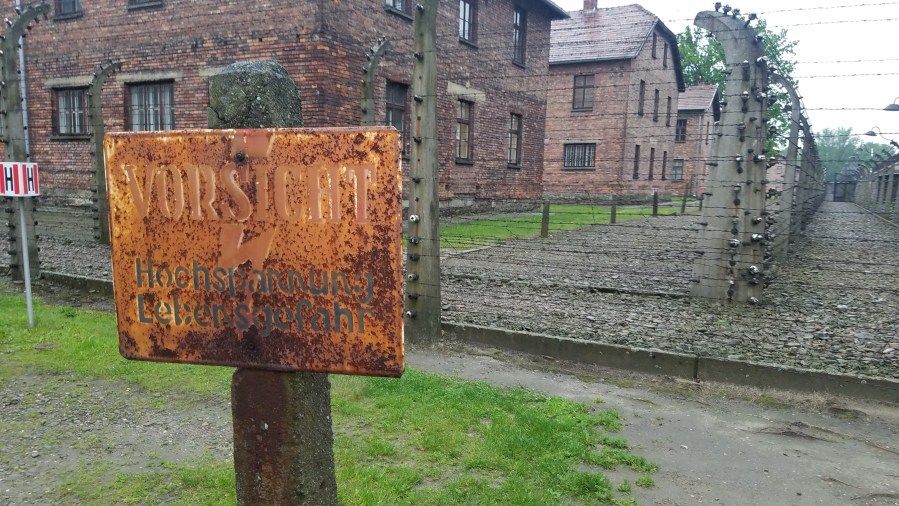
On the bus heading to Osweincim now — the city near Auschwitz camp — to visit the Auschwitz Jewish Center, before travelling to Auschwittz camp 1. I was just thinking: we are travelling in the rain and cold, but at least we are comfortably dry in this coach bus. Additionally, we only have a 90 minute drive from our dormitory — compare this the travel well over 1 million people underwent on their way to Auschwitz — not in a coach for a short drive, but crammed in a suffocating cattle car for days. I cannot even begin to imagine the dehumanization and torture of the trip alone — even in transport, many died — mostly the weak, elderly, and children. Thankfully the transport could pay itself off, right?
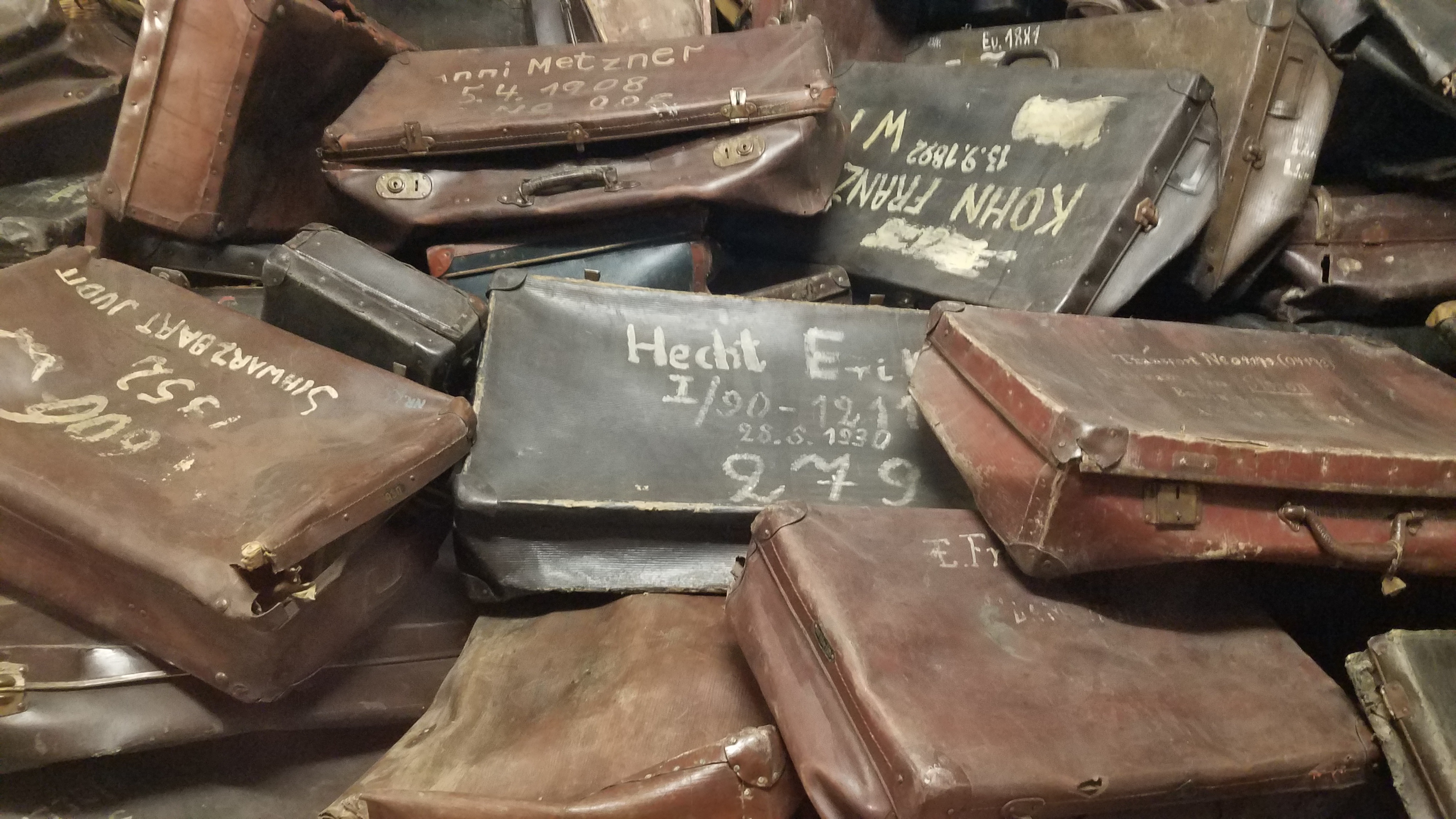
Osweincim used to be a town with nearly 8,000 Jewish inhabitants. Today, these is not one. Zero. The Holocaust was not just a big city phenomenon. This was a plan with worldwide intent — many of these camps were under construction, expanding and developing new sections, throughout the war. Even in the last six months of the war, plans were being made for the expansion of Auschwitz-Birkenau. This place was not efficient or effective enough on its own. The reason why such sites of deaths ere developed was strangely human: the Nazis were afraid that the repetitive killing of people, especially women and small children, was both too expensive and traumatizing for those on the trigger end. It was too expensive, even when the possessions of their victims were exploited, even when they had taken everything from them, even when they gave these people nothing but hatred. Far too expensive, this was still deemed necessary — the Holocaust was about ideology not business. However, there were ways to gain back some of the losses — waste could not be tolerated. Exploiting their possessions, labour, and even their hair was obviously necessary to pay for all this. Ideology demanded it.
I…will commit to concentration camps those who still think they can continue to treat animals as inanimate property…This does not correspond to the German spirit and most decidedly it does not conform to the ideas of national socialism.
Hermann Göring, 1939.
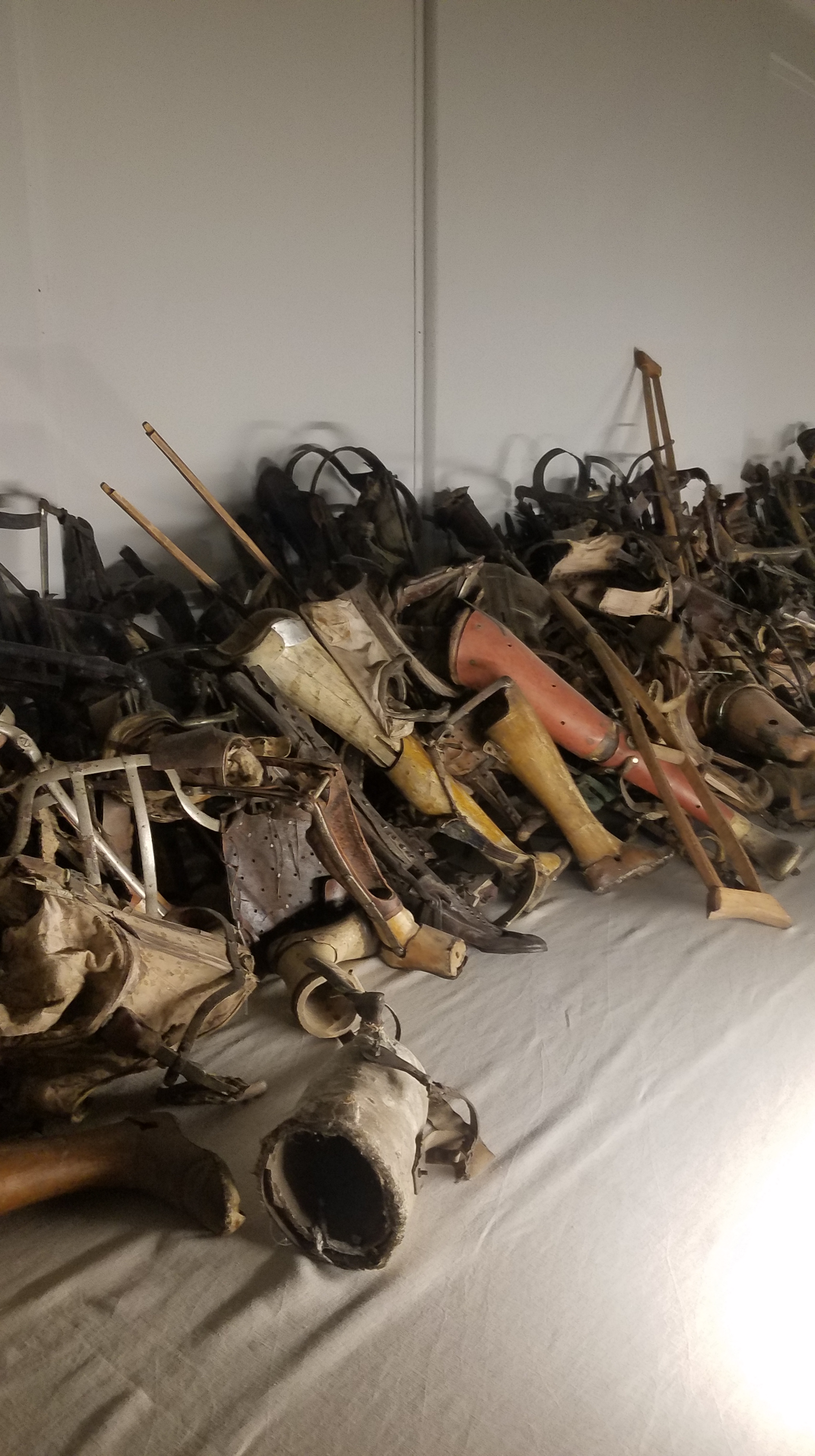
People often say the victims of the Holocaust were treated like animals. The Nazis however, were naturally a very progressive people. Animal rights activism and laws improved tremendously during the time of the Third Reich — of special concern was the issue of kosher slaughter and animal experimentation. Kosher slaughter was deemed to be too painful and cruel for animals to suffer while dying, and animal experimentation was likewise viewed as unnecessary and unduly causing pain. Those same principles were strangely reversed with all the victims of the Holocaust, and specifically with the Jewish people. The intent was to remove all humanity and to transform them into something unworthy of living — far below that of animals living in the Third Reich.
I’m glad we came together as a group of scholars. We’ve studied this history already, and know what we were walking through, at least in part. So many elementary school classes were on school trips at Auschwitz. As we discussed in our classes, at least part of the camp has been reconstructed, and is not factually all correctly done. I found it appeared to be a very different experience for students than for tourists. I was disappointed with the museum in that regard — the mentality of seeing everything as quickly as possible and moving on was evident in so many people. I don’t know that I saw half of the camp. How does pushing people through allow for reflection, for acknowledgement, or for moral conviction? Seeing and not understanding is a terrifying thing. This place is a graveyard — people don’t take selfies in a graveyard, don’t walk through a graveyard without considering there are other people’s family members buried there. While the historic artifacts and buildings are the same, I think we saw things differently.
For me, there was a strong sense of responsibility involved — a responsibility to learn about these people, preserve their memories, and ensure that they are remembered. I don’t want to remember them as just victims of the Holocaust — these were all individual people with equally individual lives. So many people seemed to just want to see what it was like and move on to the next exhibit. But I found the most powerful parts of the museum to be the pictures of children, the book of names, and the scratches in the concrete wall of the gas chamber. How can we ever get to know them — all we have left are their images, names, and some physical scars of their anguish. What would Poland, Europe, and the world be like today if each of these people had not been hated, despised, and murdered? I’m not trying to start talking about counterfactuals, but I just wonder how much of the future died in the Holocaust. How much good could have been done by those people? As such, the difference between Auschwitz as a tourist and memorial site becomes clear.
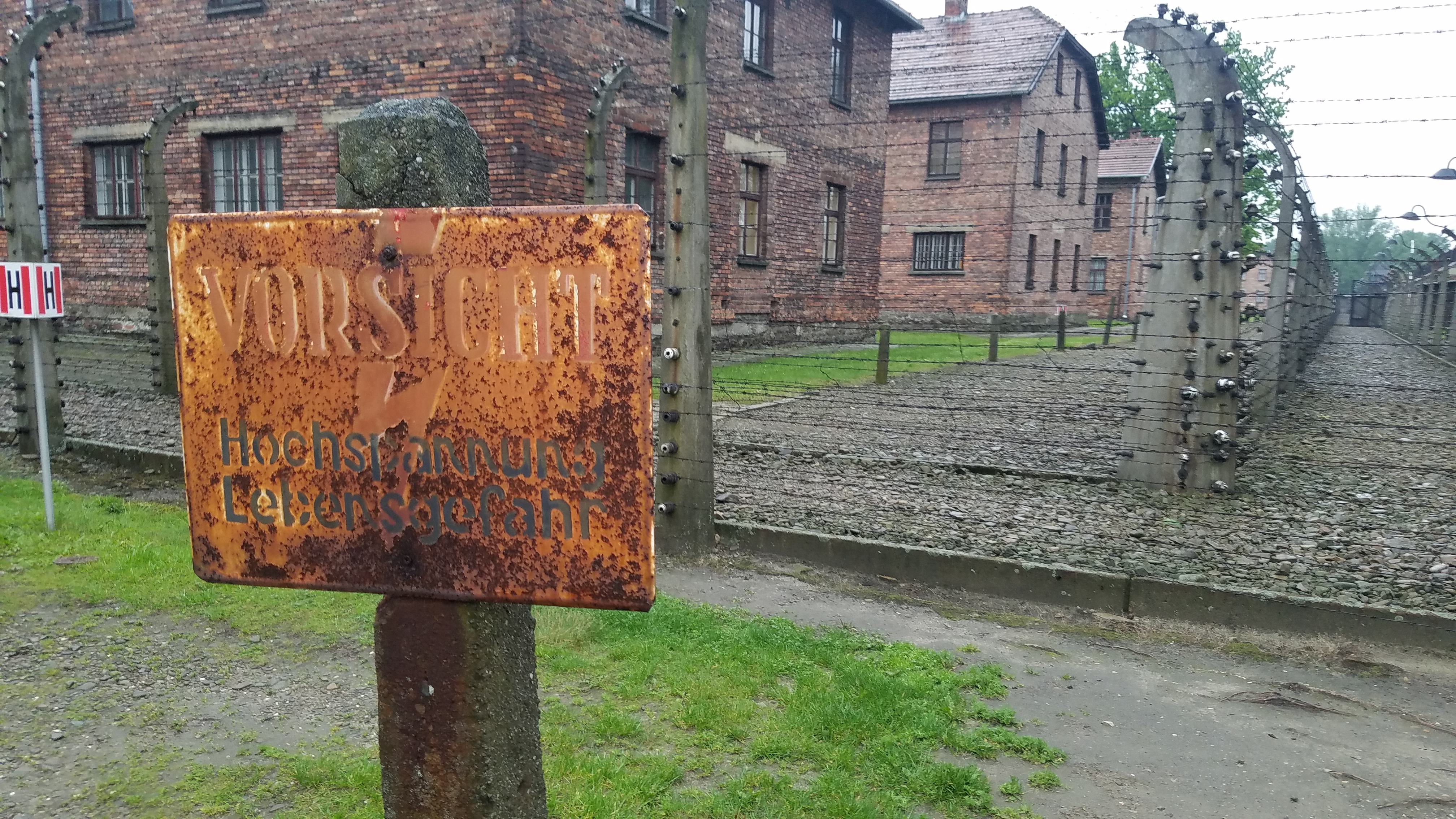
Top ten things to do in Poland: Auschwitz is a guaranteed part of that bucket list. It’s a fascinating place. I’d give it a solid 5/5. Additional comments: “Would not recommend — I hope nobody ever does recommend it. However, I do say go. No picture will ever offer the same understanding as seeing the same things this massive number of people saw as they died. This is a museum that evokes the emotion of remembering the past. You cannot walk out of the gas chambers unchanged, especially when the 1.2 million victims of Auschwitz did not leave either the camp or the chambers alive. Why are there so few survivors? The answer is simple — the camp was well-designed to ensure maximum efficiency. But I think the museum was designed the same way (though perhaps not by choice) — being an immensely popular tourist attraction, the place tries to keep people moving through to see the rest of the exhibits’ I think more emphasis needs to be given about the reality of respecting the site as a graveyard memorial and not so much a reconstructed camp.
If only the bricks and trees could talk. I walked same roads and saw the same scenes and landscapes. But I didn’t experience the same thing any person at Auschwitz did, and I could hardly begin to imagine the horrors they lived through and died among. So much death and pain. I think I saw more of a memorial at Birkenau than at the Auschwitz camp 1. I found the ruins there to speak much more of the truth. These were never reconstructed, and the camp remains almost completely as it was, aside from the effects of the elements.
I’ll have to continue this later, probably tomorrow. I’m throughly exhausted, and I could say so much more.
 Into That Darkness — and Out of it too...