Wednesday, May 29
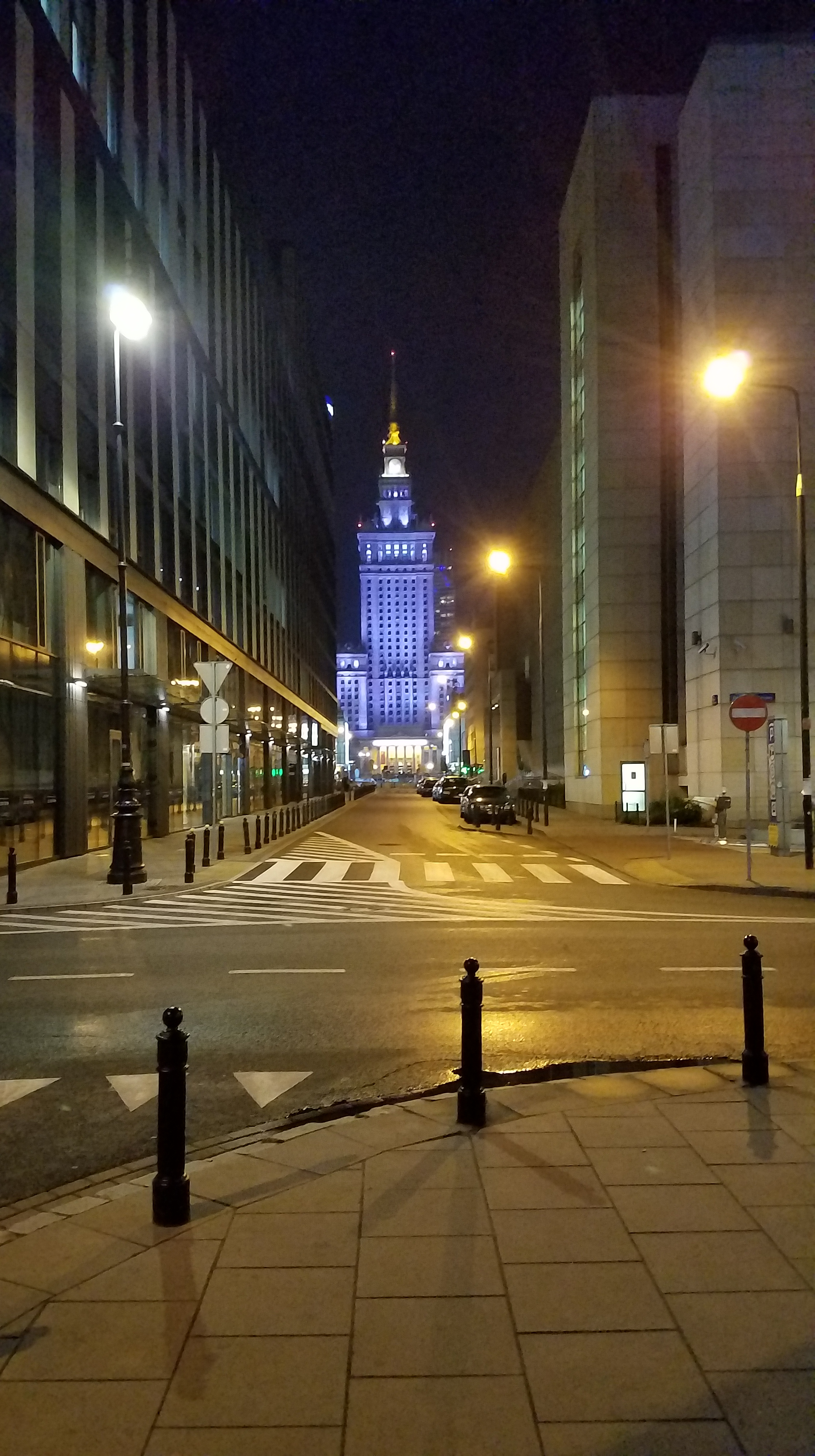
Had an extensive walking tour of the Warsaw Ghetto region, one that both incorporated and expanded on my knowledge of wartime Warsaw Jews and the resistance efforts that took place there. Warsaw itself was a very different place from the other cities we visited. Aside from the fascinating combinations of Nazi and Soviet era architecture on the same streets, along with modern-day skyscrapers (such as one featuring a bold ‘McDonalds’ trademark), Warsaw is also a place full of construction projects. At one time, I had this interesting thought: is Poland still rebuilding and recovering? While Krakow and Lublin were largely, or at least partially intact after the war, Warsaw has a few single surviving pre-war structures. Furthermore, I was really impressed by the lack of cobblestone streets — as charming and wonderful as these are, these roads were becoming absolutely awful to walk on some afternoons. Instead, I was greeted by wide sidewalks and an even wider roadway. Those who once rebuilt the city of Krakow had to plan around surviving structures, but for those who were/are rebuilding Warsaw, the city presented an opportunity for a new landscape. The city is filled with courtyards and parks, while still maintaining a ‘modern’ grid-like structure — I found our hostel was extremely easy to return to, even by different routes.
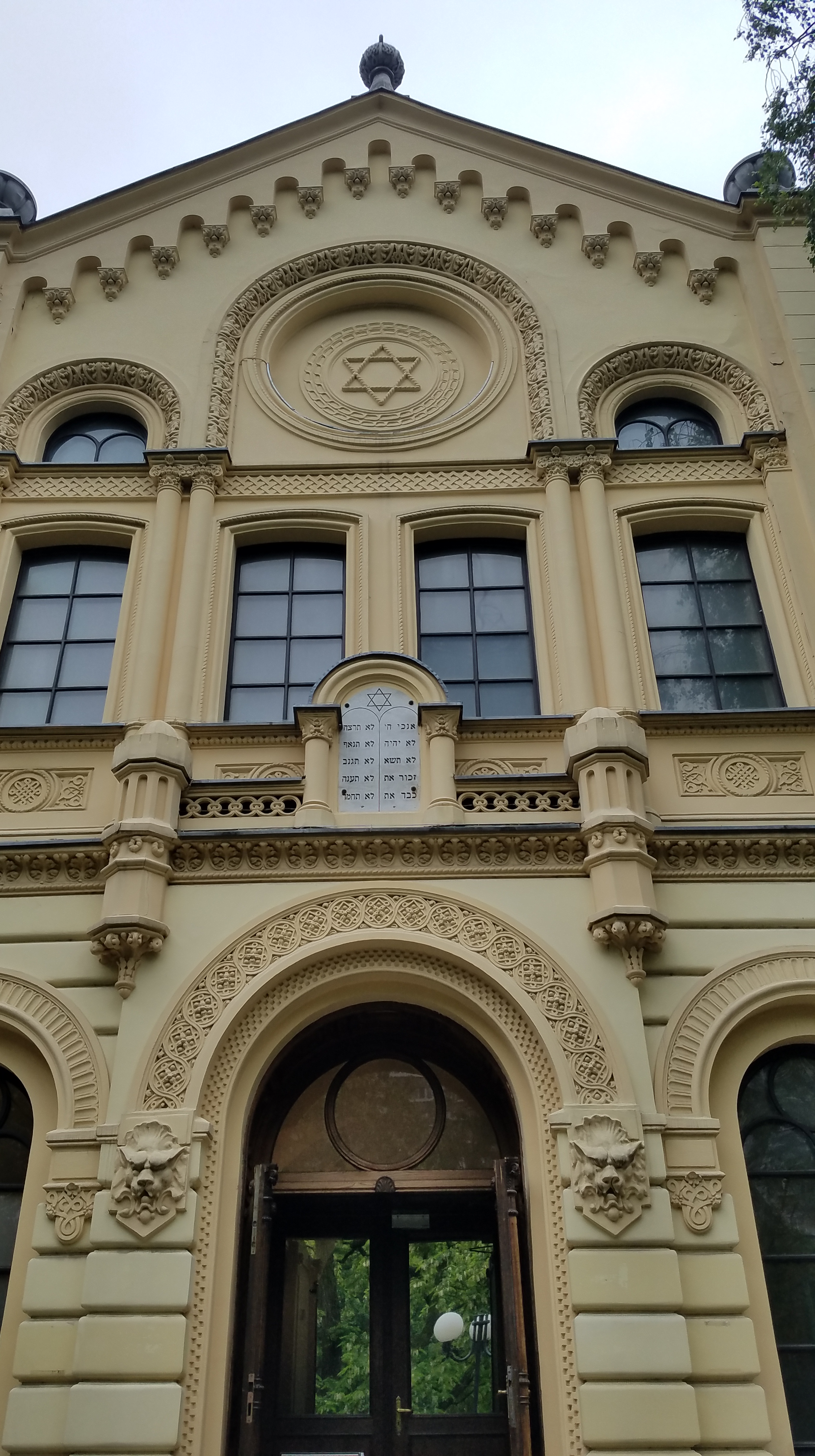
Jewish Warsaw: it exists… faintly. Throughout the day, we came across small traces of Jewish culture and history in Warsaw. On our tour of the city, we stopped at the only synagogue in Warsaw to survive the devastation of war. Unfortunately, we couldn’t go inside, but this remained an impressive monument to the continuation of Jewish life, recovered from being once used as a stable house for Nazi animals. On another occasion that morning, we noted the seemingly random palm tree in a roundabout at an intersection of two main roads. Of course, this sort tree would never survive in Eastern Europe, but the image of a palm tree presents a unique opportunity to remember the Jewish history of the city. It seemed like it was a little bit of Jerusalem, or at least Israel, in Poland. In the afternoon, in visiting the Ringelblum Archives and later the Polin Museum, a much lengthier history of Jewish Warsaw became apparent.
Shortly, out of the whole city tour, the most shocking moment was the memorial made of standard apartment buildings — created with the idea of the phoenix in mind (rising from the ashes). This memorial was constructed from the rubble and ashes of the former ghetto — including many victims who died there. These buildings are in use today… and many do not even know of this reality.
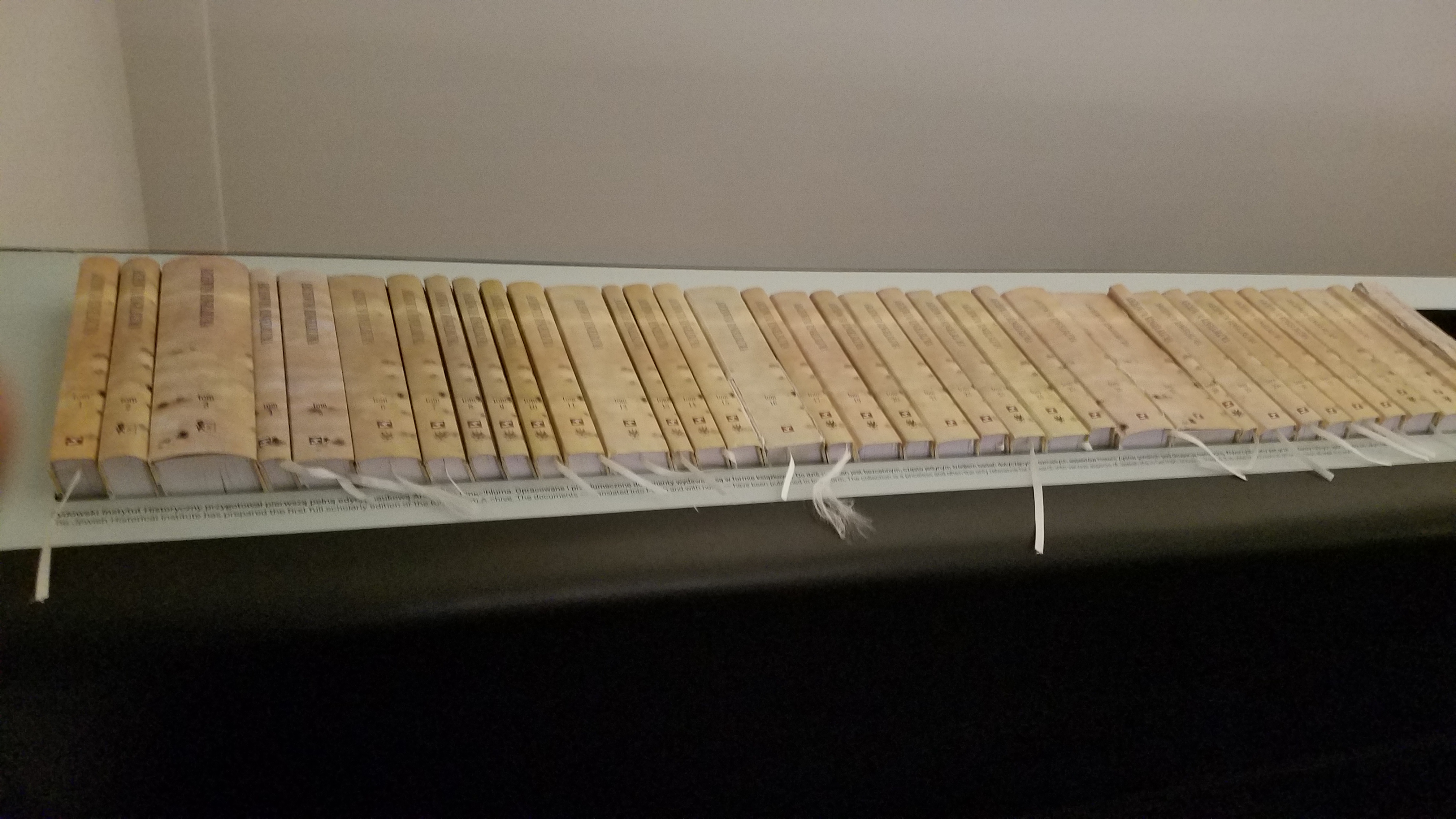
The Ringelblum archive was a fascinating history preserved in original documents. Not only did the display clearly illustrate the history fo Warsaw during WW2, but it also incorporated many physically preserved words, letters, and even poetic thoughts of people living at the time. But why did people decide to start writing these things down at all? People write to remember. People write to commemorate. People write to share, to think, to record. These people though, wrote because it was what something they could do to rebel, to share their lives, and to hope these documents would not be all that remained of their history.
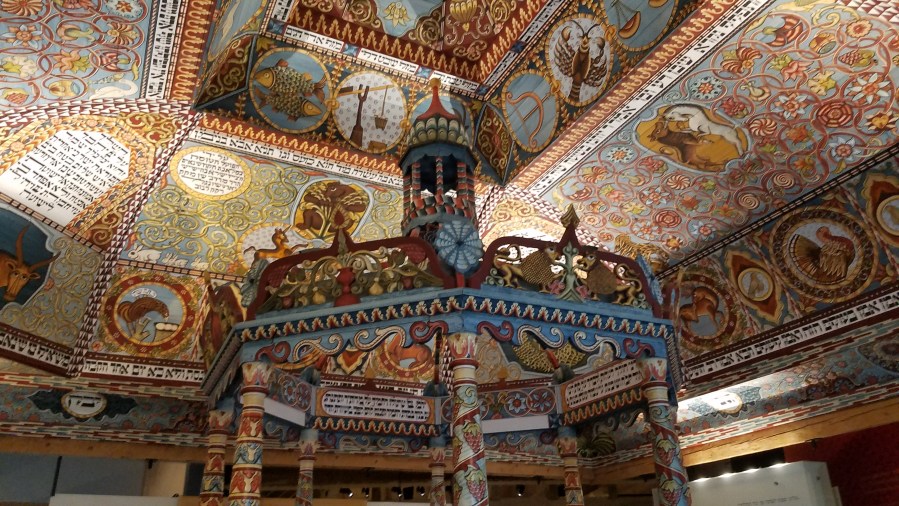
Walking into the Polin Museum, I was greeted by an amazing ceiling display appearing to be like sand dunes above and around the whole entrance hall. The museum itself, a recent development, presents the history of the Jewish people in Europe and Poland, throughout the centuries of their existence there. I found the museum to really focus on the cultural life and traditional practices that once played such a vital role in Polish society. This, no doubt, is an immense undertaking for a single museum, but I think this institution did an excellent job of walking us through the history step by step (literally too). If anything, I think what was lacking was humanity of this lost and missing culture. At the JCC in Krakow, I purchased a picture album titled: “The Lost World: Polish Jews from 1918-1939.” In perusing this book after returning home, this realization dawned, that their personal lives were missing too, not just the society as a single entity. Polin retold the history of Polish Jewry well enough, considering the enormity of such a task, but of all the exhibitions the most powerful and poignant were the single quotations of both witnesses and victims of the Holocaust.
 Into That Darkness — and Out of it too...