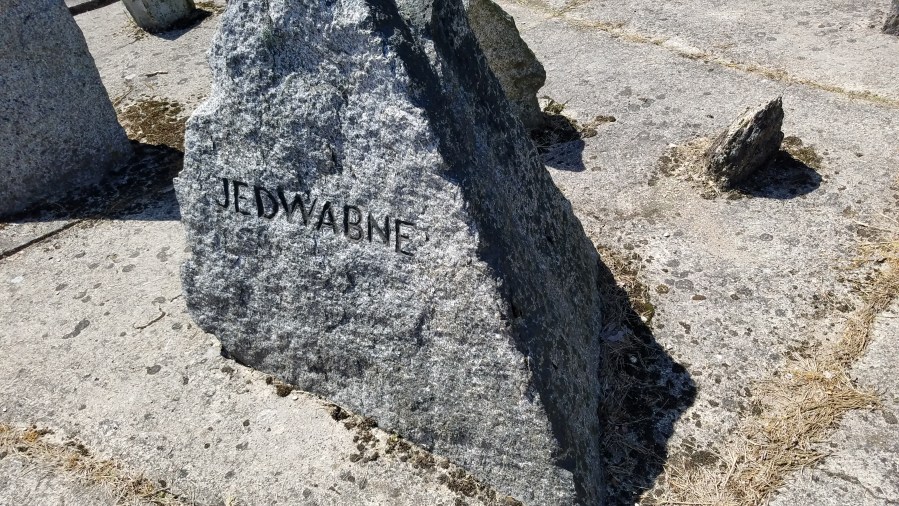
Thursday, May 30
Spent some time travelling in sporadic downpours, though thankfully, our bus roof didn’t leak too much…
When we eventually arrived at Treblinka, after a minor detour on Polish country roads, I was really impressed by the strangeness of its location. It was essentially out in the middle of a forest. The whole lane and parking lot, as well as the memorial and education centre itself were absolutely surrounded by towering pines.
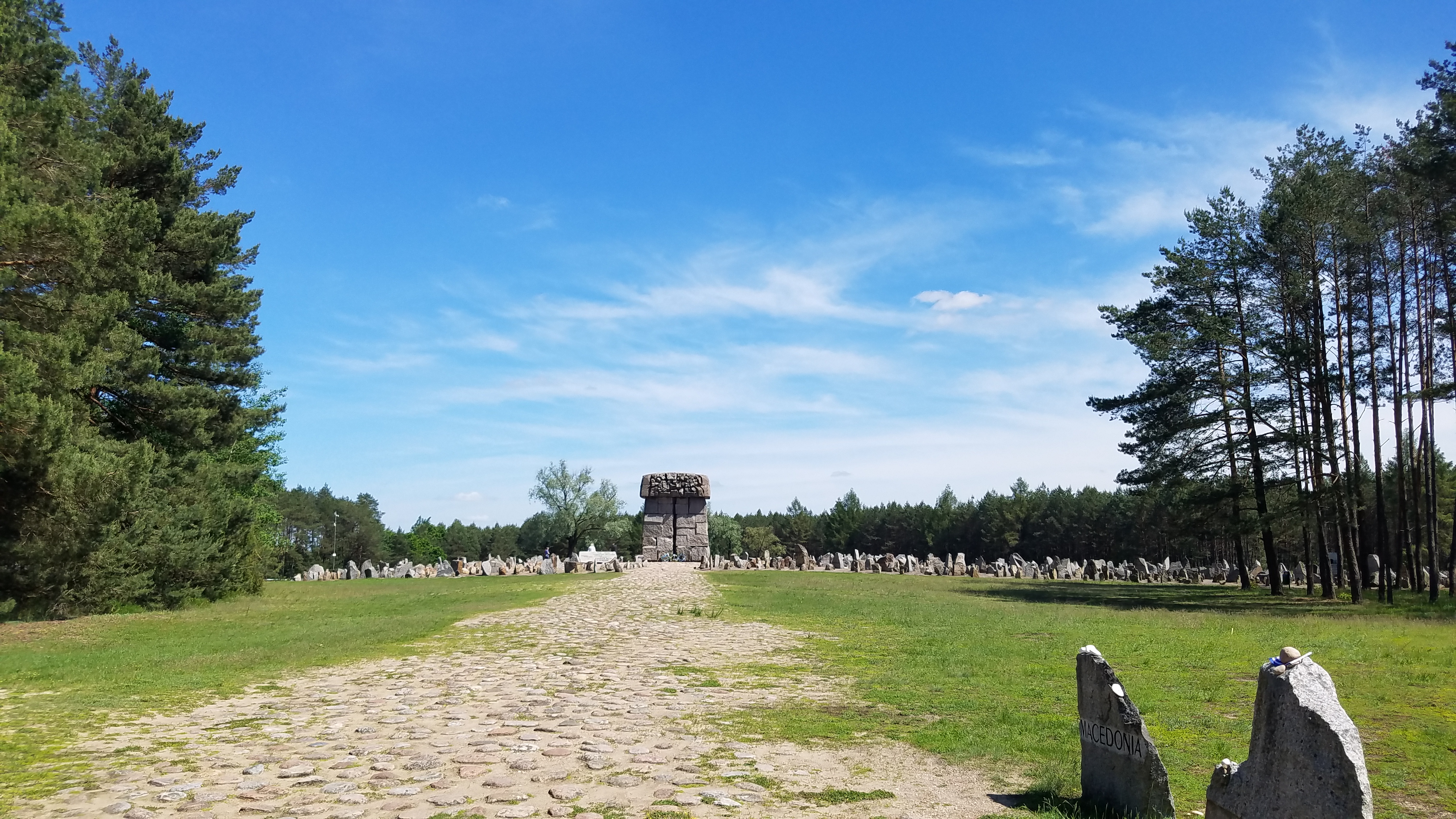
The memorial at Treblinka was fascinating. As we baked in the sun, walking alongside various geckos and snakes, a group of students spent time looking for a stone commemorating the town Aaron’s family was from — none of us found such a stone, unfortunately. Nonetheless, the memorial was evidently supposed to be a symbolic graveyard, filled with innumerable, unnamed and unmarked stones. Nearly all the stones that were marked had only the names of countries and of towns and cities that many of the victims of Treblinka were from. However, it was also hugely symbolic in the construction of the supposed rail line corridor and the path the prisoners would have walked through the camp after arrival. As a site of memory, I found this site to be well done. Using the information known from different reports, the camp has been reconstructed on a model scale in the education centre, leaving the grounds for an opportunity to remember — instead of experience — Treblinka. There was no claim to authenticity, but rather a claim to being a place of memory. Treblinka did not offer to direct me through the camp, and the many stones were not even in rows or sections. The only paths were the ones leading to the memorial and a second one returning through the woods, back to the parking lot.
In the early afternoon, returning on our morning route down wonderfully scenic, but awfully paved country roads, we arrived at Jedwabne.
Crows. Black hordes of them circling around and sitting on the nearby hydro wires. Jedwabne was mostly as I had imagined it from The Crime and the Silence, but I was surprised to see how close the site of the barn was to the rest of the village. From houses on the edge of the town, the barn would have been in clear sight from a kitchen window. Additionally, the market gathering square was much different than I had imagined — I had pictured it to be larger and surrounded by many stores or houses.
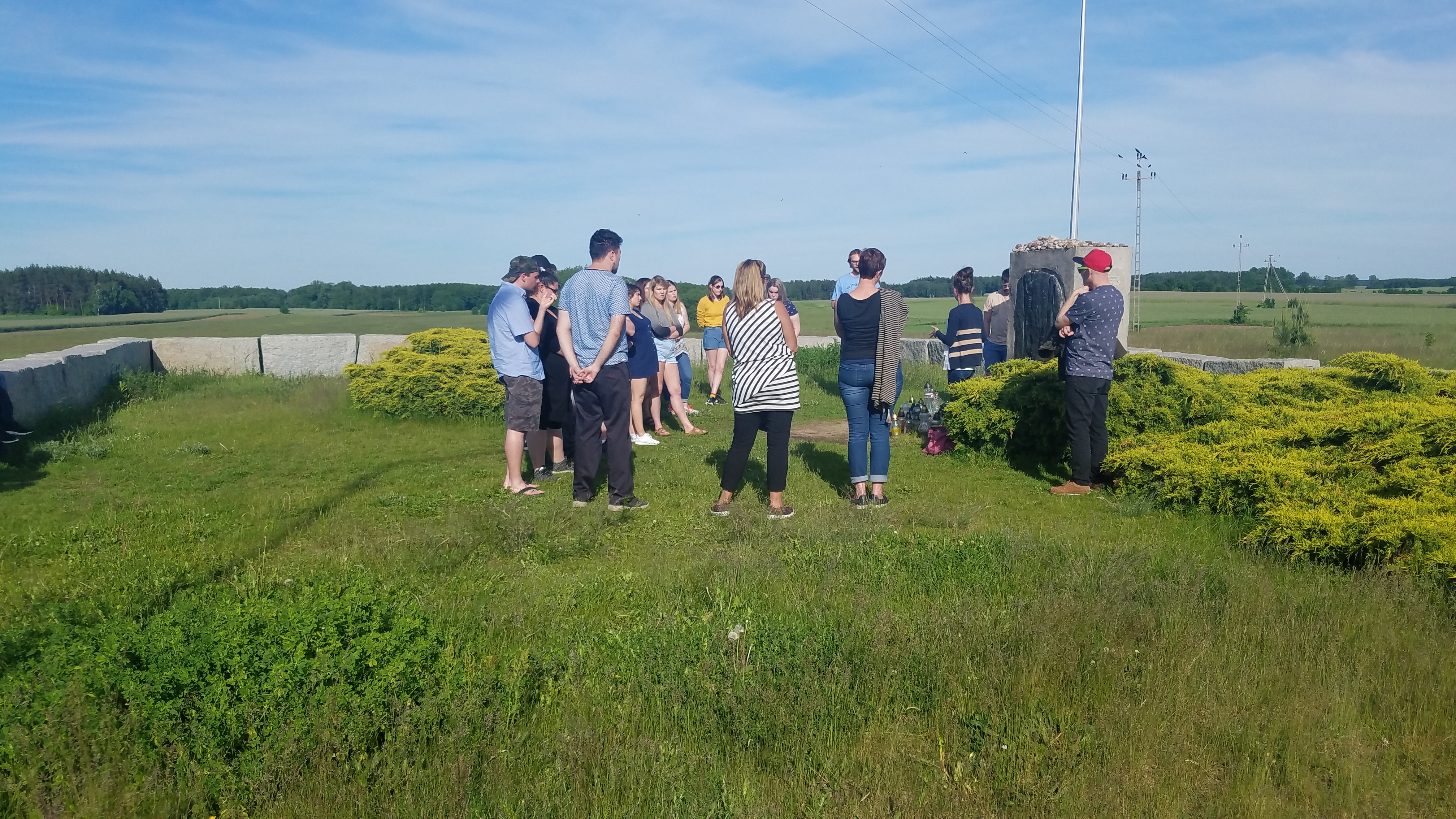
Thinking back to the vivid accounts of the massacre of Jedwabne’s Jewish population provided by Bikont’s book, I struggled to step into the space where the barn is believed to have originally stood. I repeatedly thought of the terror of the masses of bodies that remained, and the lives of those few who miraculously managed to survive by some providence. The stories and work of people like Kamil Mrozowicz have changed the remembrance of this history. He explained that for much of his life, having Jedwabne as his hometown was a taboo subject — this was something no Polish person wanted to embrace. Even in his efforts to study the history of the Jedwabne Polish Jews, Kamil faced significant criticism and bureaucratic delays. His work and studies are efforts to reinstate this history as more than just a shameful and undeniable reality. Yet, his work is inspiring, and as he mentioned, there is hope for changing memories and attitudes toward this history.
 Into That Darkness — and Out of it too...