May 27/28
Lublin 1939: home to 43000 Jewish inhabitants and a centre of Jewish culture and tradition.
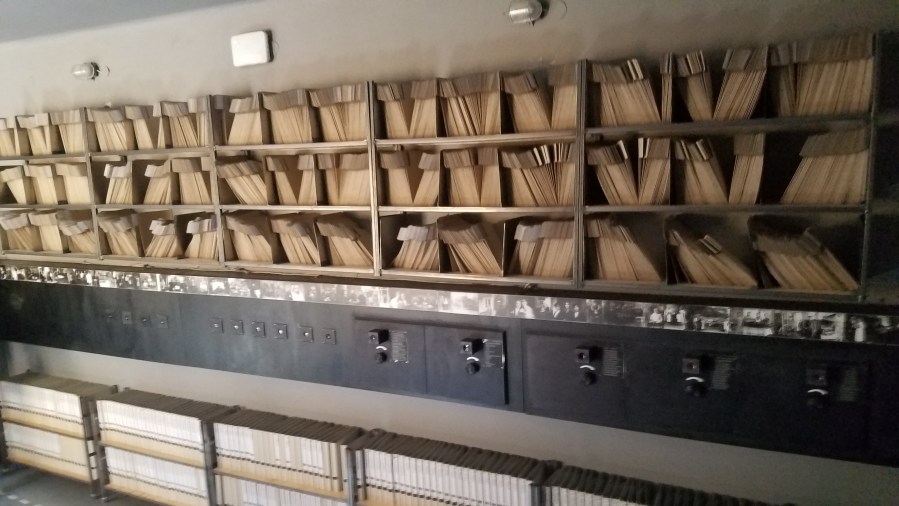
Lublin 2019: home to 43000 file folders (completely or nearly empty of any information), and a former centre of Jewish culture and tradition.
This change could not have been better noted than by the efforts of the Grodzka Gate — NN Theatre Center. Their whole exhibit, presented inside what was formerly the “Jewish Gate” between the high-town and the Jewish district, focuses on this apparent absence. No doubt, their work is further accentuated by the lack of any Jewish quarter today. Just outside the gate, a parking lot appears, filled with moving bodies, cars, buses, and trucks. Next to this: an open park with only a dirt path through the middle. Using recovered glass negatives and the available information of pre-war Jewish civilians, the centre utilizes active community engagement as a means of commemorating the Holocaust. Likely their most well-known effort, “Letters to Henio,” asks the community to send letter to this young boy from Lublin who died during the Holocaust. These letters are then mailed to Henio’s former address (which is probably under the parking lot or park grounds) as a means of demonstrating this absent part of the city. The letters all receive the same mark: Return-to-sender. No such address or recipient exists anymore in Lublin, though both once did. I found this to be such a powerful form of remembering the city’s past; this activism retells the stories of Holocaust victims in a simple manner, but with a striking result. Additionally, all the information and images that did survive are organized and sorted to tell the stories of some citizens of Lublin, but many stories will remain forever untold. Most of these 43000 do not have anything to their name or remembrance… much like the former Jewish district.
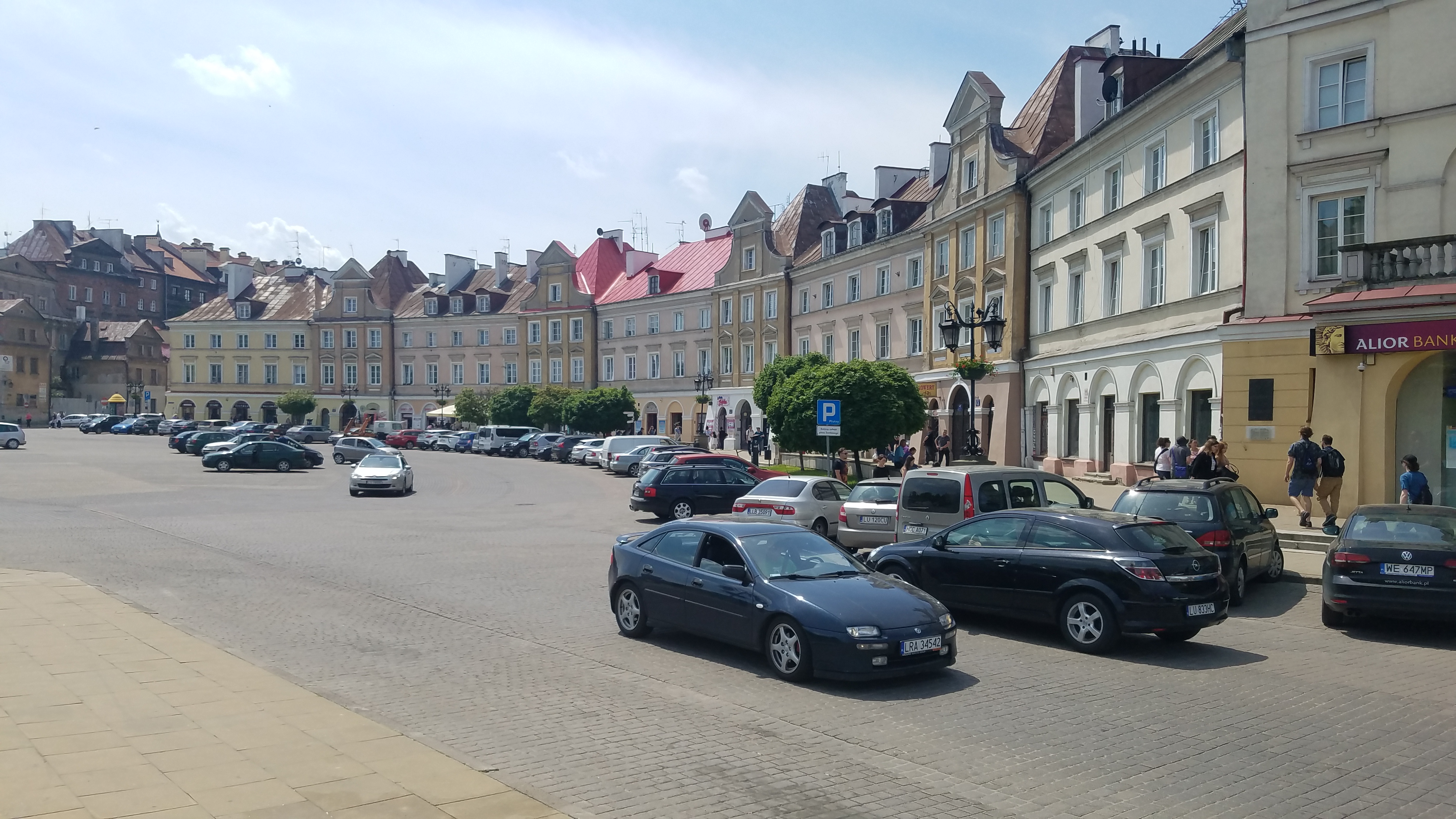
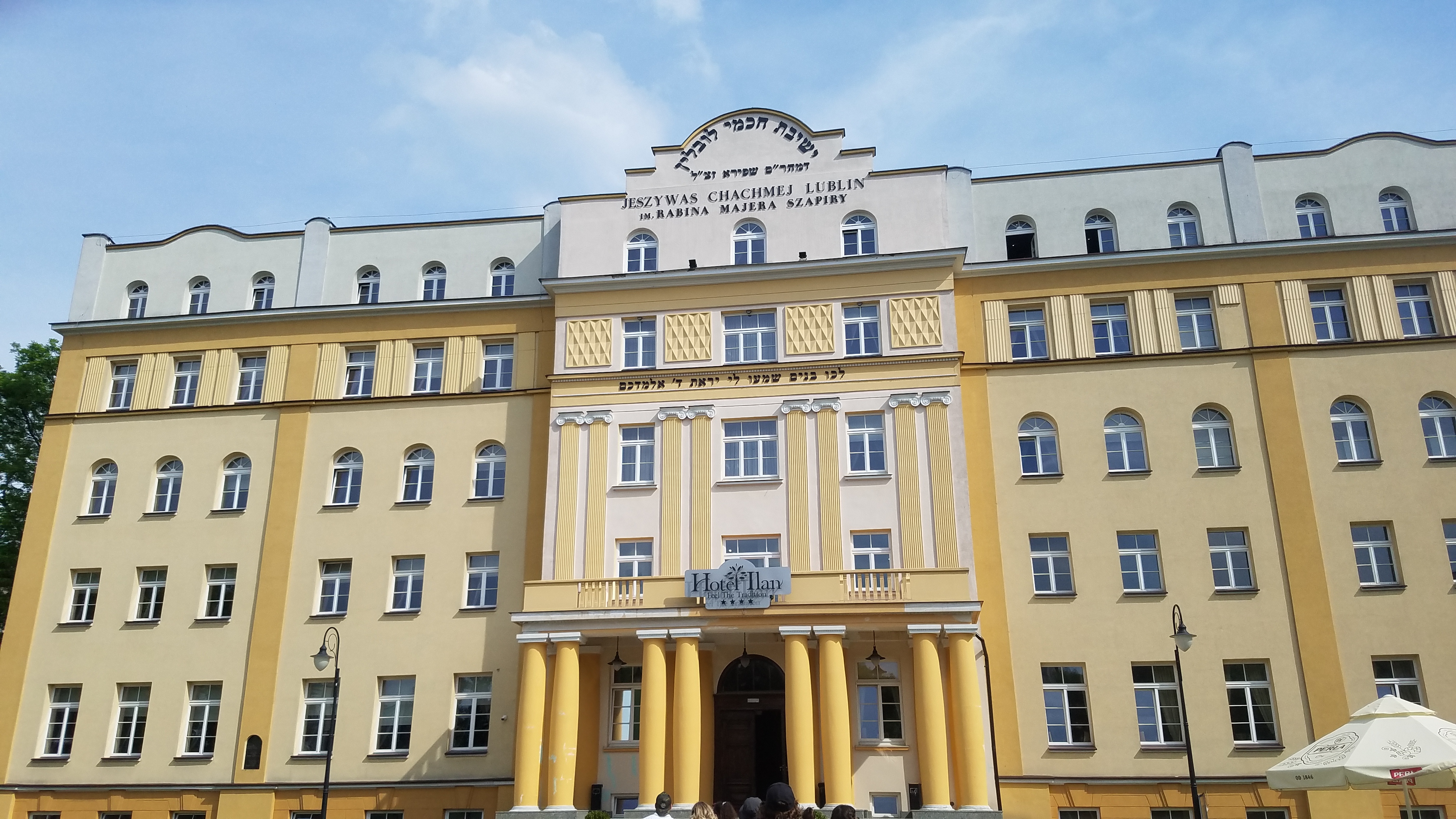
Lublin is a very different city from Krakow. Krakow, though feeling quite small, due to the proximity of most essentials, is a much larger and more diversified city. Lublin, while initially seeming quite similar, is much smaller and not as well preserved. For the most part, I found the old town’s architecture was quite similar to that of Krakow, though the former ghetto still appears to be quite preserved — or not. Nonetheless, Lublin is a crucial part of Jewish history in Poland. This was especially seen in our visit to the Yeshivat Chachmei Lublin, a Jewish Talmudic school opened in 1930 by Rabbi Shapiro at the time. This building, currently a hotel, still has a central synagogue upstairs, even though the building was largely ruined and desecrated during its Nazi occupation.
Likewise, in our visit to the Old Jewish cemetery of Lublin, I was immediately drawn to the remaining traces of the war. Though some restoration has taken place, to piece together parts of headstones, one stone stood out from the rest: a stone with a gaping hole from a large shell. Again, my mind went back to this very real absence in Lublin.
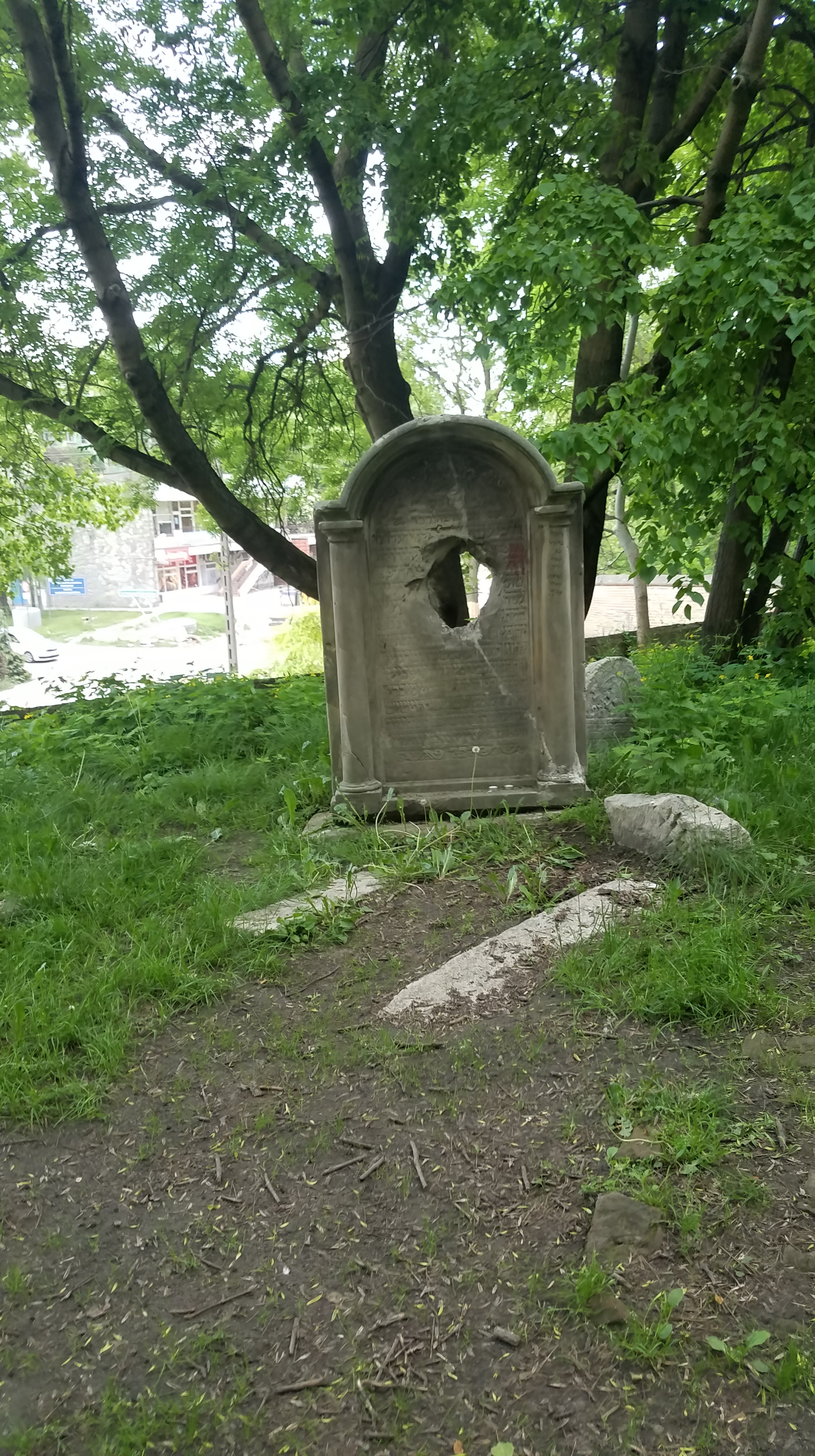
However, as we learned from our guide, this is also the site of the oldest known Jewish gravestone in Poland. One famous stone, dating back to the mid-sixteenth century, offers insight into Lublin’s Jewish history. This cemetery has existed there for centuries under administration of the Jewish community, and continues to remain as a memorial to the history of Lublin’s Jewish heritage. Even though Lublin was home to Jewish culture for centuries, referred to as the Polish Jerusalem, commemoration of this history becomes increasingly important. The parking lot and adjacent green space do little to share the history of the former hub of Jewish tradition, specifically when this absence is not even being broadcasted to the community. Nor does the former site of a once massive Jewish synagogue, where now a highway intersects the city. All that remains are empty folders, buried histories, and century-old gravestones. This is why I believe we visited Lublin — this was once the centre of European Jewish life, as difficult as this reality appears in contemporary Lublin.
The following day, prior to leaving Lublin region, we travelled out to the site of the former Majdanek camp. As an intriguing side-note, this camp was under construction throughout its existence — today, ongoing restoration efforts are evident, especially on the original surviving gas chambers and adjacent barracks. This construction was among the most brutal aspect of the camp conditions — generally, it was the horrible conditions of the camp that killed the prisoners. The camp memorial itself is not unlike either Belzec and Auschwitz. in terms of reconstruction, only one section of the camp was rebuilt, while the rest of the fields remain empty (though a forest was once planted and later cut down on these fields). The debate of memorialization has carried on through the camp’s history, since the time of its liberation by the Soviets. Other aspects, such as the mausoleum and mound of ashes still also remain hugely controversial — is there still a proper way to respect these remains? Since Majdanek’s liberation, the camp infrastructure was even utilized for various purposes, such as a P.O.W. camp, a military base, and as a source of building materials.
I think the camp’s most moving aspect was a recent addition to the exhibitions — a display telling of individual people of the Holocaust. These people were not solely defined by their ethnic roots — these were also educated intellectuals, business owners, parents, teachers, children… I found the best part fo this exhibit was the camp art, both small mementos and gifts, as well as large public sculptures. Even after being stripped of every bit of humanity, prisoners here still created jewelry engraved with their assigned number. Even a shred of dignified identity was enough. A Nazi project, nicknamed “beautify you home” was presented to Majdanek prisoners as an attempt to make the site look less menacing. For the prisoners, this was obviously more than a chance to create beautiful art; this was a moment of resistance handed to them. Specifically, one artist chose to create a statue of a large tortoise — of which the symbolism is clear (work slowly here!). The beauty of this — not just aesthetic — was the ironic and clever willingness to participate as a form of resistance. One of the last artifacts I saw as I walked out was an urn; an urn that German prisoner’s families could pay to have their relative’s ashes returned in.
 Into That Darkness — and Out of it too...