Museums, Monuments, Memory: Working Toward RE-BIRTH

Wednesday, May 22

The rain held off for most of the day — far less severe showers than experienced in the last few days. The weather in general: cloudy with a certainty of periodic downpours. But the weather is not the reason we are here…
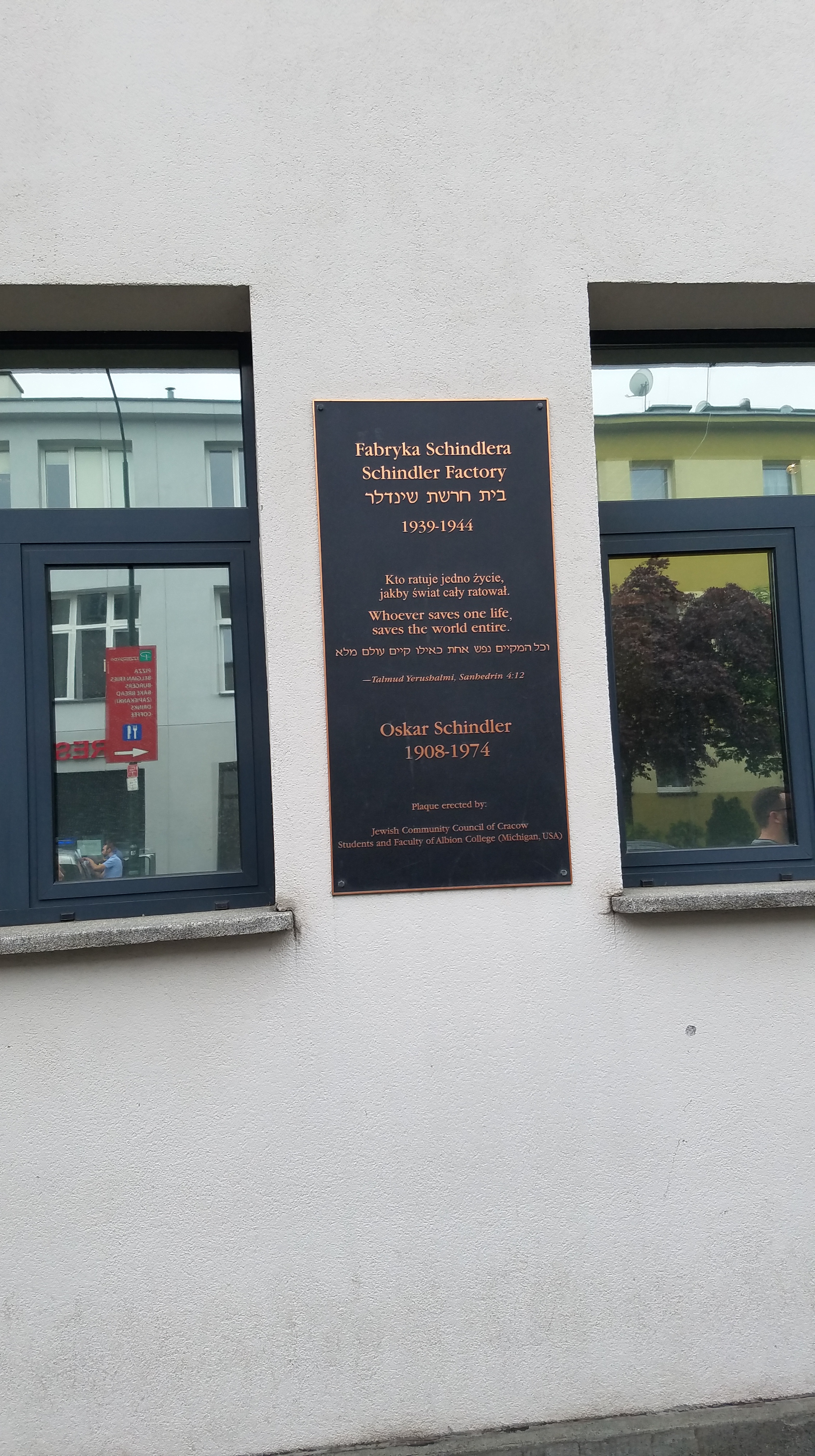
Today, in our visit to Oscar Schindler’s factory, from which the history of Schindler’s List is gathered, I was struck by the intended purpose of the museum. If I were to evaluate it on the basis of WW2 history alone, the museum tell an excellent narrative of Polish and Jewish history and suffering throughout 1939-45. The layout itself guides the viewer through a passage of time, taking different rooms to retell many events and important moments in the time. Interestingly, we do not even meet an exhibit or image of Schindler until nearly the end of the museum, near the black and white books of names (which are pretty self-explanatory, though deeply symbolic). These two books of names — one for the names of people declared ‘Righteous among Nations’, another for the names of people who turned others in to the Nazi police — might also be viewed as collections of those who did good and those who did not, or even books of life and death, respectively. Schindler was declared ‘Righteous among Nations’ years after the war, when his story was retold.

However, if I look at this museum as retelling the full narrative, in which the Aryan ideologies played a central, not tertiary, role in the war, the question I had to ask myself was: “Whose history is this?” Schindler is supposed to have saved over 1200 Jews from certain death, as well as improving their living conditions greatly, by employing them in his factories. However, he was a businessman as well — in fact, after the war Schindler was unable to find his place in the market. I had to think that obviously is immensely profitable and lucrative when wage-expenses are limited to providing shelter for the labourers. Business is not nearly as profitable when you have to pay every worker a living wage.
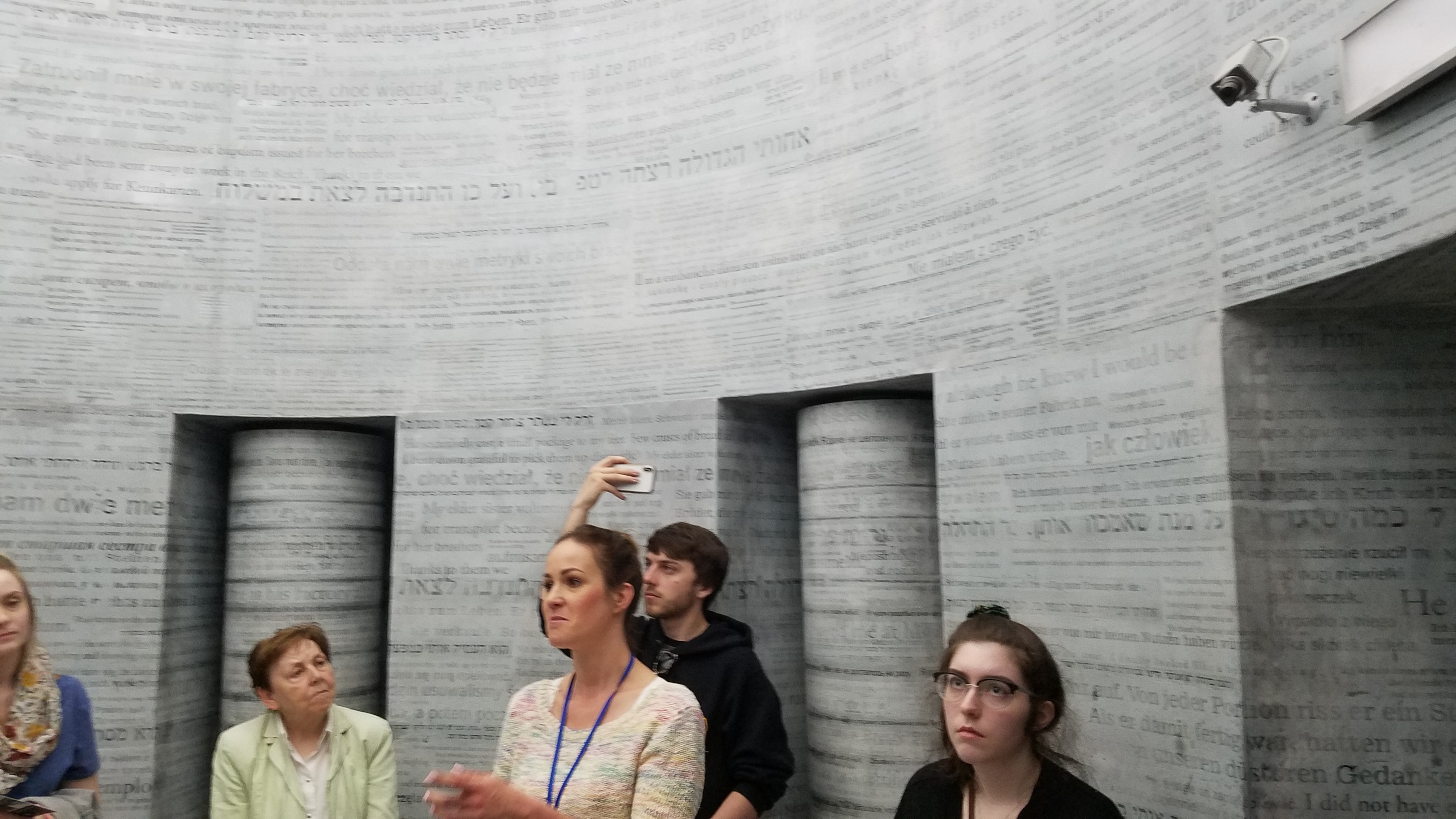
The exhibits I most understood were not the ones of reconstructing the history. I really found the museum best told its story in the more symbolic exhibits, such as the wall of pans, like the ones that Schindler’s factory would have made, or the circular room with walls filled with survivors’ memoirs. These were the ones that offered a sense of humanity to the history itself. They offered hope. They told the real history.

Visited Hero’s Square: the Chairs Monument. This monument offers a striking moment of emptiness, especially because most of the chairs are placed on a small pedestal above the square itself, illuminated at night by lights from beneath the chairs. I found this presentation to be incredibly well done — this was the same square used for random selections, executions, and gatherings in the ghetto. While the space is still occupied by the occasional passerby, the distinct feature remains empty. As for the chairs themselves, as our guide so eloquently put it, in every home each person has their own chair at the dinner table. When one chair is empty, everyone notices the absence, and the dinner just does not feel the same.
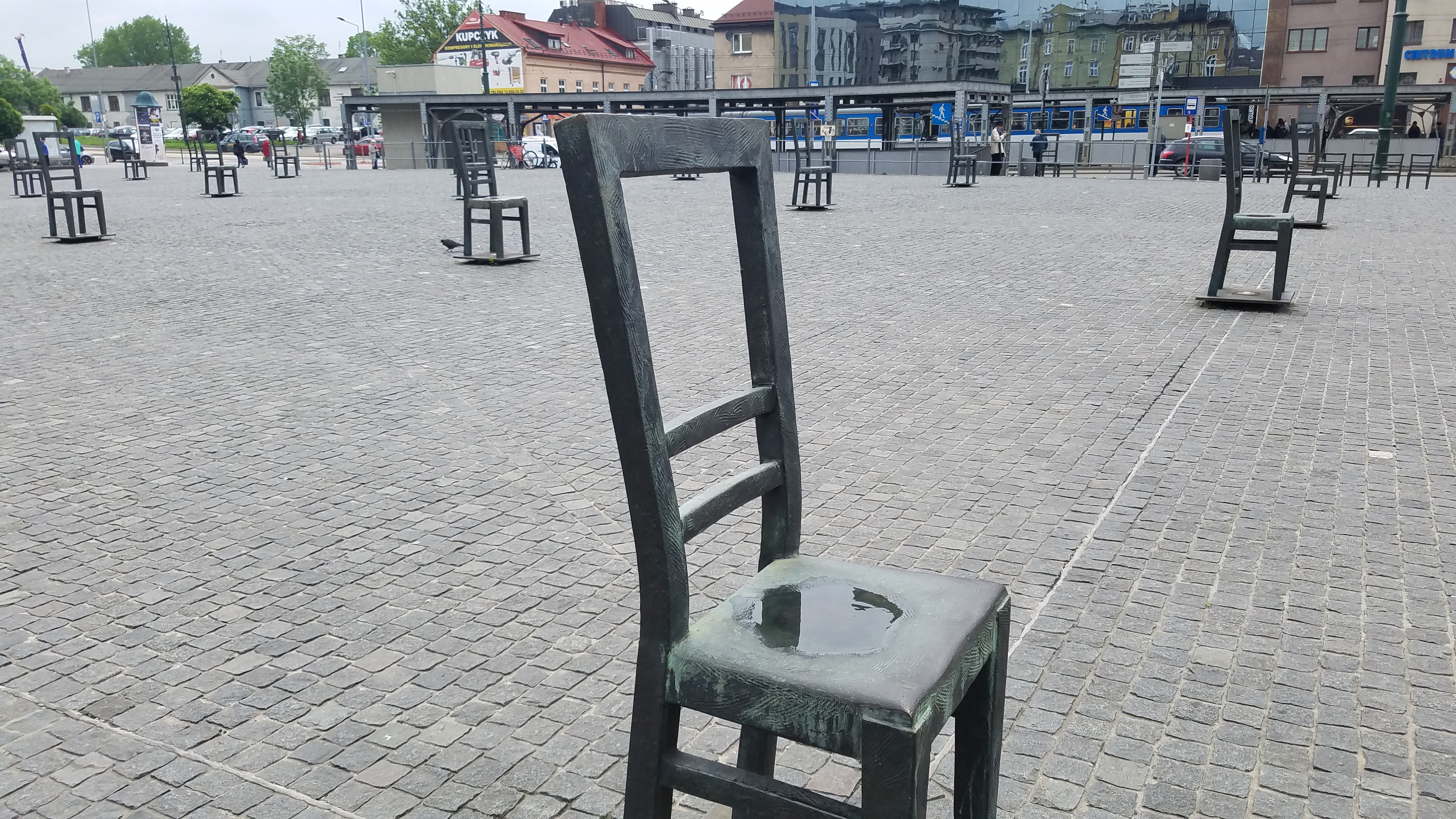
These chairs are all empty places. They even have puddles of water on top — they have not recently been used, this much I assure you. Who is left of the family to occupy these once familiar places?

This is what the Jewish Community Center of Krakow hopes to aid in — finding those who still remain, and encouraging them to pursue learning about their Jewish roots. The woman we spoke with mentioned they have over 700 members already, and the JCC continues to perform community outreach activities as well. However, a quick Google search says that the current population of Krakow is over 760,000 people. Keeping in mind the pre-war Jewish population added up to 1 in 4 residents of the city, that number has changed to less than 1/1000. Nobody needs the group’s math student to explain this to us — these are things that cannot be undone. However, the JCC is working to offer Jewish people in the region a chance to refine their place, and embrace it without fear.
Community Service and Memories

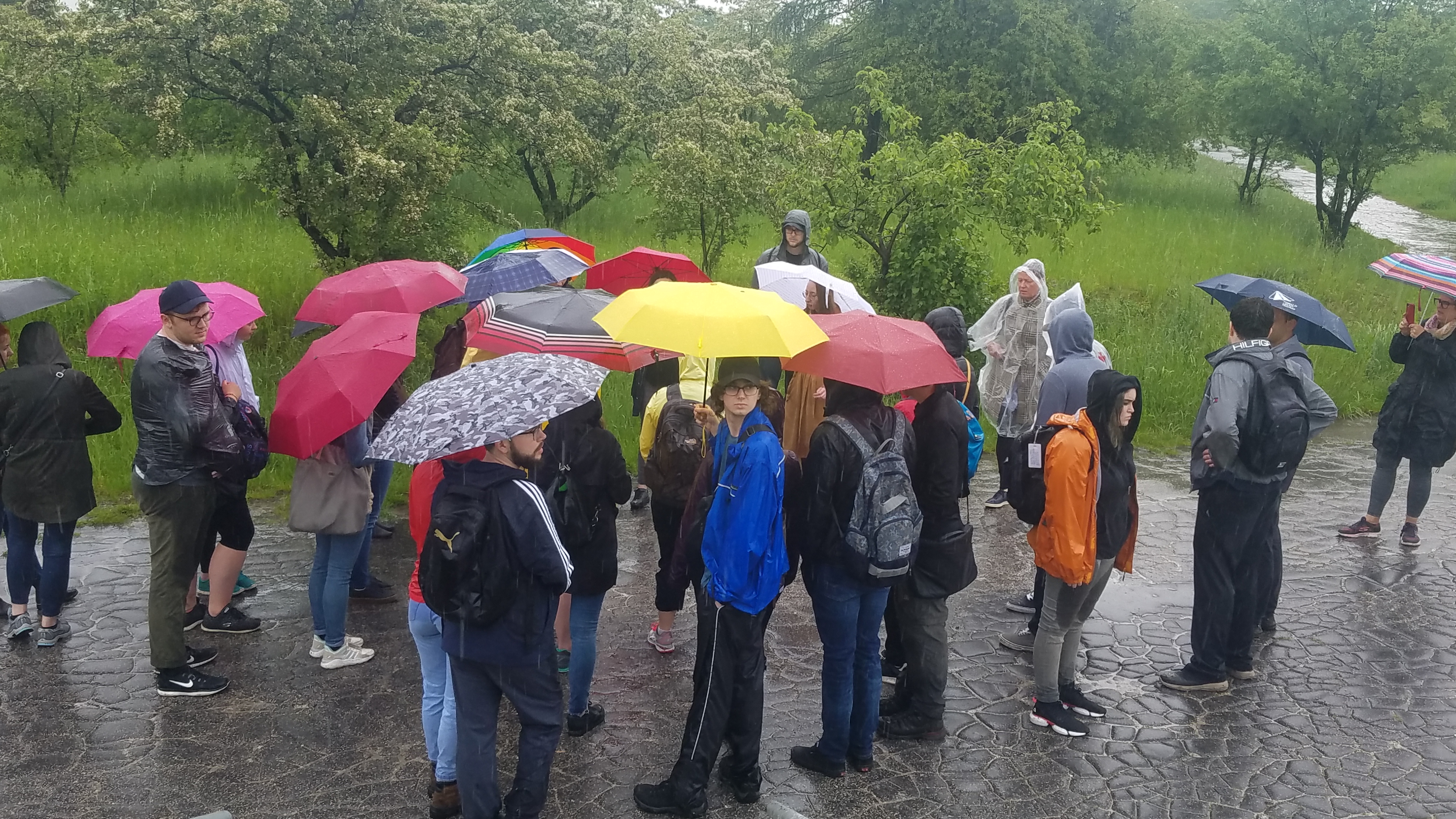
There will be no balcony seat tonight. The view will have to suffice. Rain. Wet rain too. Forecast suggests more for the rest of the week. But as miserable as we feel, we can go back to our room. We can relax afterwards. We still have our home. Those who were deported to this work camp had no home. They were forced into labour. They live on a few hundred — a maximum of 300 — calories/ day. I eat when I’m hungry, and drink when I’m thirsty. Why didnt everyone have this basic human right — was it because they were different? Obviously not. They were people. People with the same depth of humanity and emotion. They were people with a desire to live, and they were killed because they believed in their God. They were not executed as criminals — criminals are still people. These people were liquidated — literally, millions were eliminated in the most efficient manner possible.

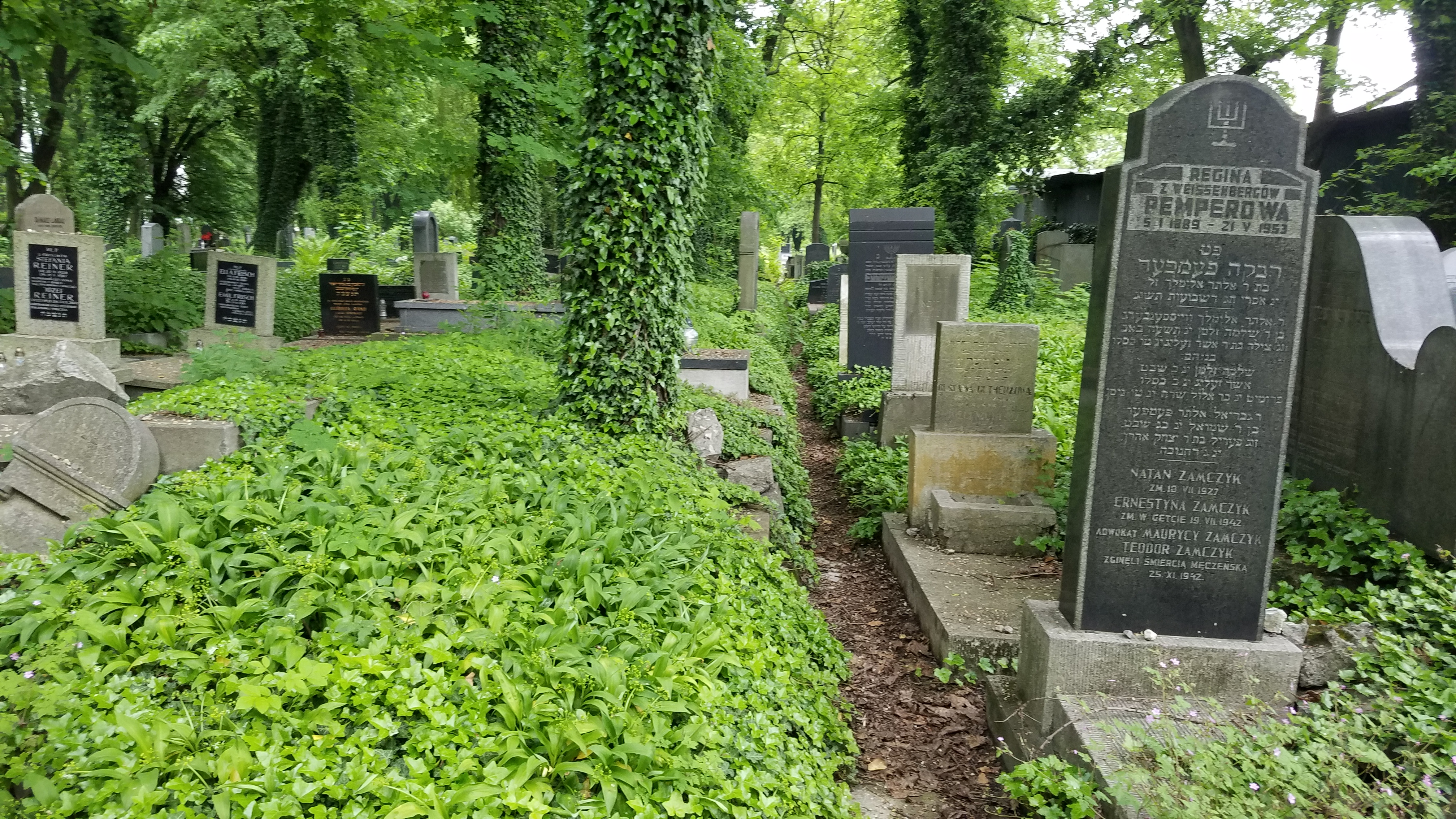
As a group we were honoured to participate in cleaning up a large Jewish cemetery within the city. When discussing this activity with a few others, we all concluded that we would not fully understand how meaningful this part of the trip was, at least not until later in the day after we had completed it. There was also a question of why we would do this, when we are on a trip such as this one. The reasons became apparent as I worked, and this was very much the case — this opportunity allowed for me to participate in Jewish remembrance in a simple manner. This also struck me as a time to honour the history of the Jewish people throughout time — many of these extended families have lived in Poland for centuries.

Prior to the Holocaust, such grounds would have been much better kept, as there would have been a many more visiting and caring for the graves of their relatives. The overgrown nature of the grounds really struck me — this site was unlike any cemetery back home — telling me a little bit of the narrative of rapid extermination of millions of Polish Jews. The large weeds, garbage, sprouting trees in the gardens, and even the heavy vines demonstrated a significant absence of family visits. Not many of the headstones even had signs of visits, whether that be a bouquet, candles, or prayer stones.

Within a few hours, we cleaned a small section towards the back of the cemetery (the place most in need of some cleaning). Though only working in a small section, we gathered up over 100 bags of waste, making a noticeable difference in the appearance of the cemetery. While many other cemeteries and burial plots are maintained by relatives of those who died, or are under state responsibility, these provisions do not exist for most Jewish cemeteries, and we were witnesses to the fact that there are simply comparatively few relatives left alive to care for the space. Many burial grounds therefore rely on such volunteer work and donations to keep up their functionality and maintenance. But whose responsibility should this be, considering these are the historic burial grounds of the Jewish people?

I find there is an undeniable responsibility of the Polish state to ensure these are maintained. In terms of identity, these families were not only Jews. They were residents of Krakow and Polish citizens for hundreds of years. These two identities cannot be separated from each other — as 25% of the population of Krakow, these people were a vital part of society. As 10% of the total population of Poland, the Jews were a significant minority group not a small faction. However, curatorship of such places still belongs to the surviving Jews, and their choice of what to do with these grounds remains as such. This absence is a significant part of contemporary Jewish identity, though, no doubt, a defining moment of their family life but not the defining moment of their past. Tracing their history back to the Abrahamic times, their history is filled with continual opposition, which still persists today in some places. Furthermore, I found a powerful message in the overgrown state of the grounds — speaking to the community memory of the cemetery, there is a significant absence of those who would have once come to pay respects to their dead.

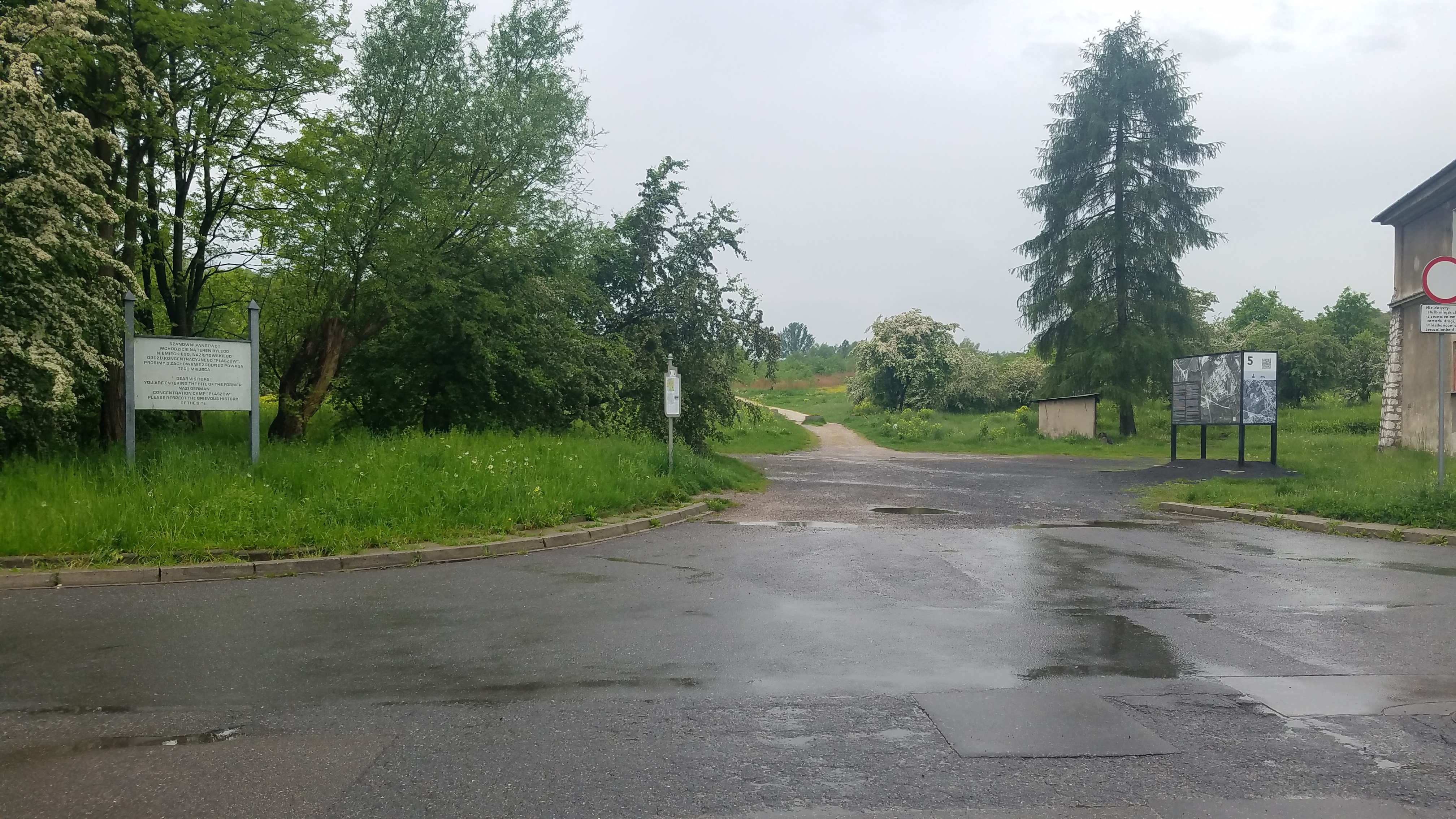
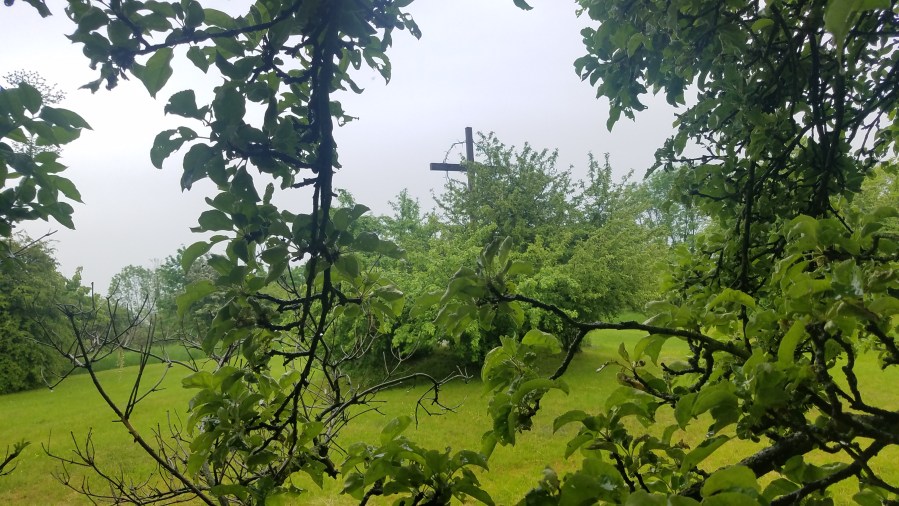
There was a similar absence at the Płaszów concentration camp grounds. Very little remains, except open, empty grounds, and several commemorative plaques and two prominent monuments of mass killings that occurred there. Interestingly, the one monument commemorating a mass killing site is a large cross adorned with a crown of thorns. Recently coming out of the time of the Passion of Christ, this symbol really intrigued me — why would the Polish community choose a cross and crown of thorns to commemorate the deaths in Płaszów, especially considering the commonly mentioned reality of the Jews demanding the crucifixion of Jesus, which this monument represents to the Christian church? I don’t know. Regardless, this monument represents a narrative of Polish-Jewish relations, and the complexity of the retelling of the event of 1939-45 and beyond.

I also found it very interesting to see buildings such as the house of Aman Goth, the former SS command officer in charge of the work camp, on the former camp grounds. This house is now a privately owned residence and no longer part of the camp. The camp itself was undeniably gone. I was unsure what to think of this for quite a while — I went there expecting a different memorial. The ones of Płaszów were much more shocking. Without the work of people like Professor Sendyka, who has dedicated her life’s work to Płaszów, the site would be absolutely empty. Now, the emptiness is a monument to what once was — a memorial on its own, standing behind the solemn plaques and telling of the history and suffering.

The (Remaining) Jewish Quarter

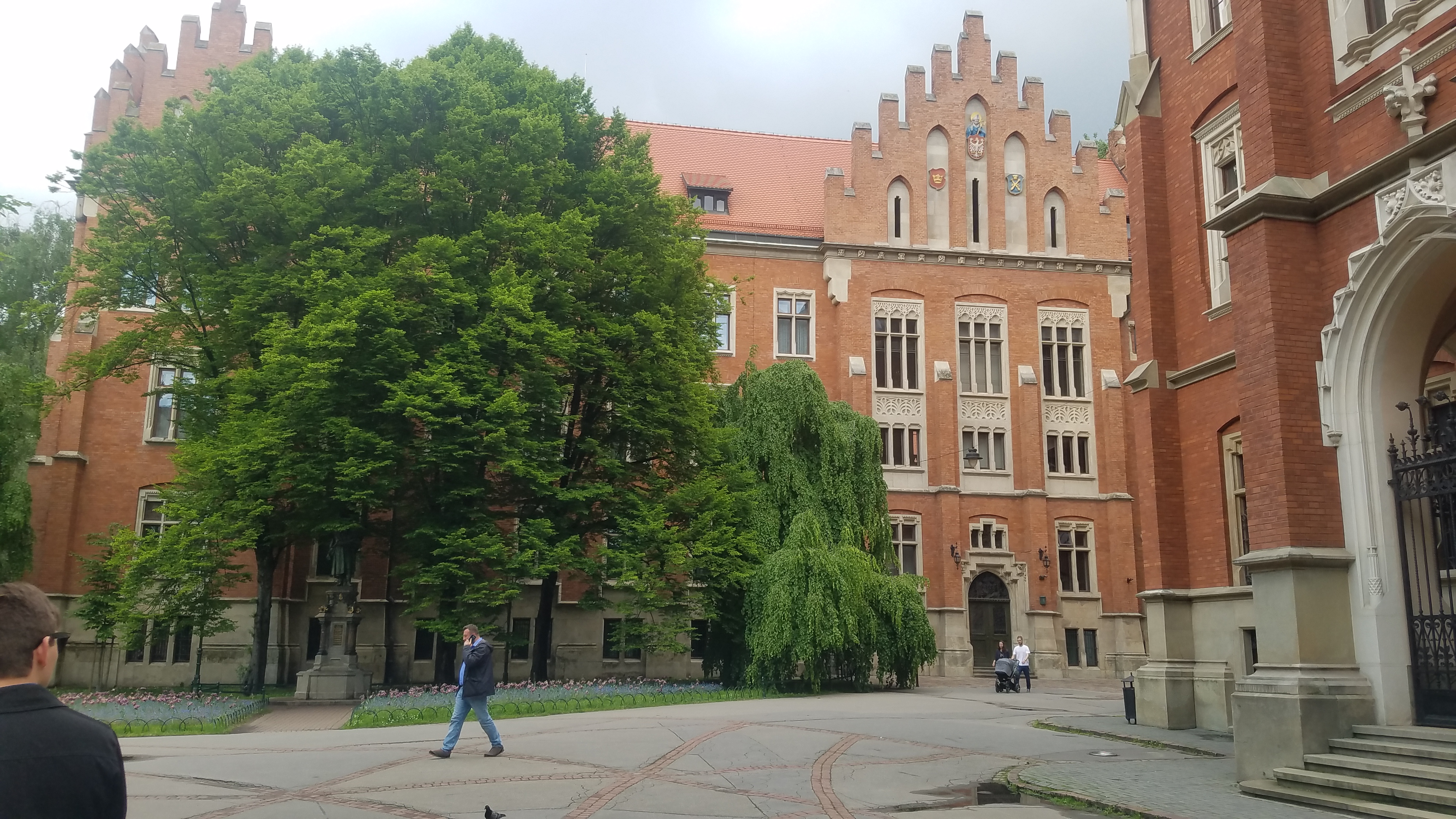
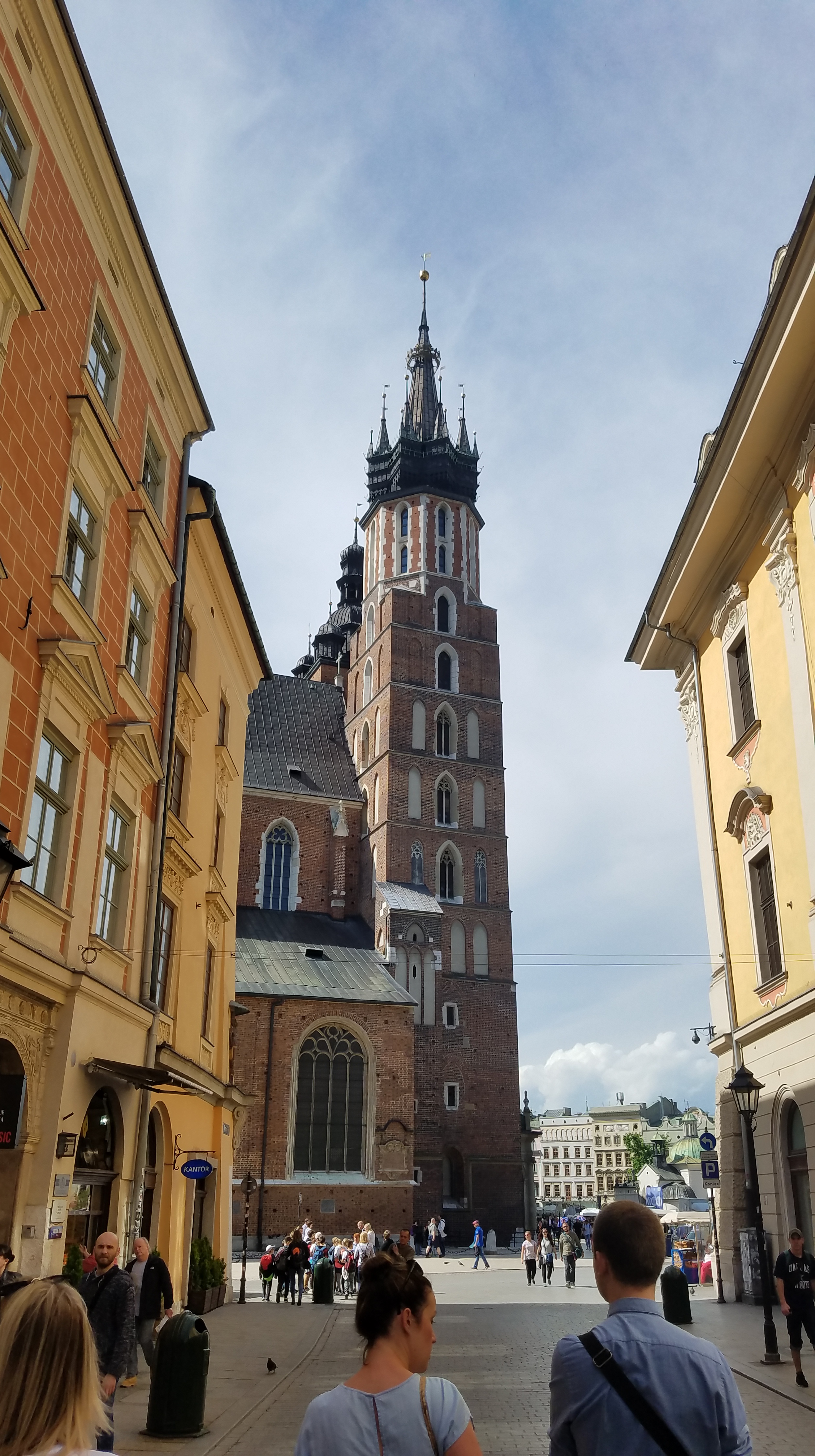
We started our day off in the Old Town, with an official tour of the historic architecture of the medieval town area, including a visit to the castle, the ‘cloth hall, various churches, the Jagellonian University, and the remaining section of the town gate. It was fascinating, especially to hear of the mythos associated with various features of the architecture, and how many people remember their history through these.

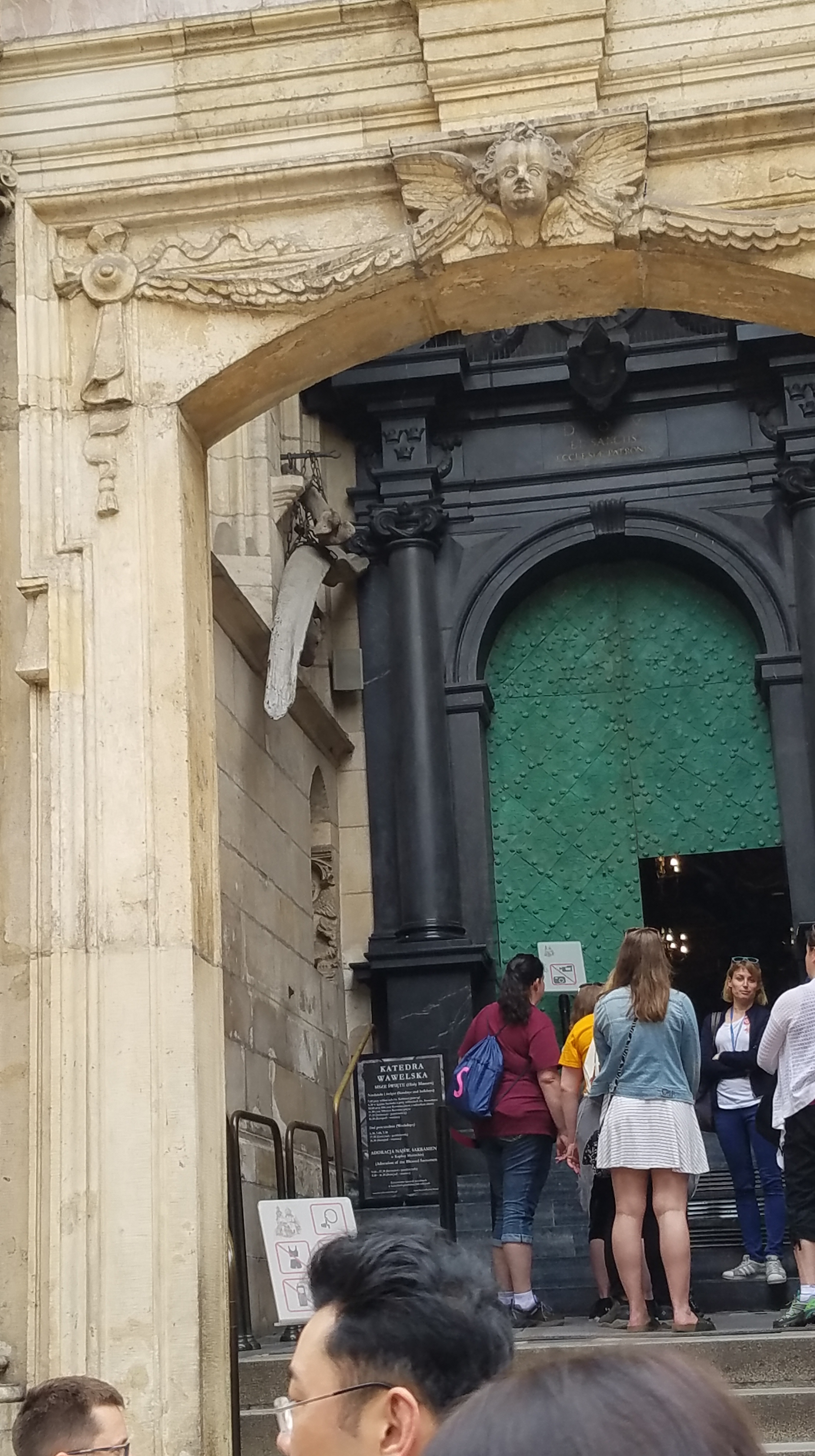
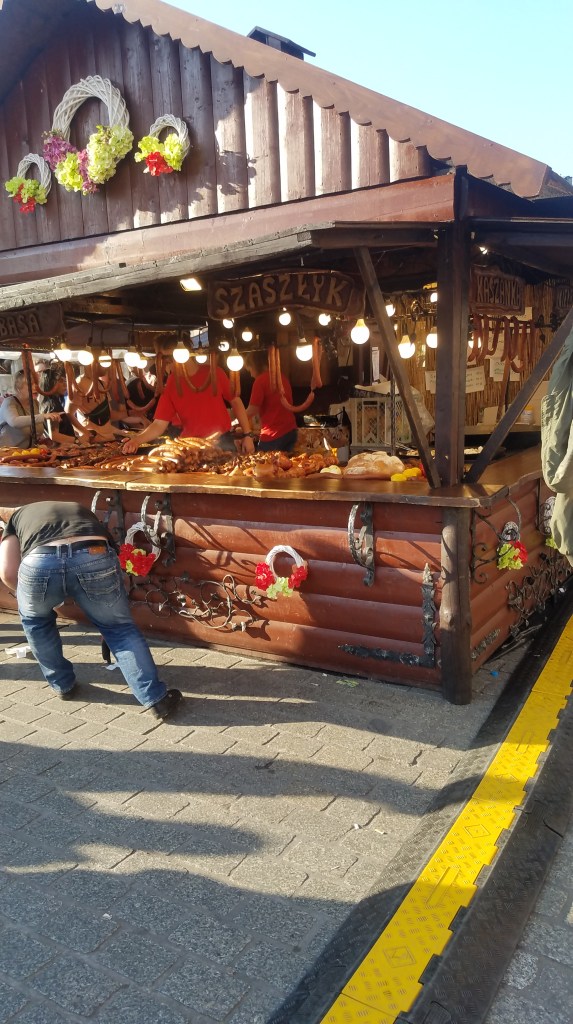
For example, the symbol of Krakow is the smok (dragon). Several of us spent the last two days looking for answers to why this might be, and what the story of the dragon was. At many of the stalls in the market, various representations of the dragon are for sale, but none of the shopkeepers seemed to know what the whole story was. In our visit to the castle today, we saw a set of giant dragon bones (more likely mammoth bones) hanging near a main entrance to the palace. As the story goes, nobody was able to defeat the dragon by force, and many of the king’s knights died trying. However, a shoemaker came up with a plan to kill the dragon. Using sulphur and a sheepskin, he managed to use the dragon’s fire against it, essentially tricking the dragon to eat the bundle of sulphur — obviously causing the dragon to explode. The remaining bones hang from a chain at the castle.

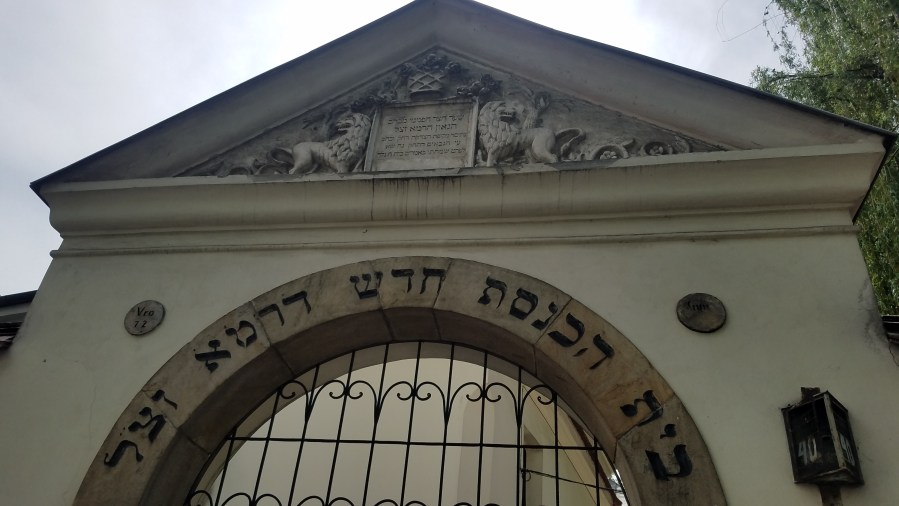
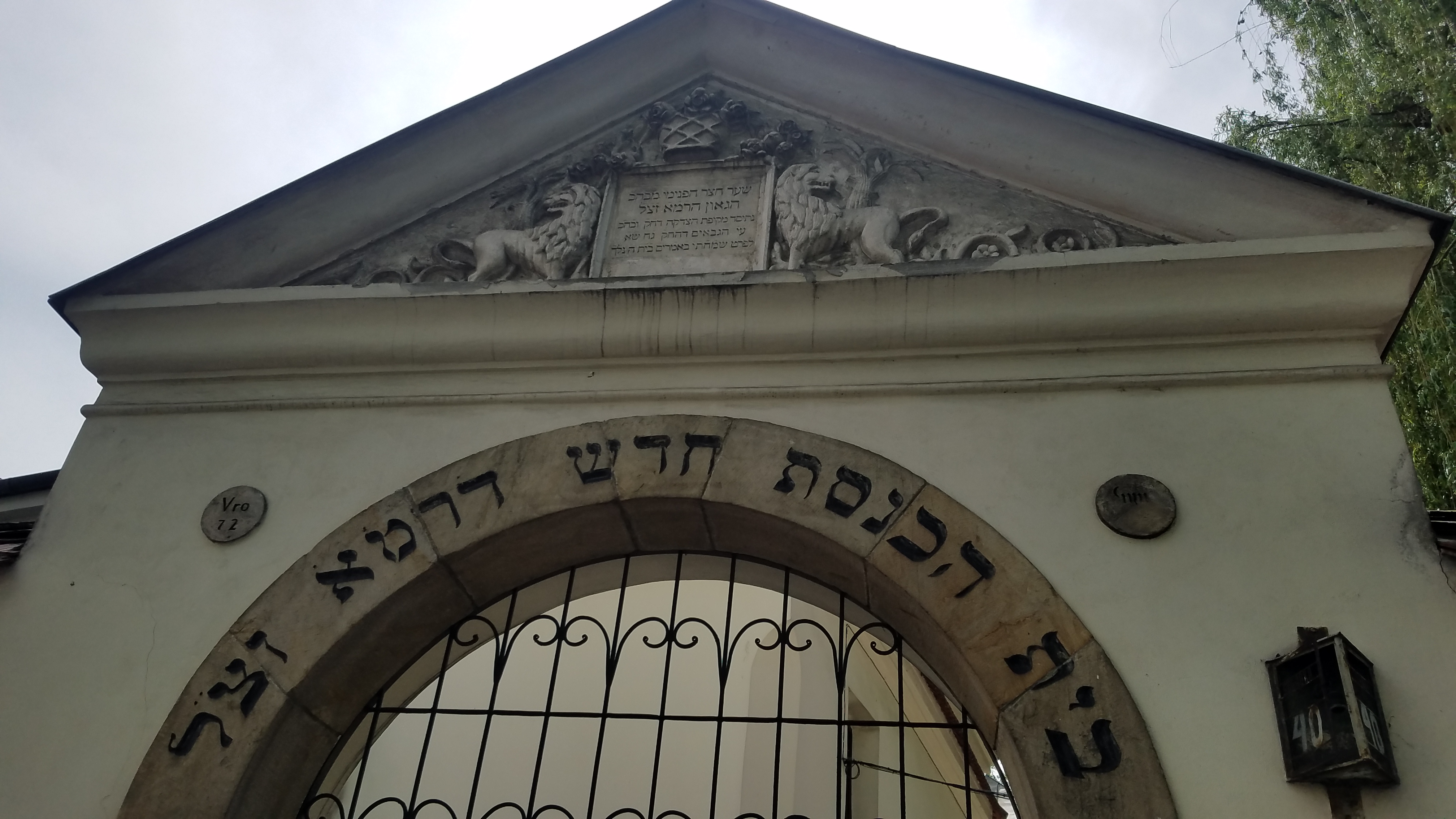
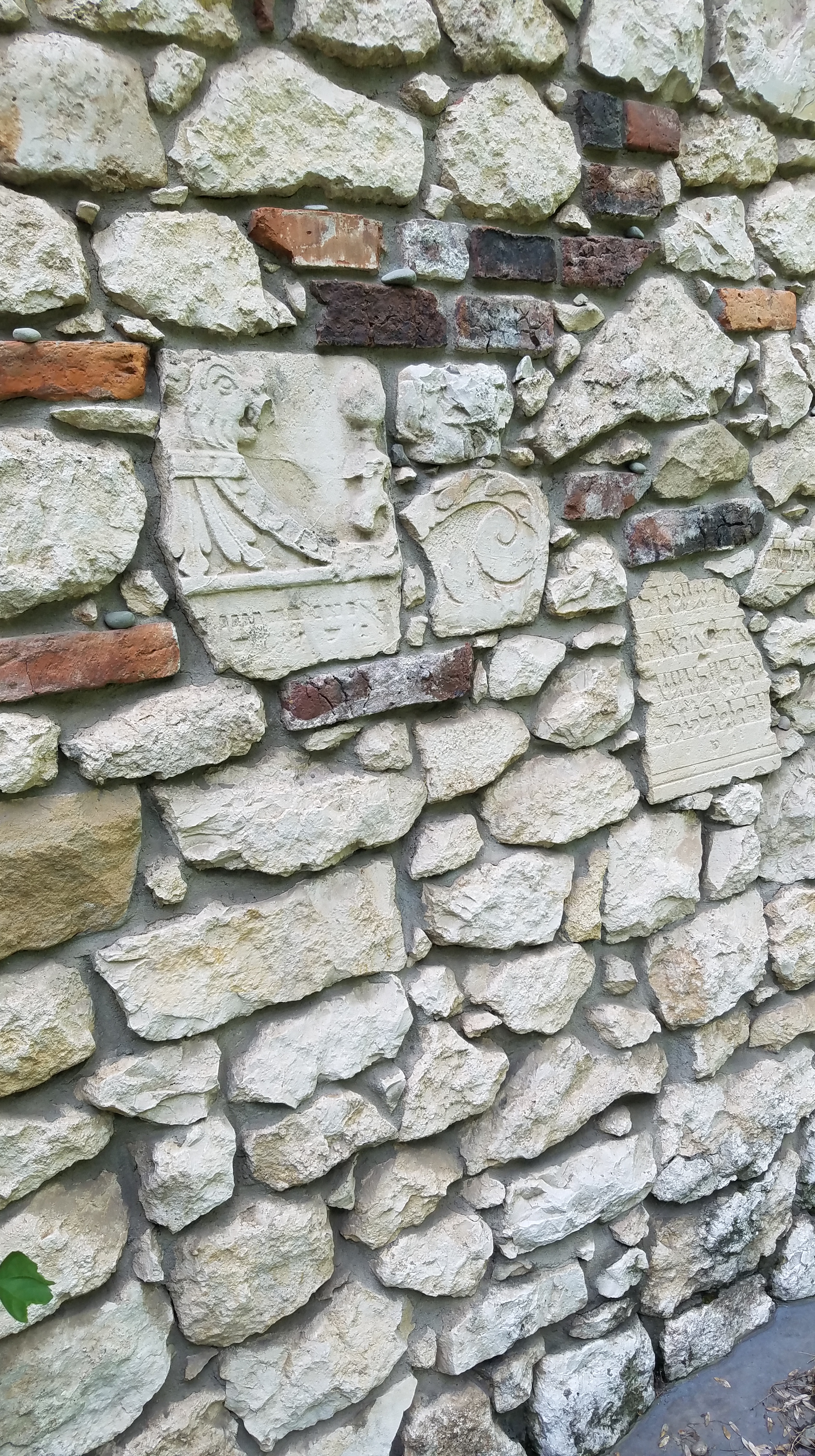
We then went to visit the Jewish district of Krakow — Kazimierz. Since the 14th century, this was the world hub of Jewish culture prior to the war and a gift to the Jewish people of Krakow from King Casimir III the Great. Interestingly, even though much of the Jewish quarter was demolished and taken over by Nazi occupying forces, none of the seven Jewish synagogues in Kazimierz were taken down. As our guide mentioned, the only explanation for this is that perhaps the Nazi’s intended to use these as a museum after the war for the ‘extinct race’ of Jews. Instead, these places were used as multi-purpose buildings, often for storage or official meetings. This preservation was very unlikely to have been done in respect — the cemetery outside of the synagogue was turned into a literal garbage dump. Only after the war was this site rediscovered as a cemetery with over 700 headstones being uncovered.

This part was most shocking — even more than the idea of preserving synagogues as museums about the very people they were murdering daily across Europe. This was a deliberate desecration of their burial grounds for the last 500 years. This was a moment of realization for me: the intent of the Holocaust went beyond simply eradicating those defined as ‘other.’ This was an intention move to fully create a world without Jews and without Jewishness; the so-called “Final Solution” was meant to be the last measure. When this succeeded, the plan would have been to move on in what the Nazis saw as a much better world, where the past didn’t matter. These sorts of desecrations wouldn’t matter, because a landfill would be a more effective use of land nobody could lay claim to. Furthermore, this meant that the extinction of the Jewish race extended to a full removal of all the culture of the Jews.

Keeping in mind the fact that the Jews of Krakow were well-established and a foundational part of the society — they comprised over a quarter of Krakow’s population — this cultural renovation initiative, to use the euphemistic language of the Nazis, was obviously a primary concern for the Nazis, who occupied the city already in 1939 during the first weeks of the war. Yet, as efficient and effective as the killing and segregation methods of the Nazis were, along with the inciting of others to ensure the continuation of the Jewish slaughter, these failed at eradicating the culture totally. Why? They failed because they wanted to leave monuments — these surviving synagogues. In repurposing these places, they ensured these buildings would not fall into disrepair; the commonly German sense of efficiency failed them. Even more so, this strange preservation of culture presents an interesting chance for rebirth, because the way history judges or defines is through the people’s culture and what is left behind. All seven synagogues of the Kazimierz district survived the war, bringing us to the Jewish Galicia Museum nearby.

Here, we met with Jakub Nowakowski, director of the museum to discuss remembrance, both Polish and Jewish. He spoke about his work there in reviving Jewish culture, and in the exhibits he prepares for international displays. Thankfully, his work tells a very different story from that of the much of the remembrance of Krakow. In terms of this remembrance itself, the ‘grassroots orientation’ of the Galicia Jewish Museum, more than ever with the current Law and Justice party in government, becomes extremely important. Here, at least some freedom exists for the curators as this is not a state project or foundation. However, this does mean they are likely closely scrutinized to ensure they follow national remembrance laws.

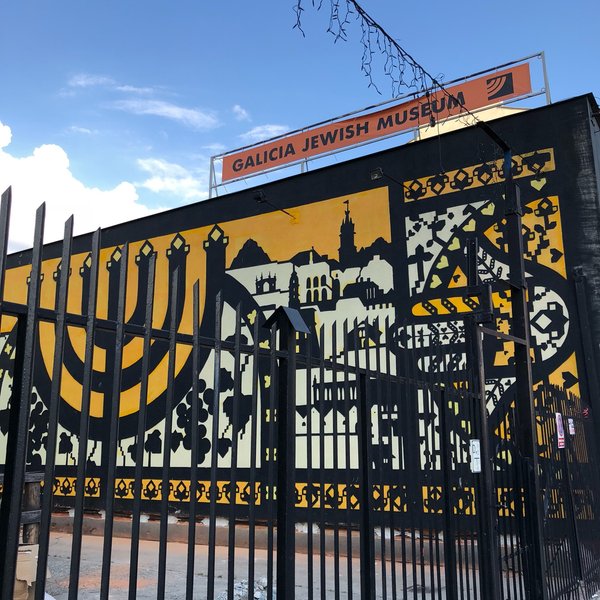
Picture credit to Google images find (did not remember to take a picture of the mural myself)

I was surprised by the size of the museum — the building itself is very simple, small, and unassuming, aside from the large mural across the front. The message however, is not simple, small, or unassuming. Their message is about rebirth of the forgotten Polish Jews and the culture that remained. The museum is able to effectively present this message because the historic world centre of Jewish culture continues to be home to many of the surviving pre-war synagogues.

Official Beginnings

Did some ‘renovations’ this evening/morning at 1 am. Currently sitting on my dorm ‘balcony,’ accessed via the accessible swinging window and inviting due to the lack of a screen to prevent this arrangement. Also took advantage of the second bed — there’s no better replacement for a hard, extremely narrow mattress plank than a second one right beside it. 

Krakow is absolutely gorgeous. Today, the small group of us explored various parts of the city, waiting for the larger group of fellow students to arrive from Canada. Saw several a nun and several monks going about their work in the old town — the Catholic faith is extremely present in the cuture. I even saw a short part of a Catholic worship service and mass in an Old Town cathedral.

The same church’s bells, or so I assume, just rang twice — 2am. A rare time for me to be awake, but I continue to tell myself I need to experience as much as I can take in. 

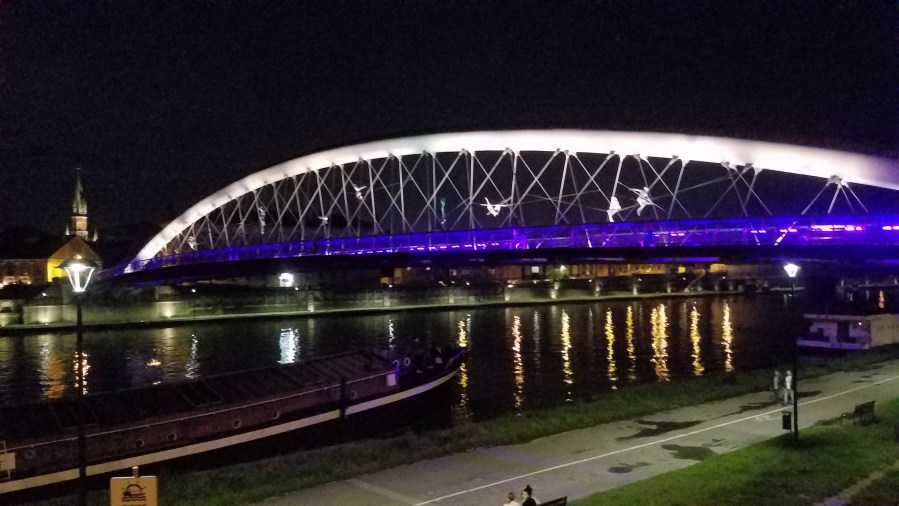
A hour ago, I was walking along the Vistula River that runs through the heart of the city. I really enjoyed walking across the main walking bridge of the Vistula and seeing the artistry in the design. The suspension cables in the centre of the bridge suspend more than just the bridge itself — obviously, or I would mention swimming with Martin, as well as the hypothermia. The bridge is home to a acrobatic circus display, or at least that’s the conclusion we came to. Every sculpture, being of various people performing different balancing feats, moves and sways with the increased weight load. Any movement presents a fascinating show — a masterpiece of live performance art-citecture — as presented by yours truly.

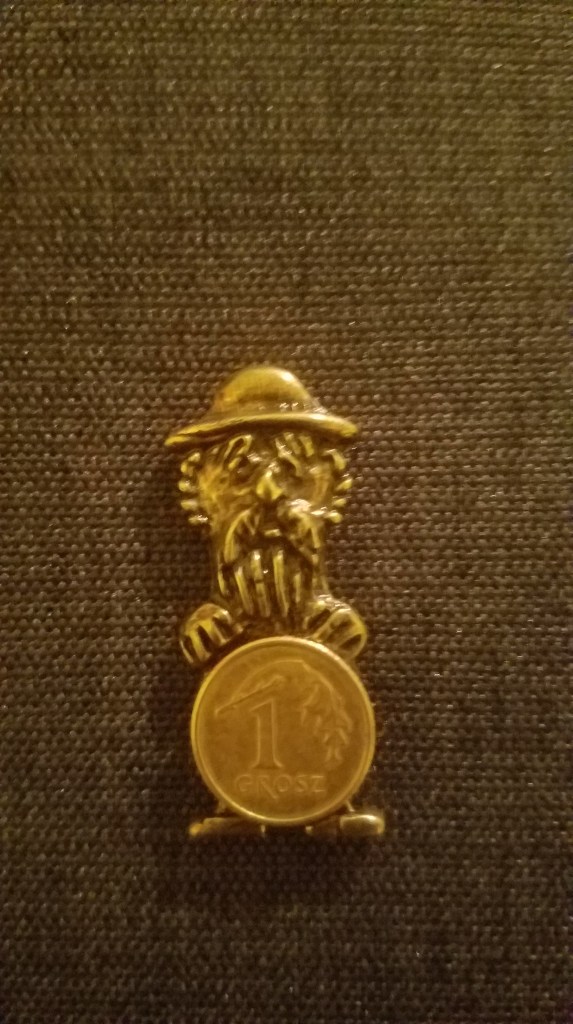
On our walk, we also paused often to take in the night life of the city. However, there was one moment where we paused, looked at each other, and said, “You know, this city is a graveyard. People were murdered on these streets. Where’s the Jewish culture today…” — besides in museum exhibits or the horrendously racist figurines of Jewish men holding a gold coin. How can so many people walk these streets without ever coming to that moment? Why are the only things left the synagogues and cemeteries?

Shockingly, this is the very ‘toned-down’ version and probably the least offensive one I’ve seen. Dr. Earl explained further that all the ones I did come across in the marketplace were still fairly tame compared to the figures for sale in past years. This was also the cheapest I could find on our Saturday explorations (5PLN) — strangely, and terrifyingly overpriced, if you care to consider the events and attitudes entailed in this depiction. How can this be considered a symbol of luck? How can the city not remember, or even acknowledge the many innocents who were killed because they were Jewish — an ‘accident’ of history — and in no way a crime except in ideological imagination? 

I hear cheers from a short distance away as I write this. Then, I witness an older man walking past responding to the cheers with a softer, but still emphatic ’whoowhaa, yeah!’ I am thankful we came as scholars and students of history, knowing about the basic history of the place, and the defining moments of 20th century Krakow. 

The morning birds are singing from the trees outside my window. I do look forward to the official, guided tour of Krakow later this morning, but had best be signing off. Church bells strike 3.

Early Experiences and First Impressions

Flight went well, though ended with a bit rough landing in a thunderstorm in Warsaw, and some minor inconveniences.

On my connecting flight from Warsaw to Krakow, I read Maus by Art Spiegelman (graphic novel) — a condensed version of Spiegelman’s father’s life as a Jewish businessman during the war. Maybe I should have chosen different reading material, but I found it fitting as I begin my journey. The man to my left seemed slighted by the cover, perhaps due to the large Nazi swastika, or perhaps he knew of its content. But its was a fascinating book, especially considering the various character depictions Spiegelman draws upon (pun obviously intended…) in his drawings of everyone his father mentions. 

To clarify: Maus portrays every character as a different animal, defining people based on ethnicity (Jews as mice, Poles as pigs, Germans as cats). With this inevitably comes the stereotypic associations of these animals — think of why Spiegelman would choose pigs as the animal the Poles will be represented by. I don’t know the answer to that question: Spiegelman himself admitted in the book that he struggled with how to represent various different groups of people. 

However, my thoughts went as follows: swine were non-kosher animals — forbidden animals to the Jewish people in Old Testament law — thereby being something the Jewish people could not become part of. I find the cat and mouse arrangement Spiegelman chose to be very fitting to the situation of many Jews throughout the war — there was no safe place, either from the cats or from the traps set by others. Often even their hideouts, or ‘mouse holes,’ were compromised.

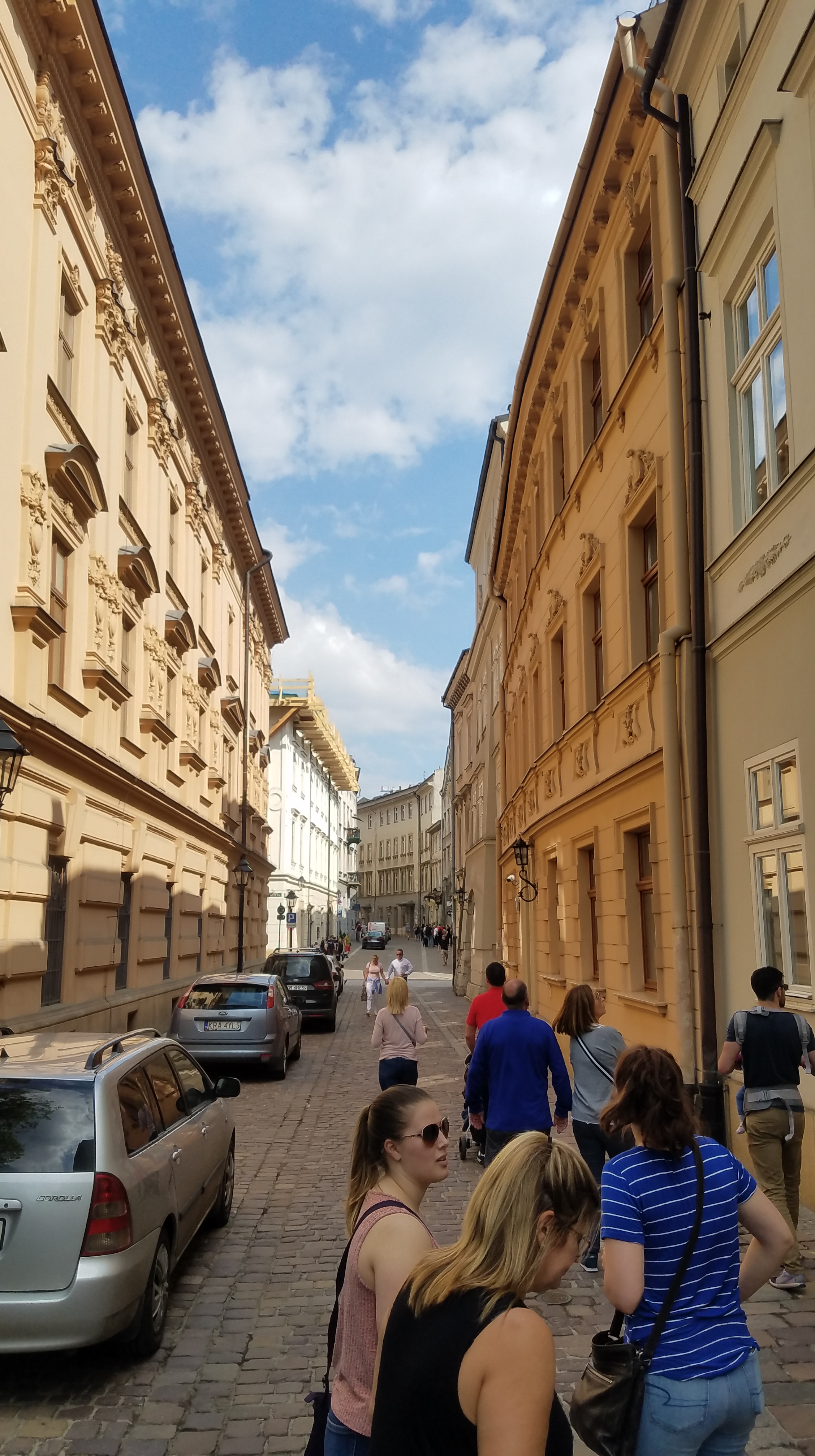
We explored the Old Town of Krakow a bit today, with our Jagiellonian University friend, Michal. Aside from our heavy fatigue, this was a wonderful first day. The traditional food is wonderful. The city itself is fantastic. And remarkably clean. There’s almost no garbage or dust, even considering the tourist masses. Speaking more to the charm of the city itself, the historic nature of the city is remarkably blended with modernity, the public transit is easy to navigate, and even gardens and green space are readily available within a short walk.   Hopefully I will be able to give more insight than of its aesthetic appeal as I experience the city over the coming week, especially as pertaining to the nature of this trip. 

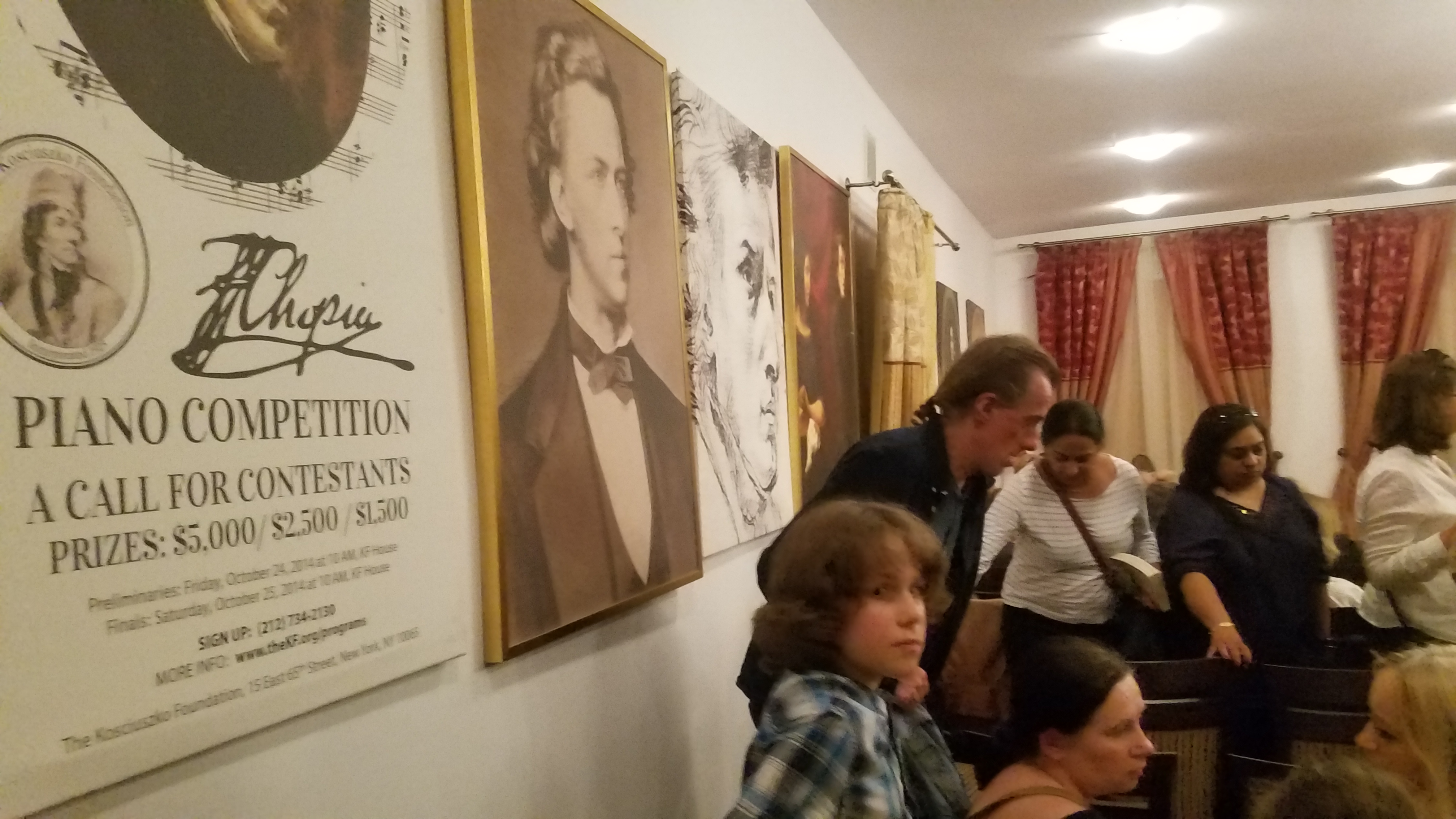
I did also attend a wonderful Chopin piano concert this evening with a few others in the Krakow Chopin Gallery. This concert was performed by internationally renowned and  award-winning, Polish pianist, Witold Wilczek. This was also a fabulous way to unwind and to enjoy an introduction to the history and culture of Poland in a very posh and sophisticated manner. (We even were served a glass of white wine — which, if I may note, was simply awful. Blegh.) Regardless of refreshments, the concert was worth attending. The pianist had over an hour and fifteen minutes of Chopin memorized. He did not miss a single note. Exhausted, but pleased with our experiences thus far, we arrived back at our dorm rooms.

Pre-Departure Musings

*UPDATE*

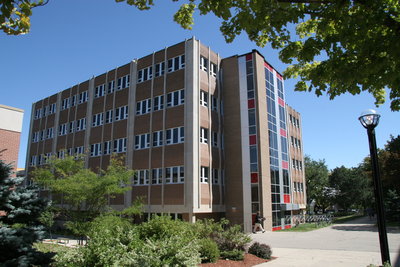
Far less was different than imagined. Coming from Brantford, having all my classes in the same building was a concept I am quite familiar with. After all, this is the same university we are talking about. Unfortunately, only one, single, lonely squirrel sighting was documented.

In class, we spent numerous hours simply discussing the Holocaust and the shaping of its history and contemporary memory, especially considering Poland’s current political state of affairs. Paradoxically, history continues to change, being shaped, remembered, and influenced by those who preserve it and those who choose to interact/engage with it. The question I hope to answer as I embark on this trip is: how will my engagement shape this history of suffering, both for myself and for the humans of the future?

For many memory activists, Jewish absence represents the loss of a multicultural Poland, of what was and could have been. Their activities… are meant to re-member: not only to recall past Jewish presence on Polish lands, but to attach a prosthetic Jewish limb to the Polish national body. 

Genevieve Zubrzycki

So with this history of remembrance in mind, we need to also consider the actual events of the Holocaust. Genocide: “the deliberate and systematic extermination of an ethnic or national group” (OED). The concept of genocide was not even officially defined until the 20th century — as a post-WW2 concept, this definition and laws based theron, were founded on the actions committed against the Jewish people of occupied Europe. For many living at the time, this was unthinkable. It was unheard of. Genocide was not a codified part of international law, or even their national law. Furthermore, it was unthinkable in such a modern part of the world — this was previously the hub of the Renaissance and later the Enlightenment.

So I turn to my future self and say: remember. But do more than just remember — share, meet, and discuss the people of the Holocaust. Ensure that mankind does not reach that level of total depravity again. Look for the path away from any such possibility. And be thankful for my own personal freedoms of religion and all other indiscriminate rights as a Canadian and global citizen.

History, like most elements of life, are subject to personal experience and individual interpretation — that is to say, each person will embrace and understand this history in slightly different manners. This is not in the sense of “I can believe what I want and unsubscribe to those uncomfortable moments,” or that strange mentality of ‘alternative facts and truths’; every person on this trip with me will see, hear, and work on the same projects I do, but none will come to exactly the same conclusions. This becomes why conversation is such an awesome and integral part of studying history; no discussion means no care for the people of the past, and no concern over the truth. History becomes a present conversation about truth, about intent, and about humanity itself.

I struggled a bit this morning with the thought of whether I would even like Poland — especially considering the terrifying events of the 20th century (and in light of the course text material — The Crime and the Silence — as one of the destinations of our trip). The stories of sweet little ladies spouting anti-Semitic lines without thinking is terrifying (even more so with the knowledge that the book was published less than 20 years ago. Nonetheless, I think Poland itself will have its charm and unique appeal, especially considering the diverse history Poland has as a central European power.

Ultimately, I hope to tell you about my interaction and understanding with this history. What will yours be, and what is yours right now?

Featured

Back to School: May Edition

These sort of things sometimes just happen. Sometimes they don’t just happen. This one all began some time ago on a walking trail in Brantford, while conversing with a good friend about just how great my undergrad is shaping up to be. Feel free to follow along this month, as my education looks to be getting a whole lot greater.

Sometimes you just need to be a little less practical and a lot more passionate. — That aforementioned friend

20190508_134614

For those of you yet unaware, my studies throughout the month of May will be dedicated to studying Polish-Jewish history, the Holocaust, WW2, and the millions of people whose lives and families were harshly altered, restricted, threatened, and rapidly extinguished — not because they were dangerous or enemies but because, according to Hilter’s prescribed Aryan race, their genetics were not in line with the German vision.

My studies begin at the “other Laurier” (a.k.a. the Waterloo campus of WLU — the larger and yet unfamiliar of the two campuses). This semester then, looks be a significant one, not only because of this course or the unique travel opportunity, but also considering the perpetual question facing every student at WLU Brantford: “Why Brantford?”

As an aside, reactions often also include comments such as, “oh, that’s too bad,” or “ouch! Maybe you can still apply for a transfer…,” or even “What’s there?”

Well, it’s friendly squirrels mostly.

But returning to my current education:

The first half of the semester (the next 2 weeks) focuses on the history of the Holocaust in Poland, as well as contemporary issues surrounding its remembrance both locally, and on an international scale. With 9 other Laurier students like myself, a similar-sized group from Nippissing University, along with PhD candidate, Eric Story, and course directors, coordinators, and instructors Dr. Plach and Dr. Earl, we then hope to proceed to focus more on experiential learning to study various dimensions of the Holocaust and its ongoing remembrance and memorial. This off-campus/international experience involves various guided activities, visits to several death camps, cleaning up a Polish-Jewish cemetery, walking tours, and walking the streets of the wartime Jewish ghettos, among other activities.

What follows in future posts then, will not be the thought processes of a tourist. I will not be describing many attractions or pretty sights. My descriptions may not be so refined (though, I do hope they are readable). But throughout the month of May, I hope to meet some of the people of the Holocaust, to see beyond lists of family names and the unspeakably large numbers of people that were exterminated because they were born as they were, and because ideologies encouraged hate, anti-semitism, and the ranking of humanity based on genetic variations.

P.S. I really hope Laurier’s Waterloo-campus squirrels are also wonderful critters. So far I’ve only been greeted by several hissing Canadian geese.