Thursday, May 23 (con’d)
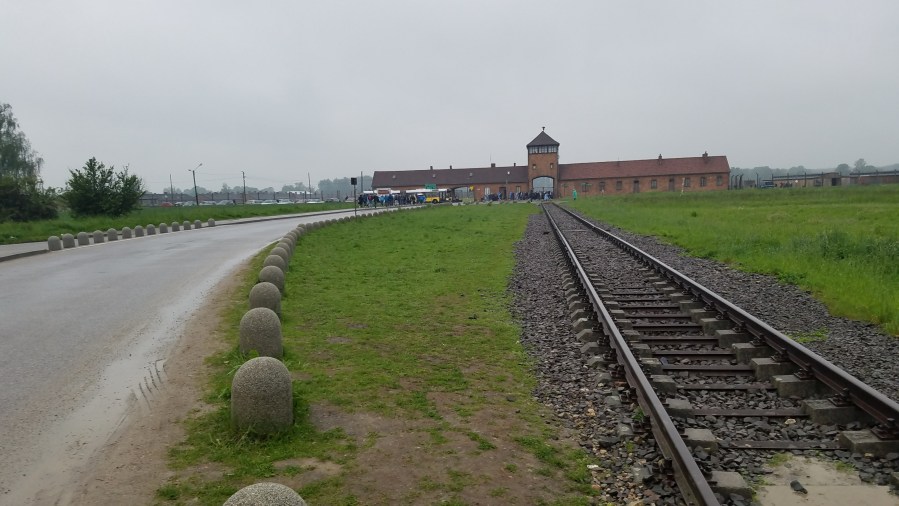
After leaving the main camp, Auschwitz I, we travelled a few minutes down the road to Auschwitz II-Birkenau — the main site of the Nazi extermination of the Jews. My first thoughts of Birkenau were that it looks like a graveyard. Only the foundations of the former camp remain, sometimes even submerged under water. However, this is also a literal graveyard for those burned in the crematoria — these ashes were spread throughout the camp, forcing the living to be physically walking over their own dead. I found this even more terrifying, considering the camp has largely been preserved in its original post-war condition, although much dismantling of barracks occurred in the Soviet era. Nonetheless, this aligns with respecting the Jewish laws about exhuming graves; leaving the grounds means for the most part, these are original artifacts of the Holocaust.
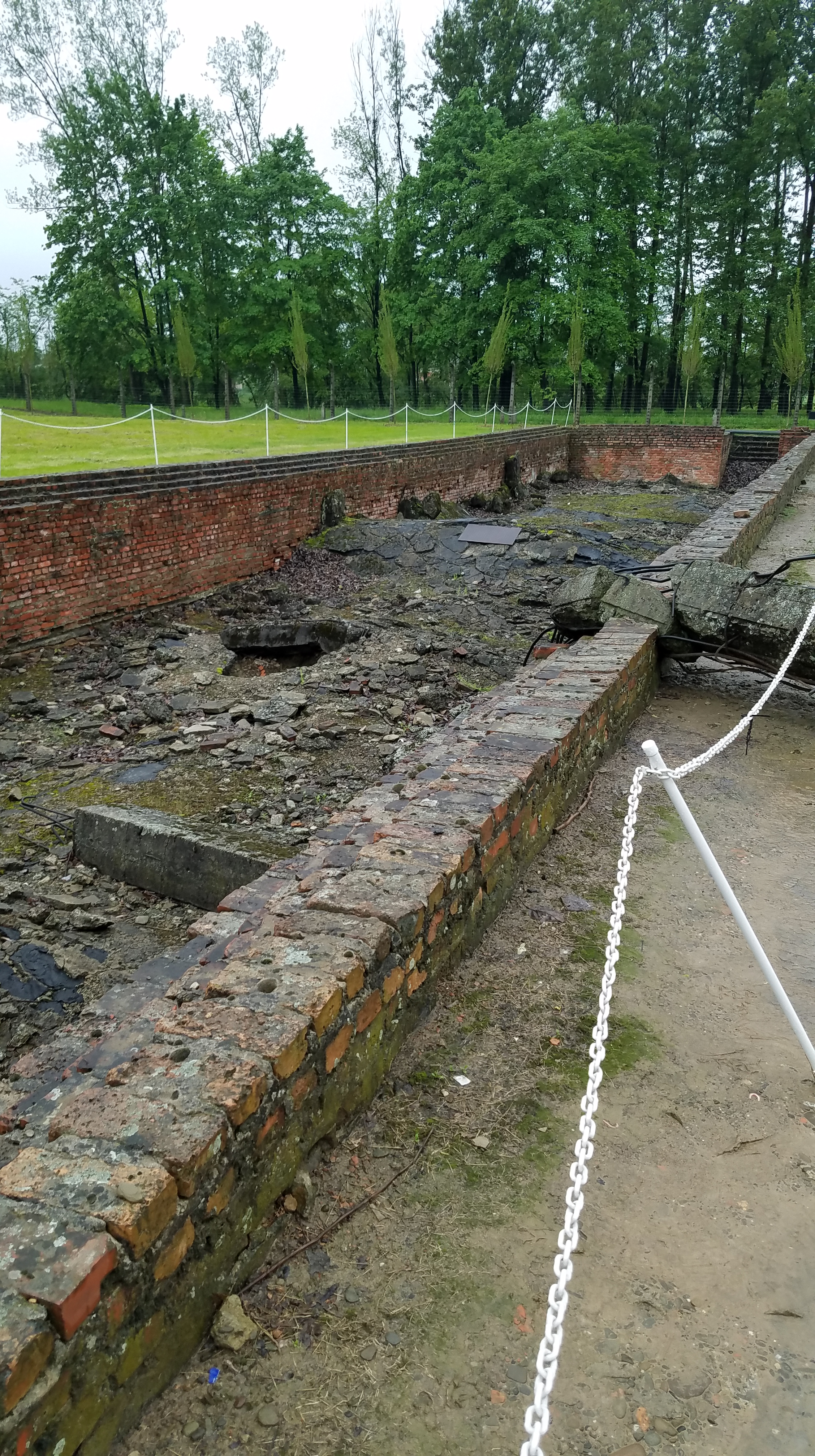
I found Auschwitz still offers a very strong representation of the overall dynamics in the history of the Holocaust, and that this memorial was designed to evoke emotion over the horrors of the Holocaust. However, it does not offer the whole history and the reality of the expanse of the Shoah, or the full terror of this ideological mass killing. The remains of the gas chambers and crematoria, being original, are original artifacts of the Holocaust. This is why I really appreciated what the reconstruction efforts at Birkenau preserved. For example, building off of the original foundation and floor, a building was re-erected to show the operation of the Nazis dehumanization efforts and the processing of prisoners. Yet, they placed a glass floor above the original floor, both to protect it and to respectfully interact with the history of the space.
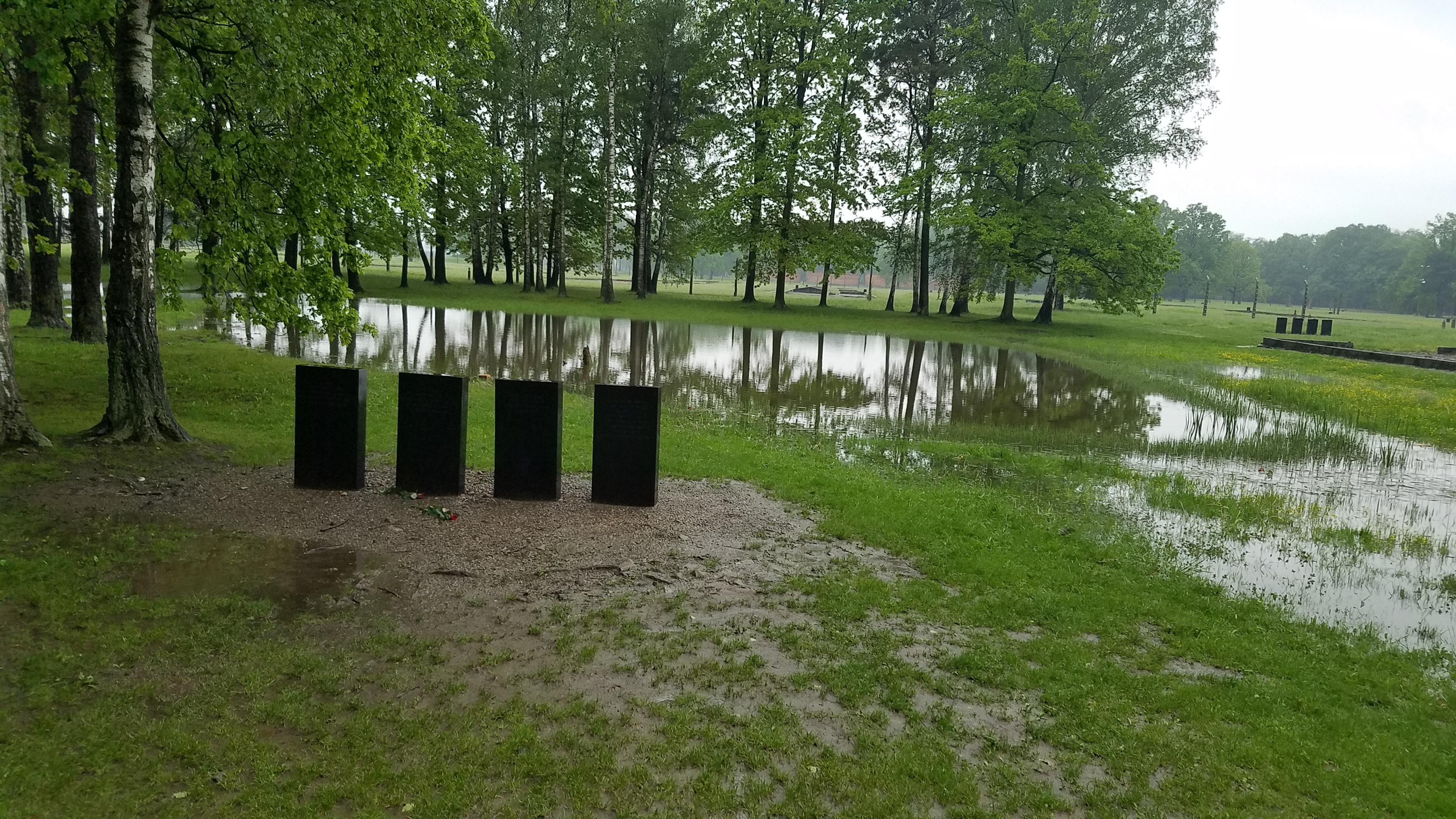
Often, when learning about the Holocaust we hear the phrase “Never again.” Birkenau is in ruins — gone, demolished, flattened — speaking to this as a literal form of these words. It cannot happen if nothing remains. Yet, we need to move beyond this to consider contemporary crises as well — by this, I mean that we need to work towards “nobody again being subject to such hatred.” When walking around the outskirts of the camp, I noticed headstones placed throughout the camp in fours, near each of the front of each crematorium. I found these to be a very powerful monument to those whose ashes were spread throughout the area — these people have no set grave, but were scattered. These monuments all have the same inscription in different languages: “To the memory of the men, women, and children who fell victim to the Nazi genocide. Here lie their ashes. May their souls rest in peace.”
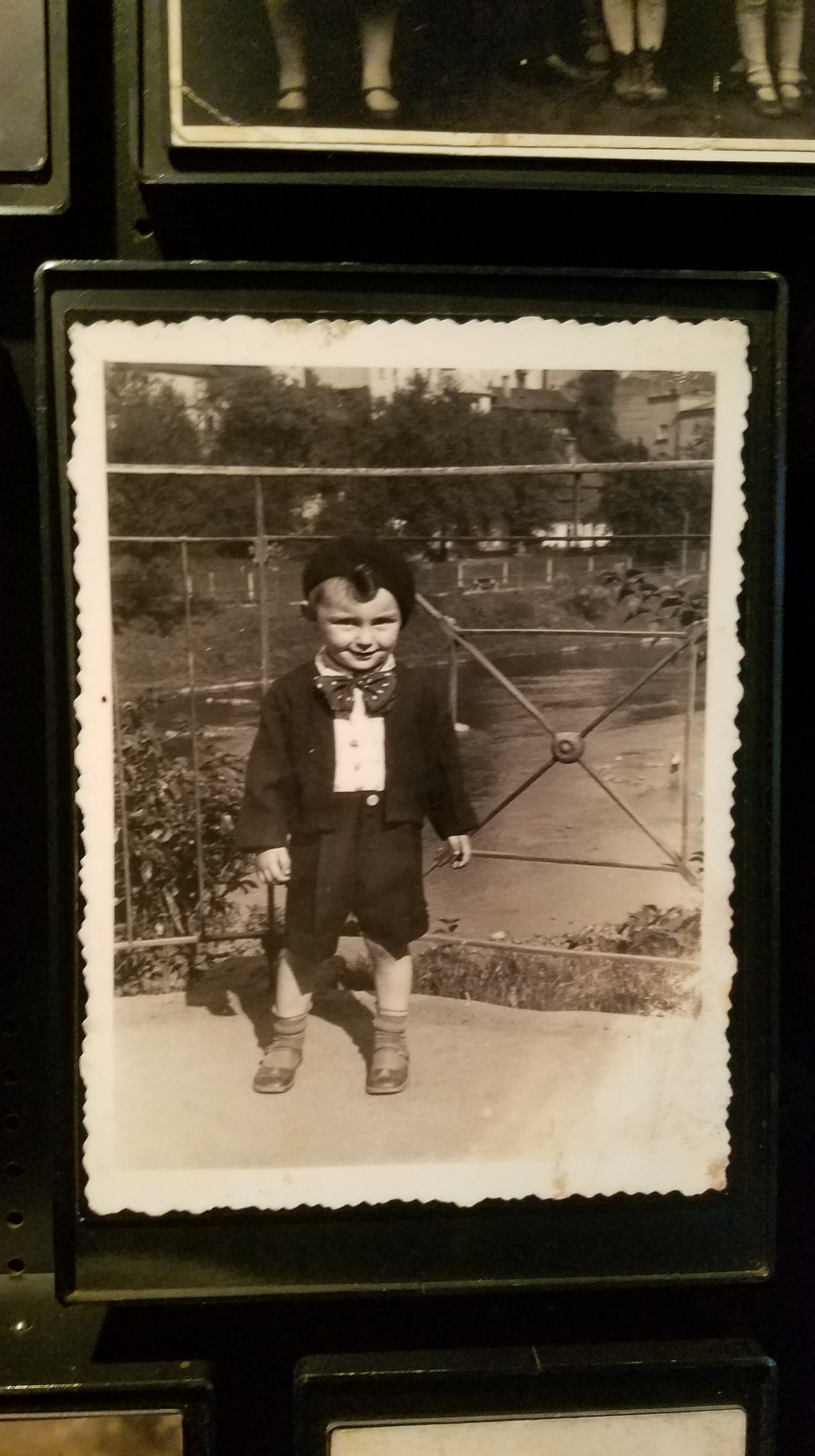
I met a young boy at Birkenau. There is no record of his name, no information available about the dates of his birth or death. All that remains is this image of him. Someone’s own child. A beautiful boy who died because he was born into a Jewish family. He was condemned because he was too young to possibly be sent to a labour camp. This reminded me of the white room at Auschwitz where only children’s art was shown —an absolutely heartbreaking monument to the children of Auschwitz and of the Holocaust. And there were millions like him, who died not even recognized as people, as a child. They, children with their own lives and families, were seen as less than animalistic.
 Into That Darkness — and Out of it too...