We started our day off in the Old Town, with an official tour of the historic architecture of the medieval town area, including a visit to the castle, the ‘cloth hall, various churches, the Jagellonian University, and the remaining section of the town gate. It was fascinating, especially to hear of the mythos associated with various features of the architecture, and how many people remember their history through these.
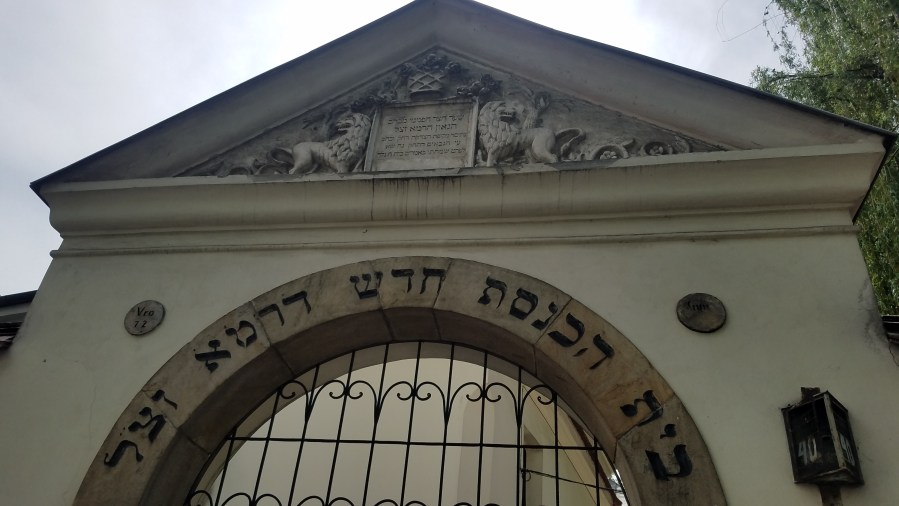
For example, the symbol of Krakow is the smok (dragon). Several of us spent the last two days looking for answers to why this might be, and what the story of the dragon was. At many of the stalls in the market, various representations of the dragon are for sale, but none of the shopkeepers seemed to know what the whole story was. In our visit to the castle today, we saw a set of giant dragon bones (more likely mammoth bones) hanging near a main entrance to the palace. As the story goes, nobody was able to defeat the dragon by force, and many of the king’s knights died trying. However, a shoemaker came up with a plan to kill the dragon. Using sulphur and a sheepskin, he managed to use the dragon’s fire against it, essentially tricking the dragon to eat the bundle of sulphur — obviously causing the dragon to explode. The remaining bones hang from a chain at the castle.
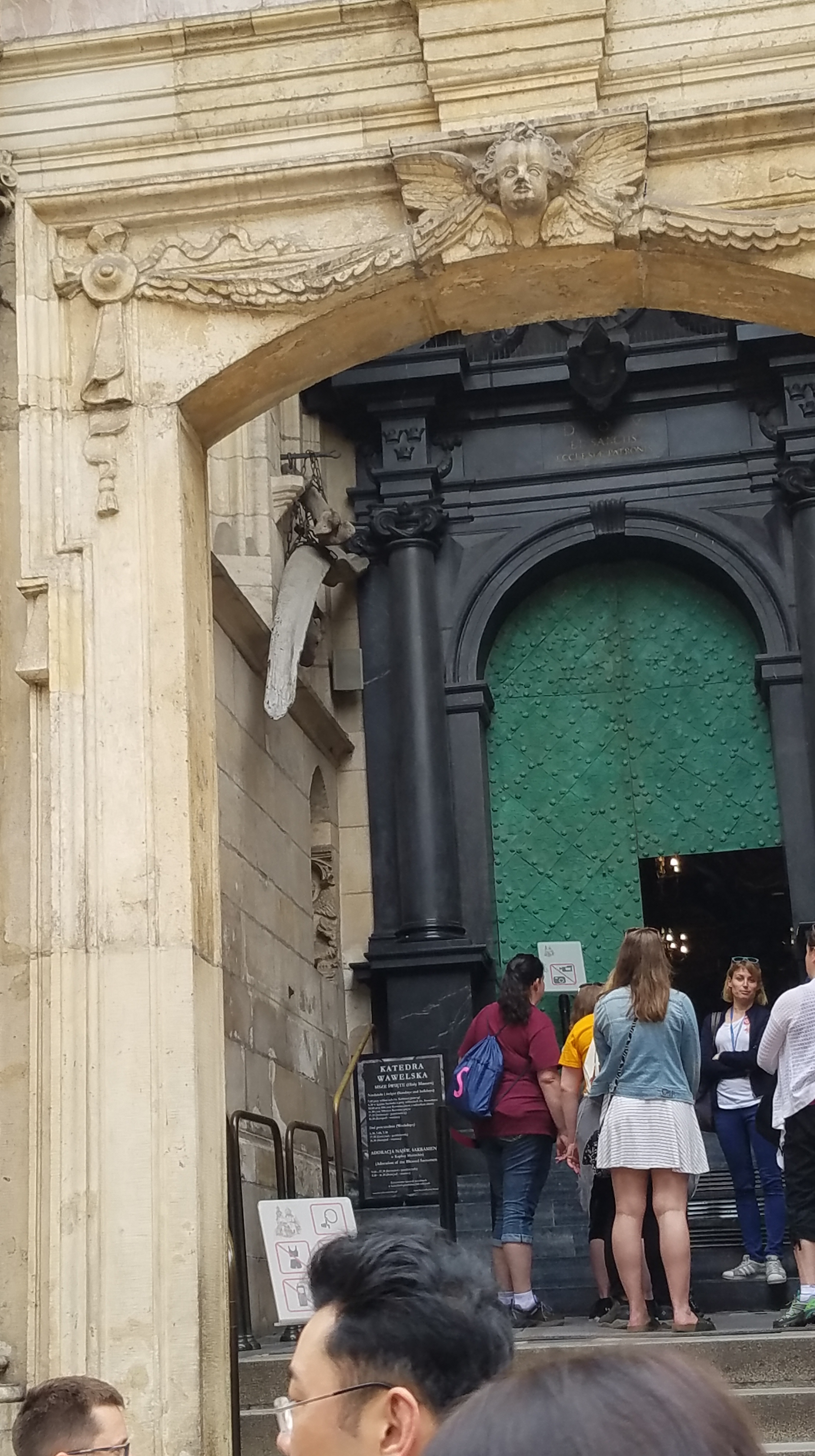
We then went to visit the Jewish district of Krakow — Kazimierz. Since the 14th century, this was the world hub of Jewish culture prior to the war and a gift to the Jewish people of Krakow from King Casimir III the Great. Interestingly, even though much of the Jewish quarter was demolished and taken over by Nazi occupying forces, none of the seven Jewish synagogues in Kazimierz were taken down. As our guide mentioned, the only explanation for this is that perhaps the Nazi’s intended to use these as a museum after the war for the ‘extinct race’ of Jews. Instead, these places were used as multi-purpose buildings, often for storage or official meetings. This preservation was very unlikely to have been done in respect — the cemetery outside of the synagogue was turned into a literal garbage dump. Only after the war was this site rediscovered as a cemetery with over 700 headstones being uncovered.
This part was most shocking — even more than the idea of preserving synagogues as museums about the very people they were murdering daily across Europe. This was a deliberate desecration of their burial grounds for the last 500 years. This was a moment of realization for me: the intent of the Holocaust went beyond simply eradicating those defined as ‘other.’ This was an intention move to fully create a world without Jews and without Jewishness; the so-called “Final Solution” was meant to be the last measure. When this succeeded, the plan would have been to move on in what the Nazis saw as a much better world, where the past didn’t matter. These sorts of desecrations wouldn’t matter, because a landfill would be a more effective use of land nobody could lay claim to. Furthermore, this meant that the extinction of the Jewish race extended to a full removal of all the culture of the Jews.
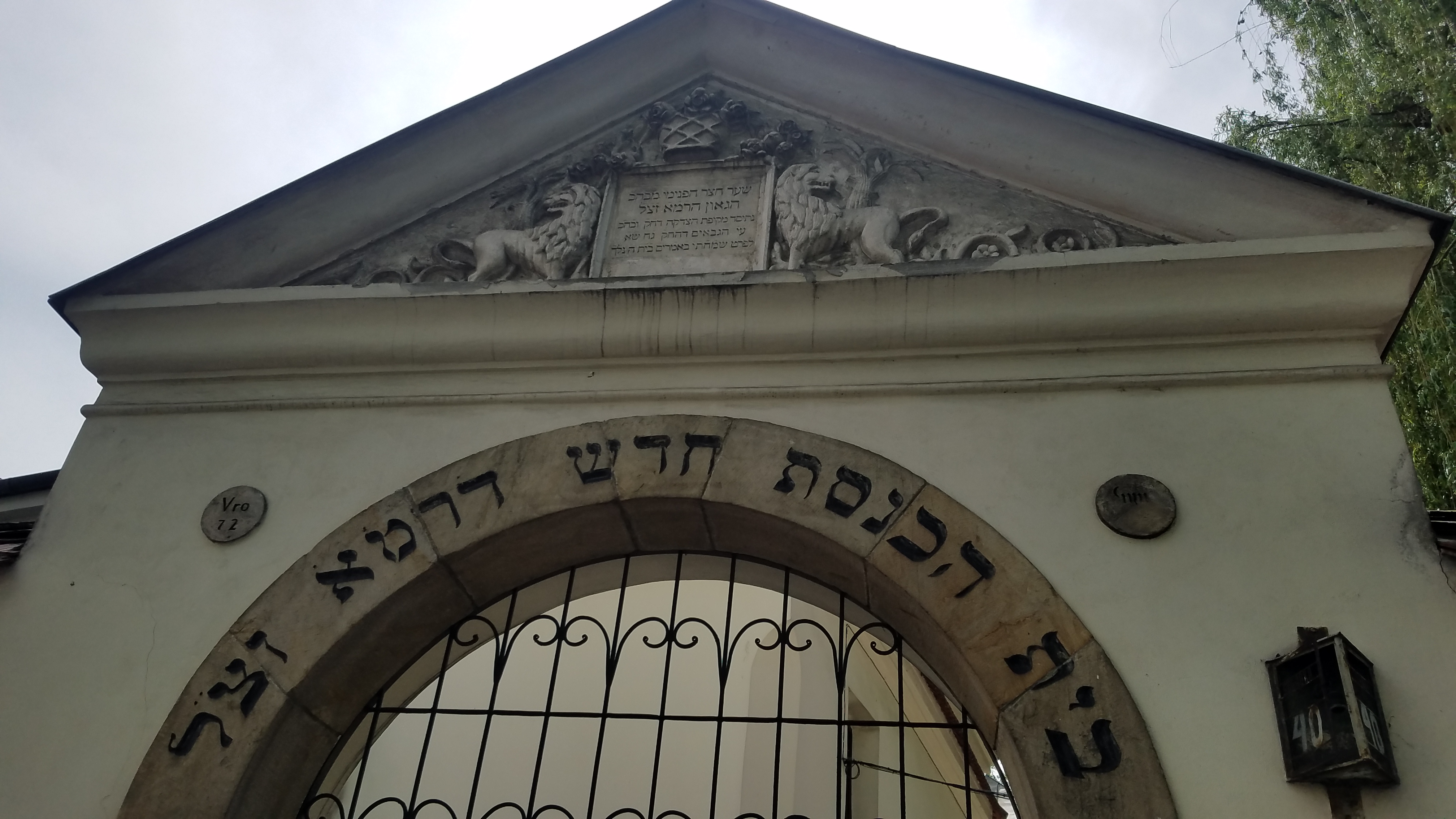
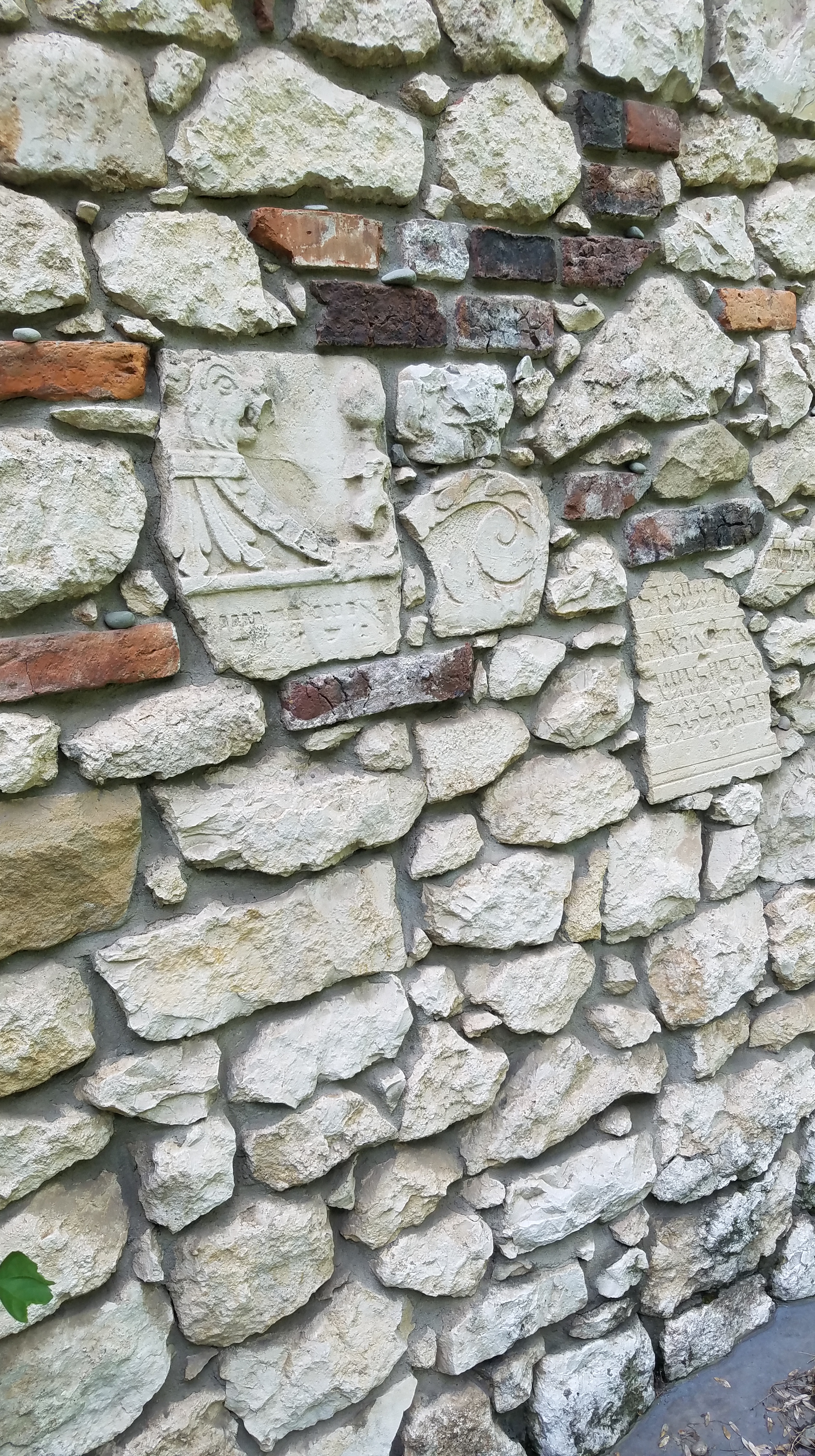
Keeping in mind the fact that the Jews of Krakow were well-established and a foundational part of the society — they comprised over a quarter of Krakow’s population — this cultural renovation initiative, to use the euphemistic language of the Nazis, was obviously a primary concern for the Nazis, who occupied the city already in 1939 during the first weeks of the war. Yet, as efficient and effective as the killing and segregation methods of the Nazis were, along with the inciting of others to ensure the continuation of the Jewish slaughter, these failed at eradicating the culture totally. Why? They failed because they wanted to leave monuments — these surviving synagogues. In repurposing these places, they ensured these buildings would not fall into disrepair; the commonly German sense of efficiency failed them. Even more so, this strange preservation of culture presents an interesting chance for rebirth, because the way history judges or defines is through the people’s culture and what is left behind. All seven synagogues of the Kazimierz district survived the war, bringing us to the Jewish Galicia Museum nearby.
Here, we met with Jakub Nowakowski, director of the museum to discuss remembrance, both Polish and Jewish. He spoke about his work there in reviving Jewish culture, and in the exhibits he prepares for international displays. Thankfully, his work tells a very different story from that of the much of the remembrance of Krakow. In terms of this remembrance itself, the ‘grassroots orientation’ of the Galicia Jewish Museum, more than ever with the current Law and Justice party in government, becomes extremely important. Here, at least some freedom exists for the curators as this is not a state project or foundation. However, this does mean they are likely closely scrutinized to ensure they follow national remembrance laws.
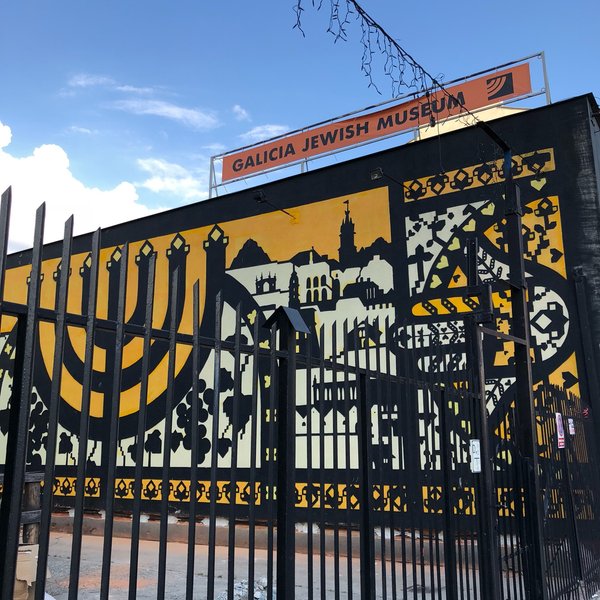
I was surprised by the size of the museum — the building itself is very simple, small, and unassuming, aside from the large mural across the front. The message however, is not simple, small, or unassuming. Their message is about rebirth of the forgotten Polish Jews and the culture that remained. The museum is able to effectively present this message because the historic world centre of Jewish culture continues to be home to many of the surviving pre-war synagogues.
 Into That Darkness — and Out of it too...
Thanks for sharing!
LikeLike